
This Quarter at Trebek
Issue #9
| September, 2026
TREBEK LEARNS
FROM WIDLIFE
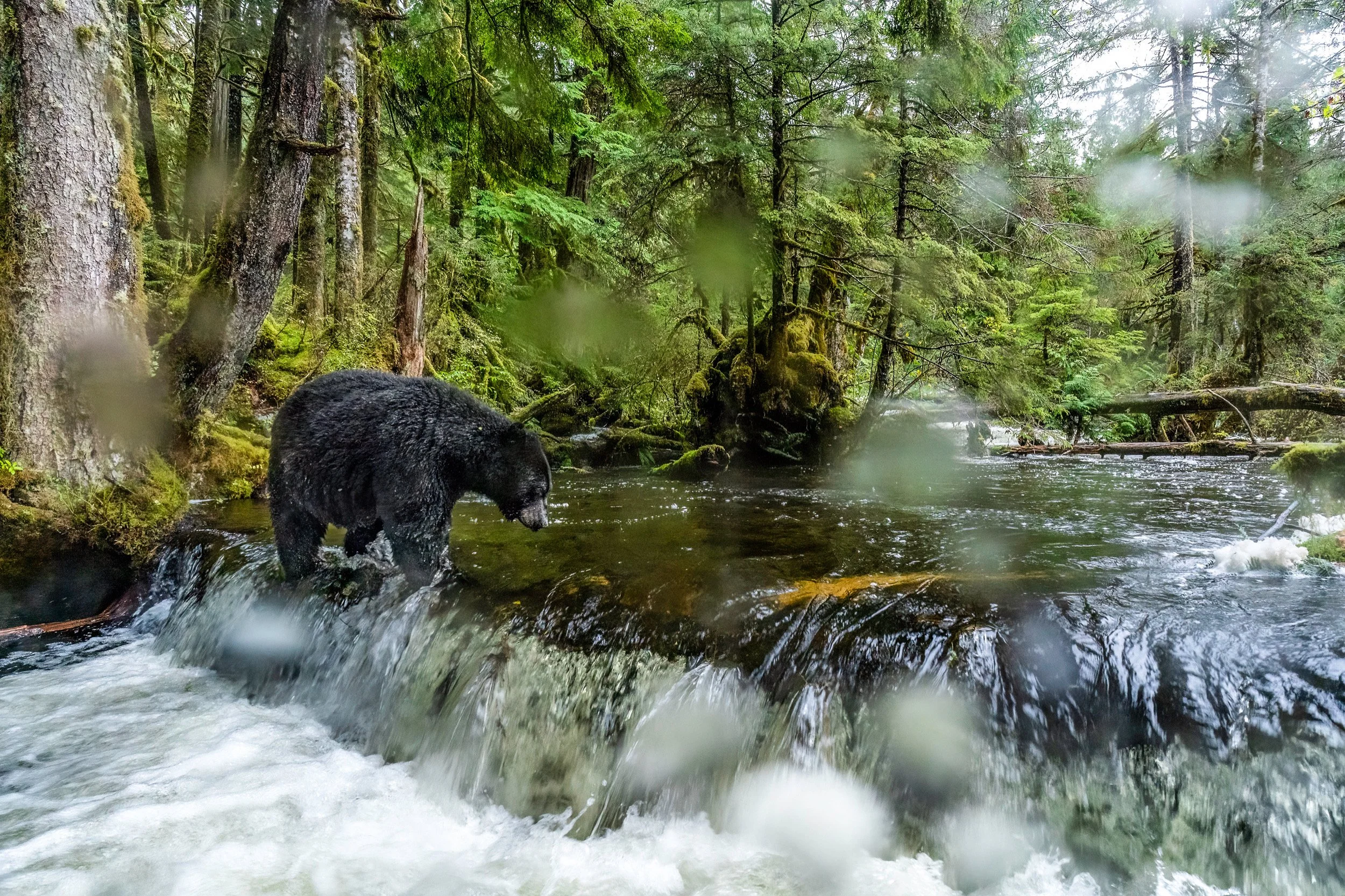
Photo: Ryan Tidman
IN THIS ISSUE
The story of a landscape is inseparable from the wildlife that depends on it. In this issue, we explore the relationships between species and their surroundings and what wildlife can reveal about environments under pressure.
WHAT CAN WE LEARN FROM MONITORING ANIMALS: Zenon Czenze studies how bats respond to extreme heat. Camille Martel documents St. Lawrence belugas during a little-known part of their lives: winter. Scott Parent follows plastic pollution through Great Lakes waterbirds. Sara Cannon examines how transboundary fisheries affect Pacific salmon from British Columbia and the Yukon, while Nick Hawkins follows Atlantic salmon through their life cycle to understand the challenges they face in rivers and at sea.
IMPACT BEYOND THE TREBEK GRANT: Building on her Trebek-supported research into changes in cervid populations with Shuswap Band, 2021 Trebek Grantee Rhiannon Kirton expanded the work into a broader regional effort addressing habitat and land-management pressures in British Columbia’s East Kootenay.
FEATURED PROJECT: 2022 Trebek Grantee Ryan Tidman spent three years documenting how Vancouver Island black bears rely on old-growth trees for winter dens, highlighting a lesser-known consequence of old-growth logging.
TREBEK AT THE ROYAL BC MUSEUM: A new climate change exhibit brings together the work of Trebek Grantees Victoria Arbour, Brian Timmer and TJ Watt, connecting their research and photography with a broader public story about environmental change.
Wildlife responds to environmental change in ways that are not always immediately visible. Changes in animal behaviour can signal shifting conditions in the places they depend on.
By paying closer attention to these responses, researchers can better understand the pressures reshaping ecosystems and what they may mean for the species and communities that live there.
What can animals tell us about a changing environment?
TREBEK LEARNS
FROM WILDLIFE
BATS REVEAL THE LIMITS OF EXTREME HEAT
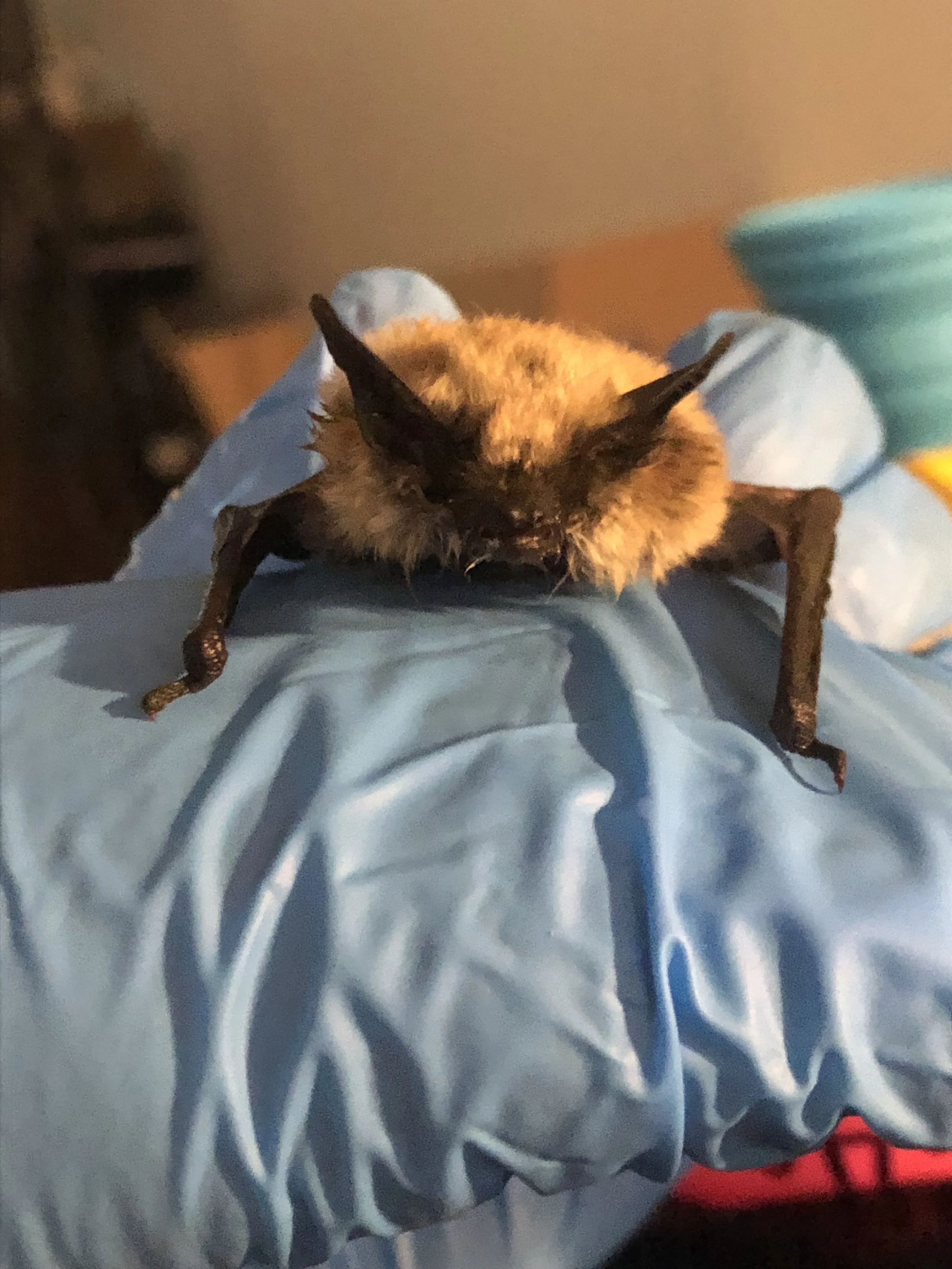
For bats, surviving extreme heat can depend on where they spend the day.
Working in some of British Columbia's hottest regions, Zenon Czenze studied how bats respond to high temperatures and how different roosts affect their ability to keep cool and conserve water. His research found that vulnerability varies among species and depends partly on the characteristics of the places they use for shelter.
Published in the Journal of Experimental Biology, the findings can help inform the design and placement of artificial bat boxes to reduce the risks of overheating and dehydration as temperatures rise.
Direct Effects Of Global Heating And Heat Waves On Temperate Zone Bats
Zenon Czenze | 2022
BELUGAS OPEN A WINDOW ON WINTER BEHAVIOUR
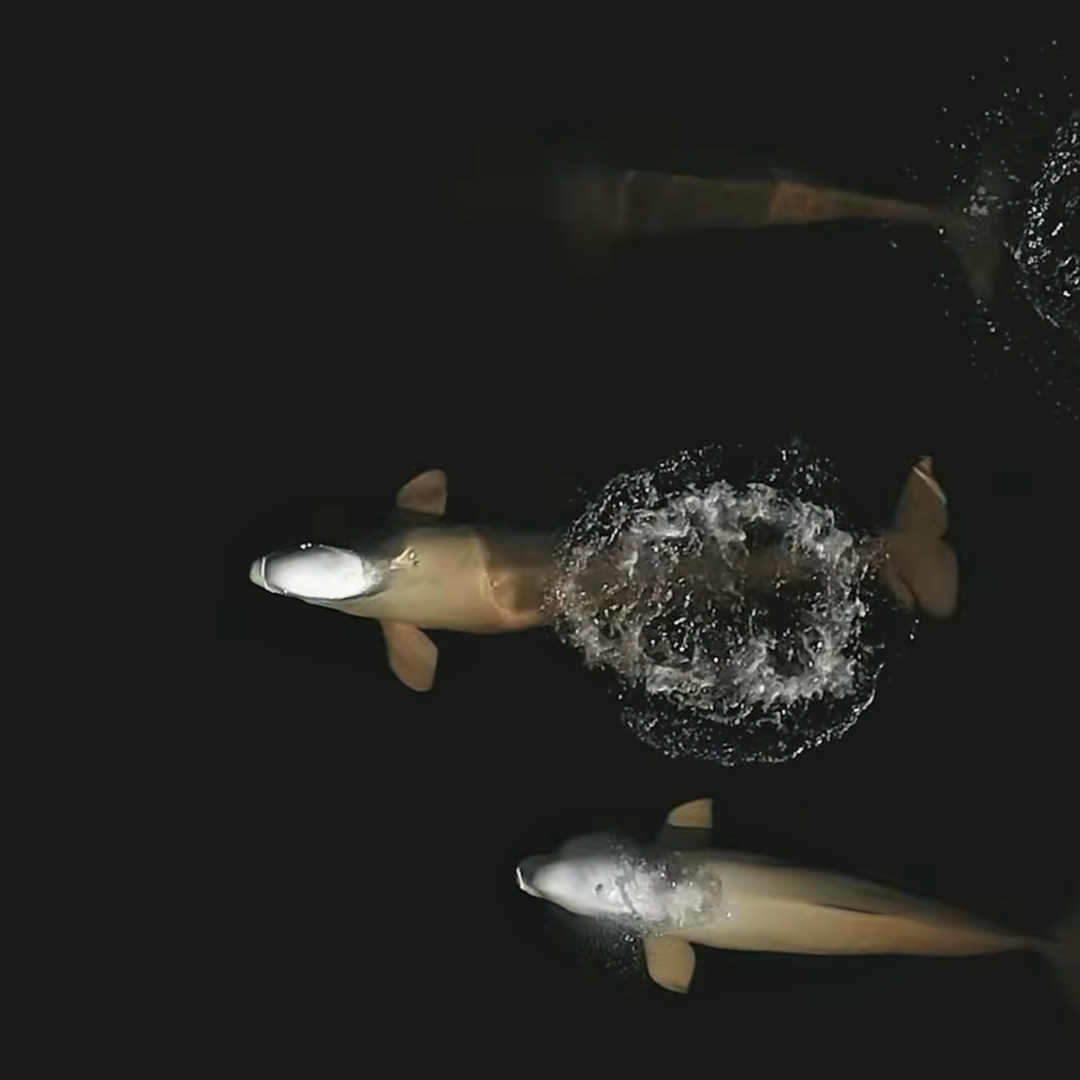
Beneath the Ice: A First Look at the Endangered St. Lawrence Beluga Whales in Their Winter Habitat
Camille Martel | 2023
Scientists have studied St. Lawrence belugas for decades, but much less is known about where they go and how they live during winter.
Camille Martel led the first expedition dedicated to filming this endangered population in its winter habitat. Ice, weather and the whales' movements made filming more difficult than anticipated, but the expedition established important groundwork for future winter research and documentation.
The project produced a documentary that aired on Radio-Canada in January 2026, and the expedition shared footage and images with scientists studying the population. WATCH FILM
WATERBIRDS TRACE PLASTIC THROUGH THE GREAT LAKES
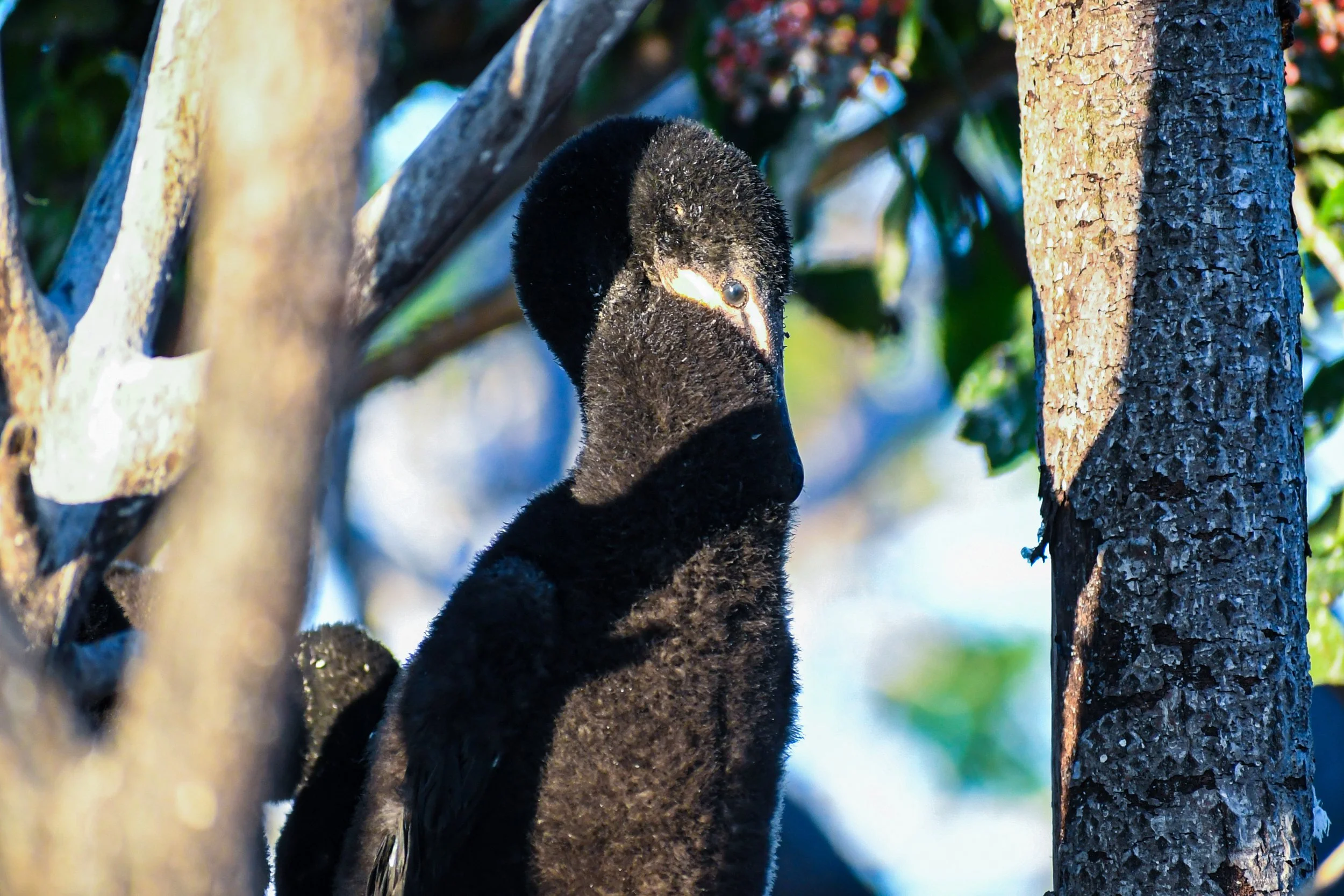
Oiseaux - How Anthropogenic debris is be-fowling the Great Lakes and infiltrating the food web.
Scott Parent | 2024
On the remote nesting islands of Lake Huron and Georgian Bay, plastic debris is turning up alongside colonies of cormorants and other waterbirds.
Scott Parent is documenting these colonies for Oiseaux, a film examining plastic pollution in the Great Lakes through the waterbirds that live there. Cormorants feed on fish and have been used as indicators of contaminants in freshwater ecosystems. Emerging research is now examining whether microplastics can also move through the food web from prey to predator.
By following the birds above and below the surface, the project connects what appears on remote shorelines with changes taking place in the water. LEARN MORE
PACIFIC SALMON REVEAL THE IMPACT OF TRANSBOUNDARY FISHERIES
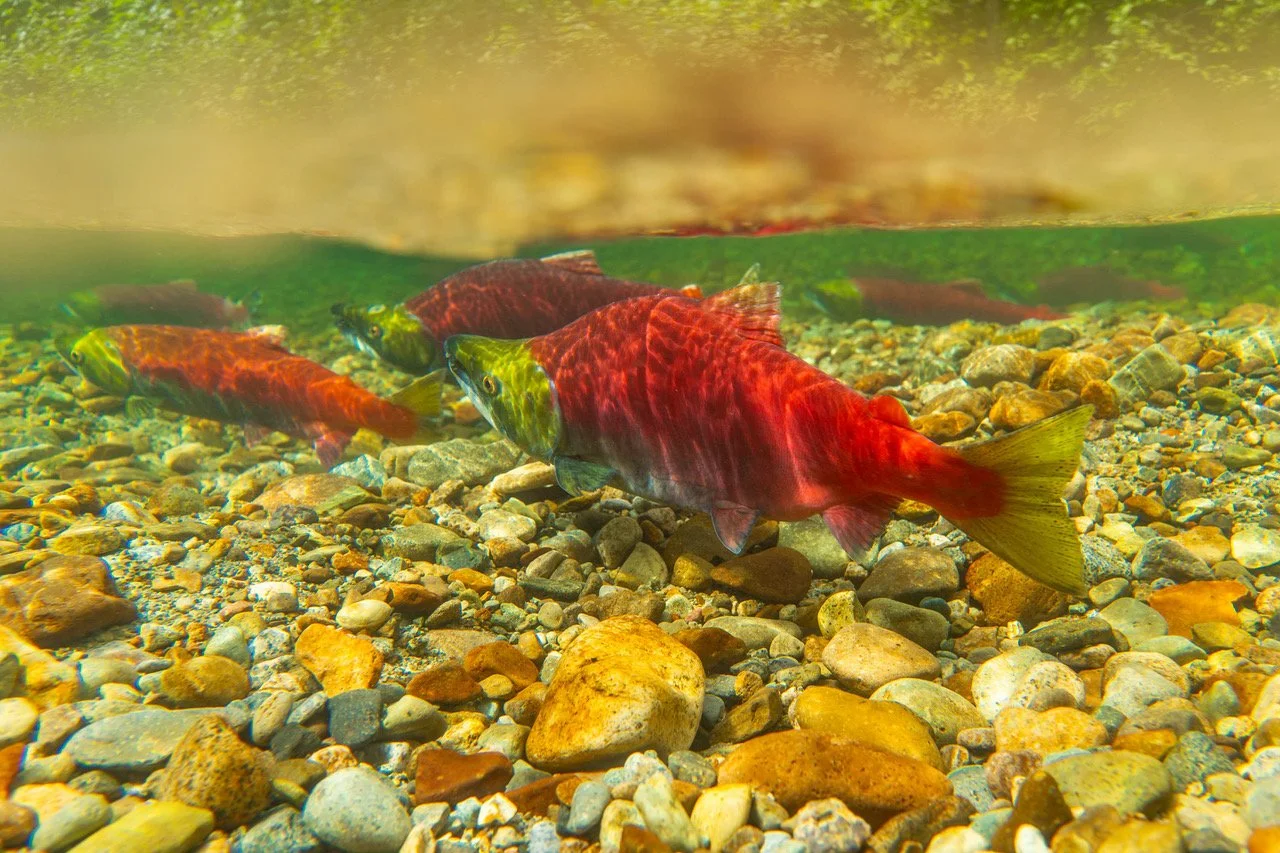
Pacific salmon can travel thousands of kilometres during their lives, crossing rivers, coastal waters and international borders before returning to spawn.
Sara Cannon is studying sockeye and Chinook salmon from British Columbia and the Yukon that are caught in mixed-stock marine fisheries along these migratory routes. Working with the First Nations Fisheries Council and other partners, she is examining how many salmon are intercepted before reaching their rivers of origin and which populations are most affected. She is also assessing how harvest levels could change to meet conservation objectives.
Her work considers how these fisheries affect First Nations’ access to salmon and their fishing rights. With the Pacific Salmon Treaty approaching renegotiation in 2028, the findings could help inform cross-border salmon management. READ THE RESEARCH
Towards social justice and sustainability in Canadian salmon fisheries
Sara Canon | 2024
Photo: Fernando Lessa 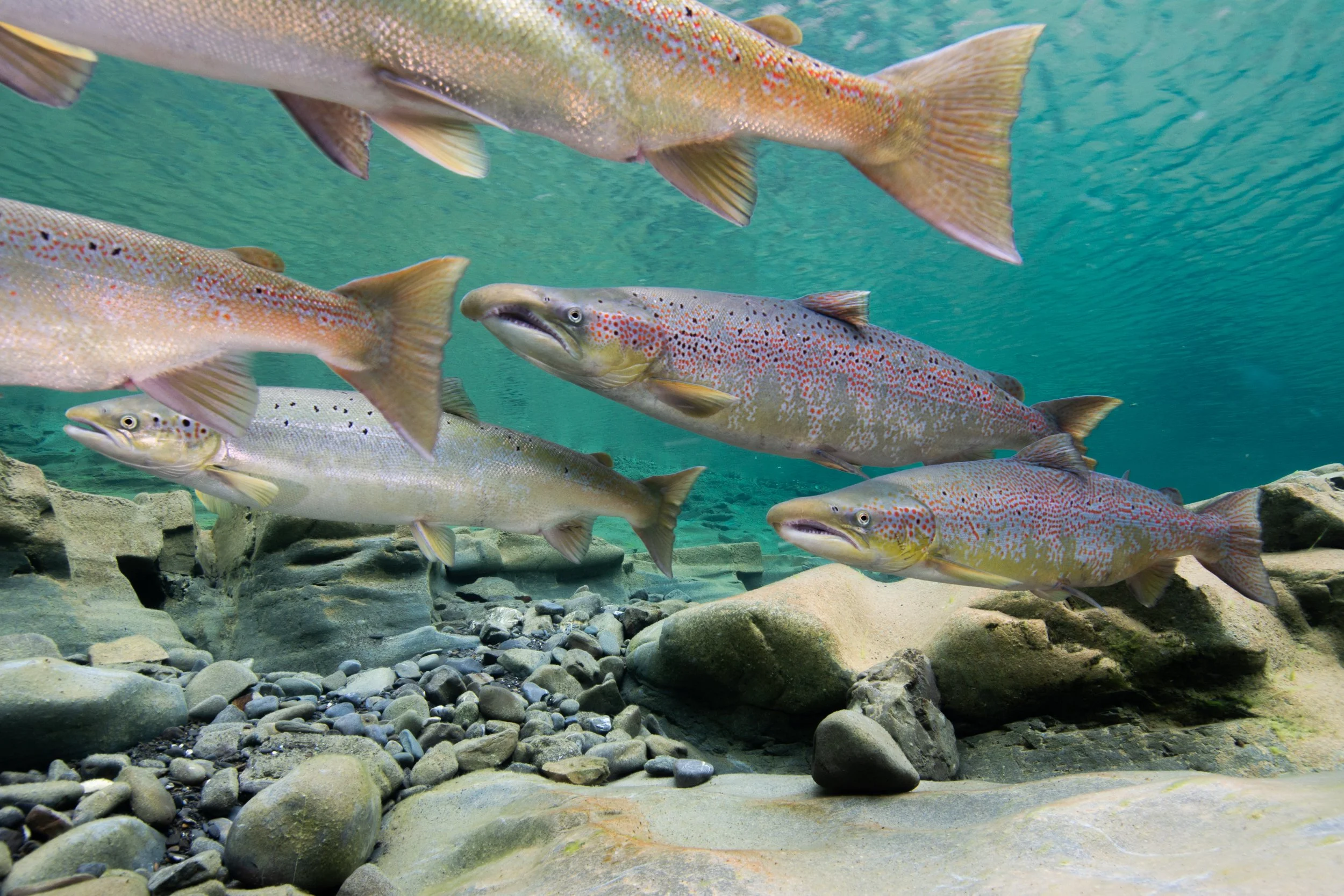
ATLANTIC SALMON CONNECT RIVERS AND OCEANS
Photo: Nick HawkinsNick Hawkins | 2023
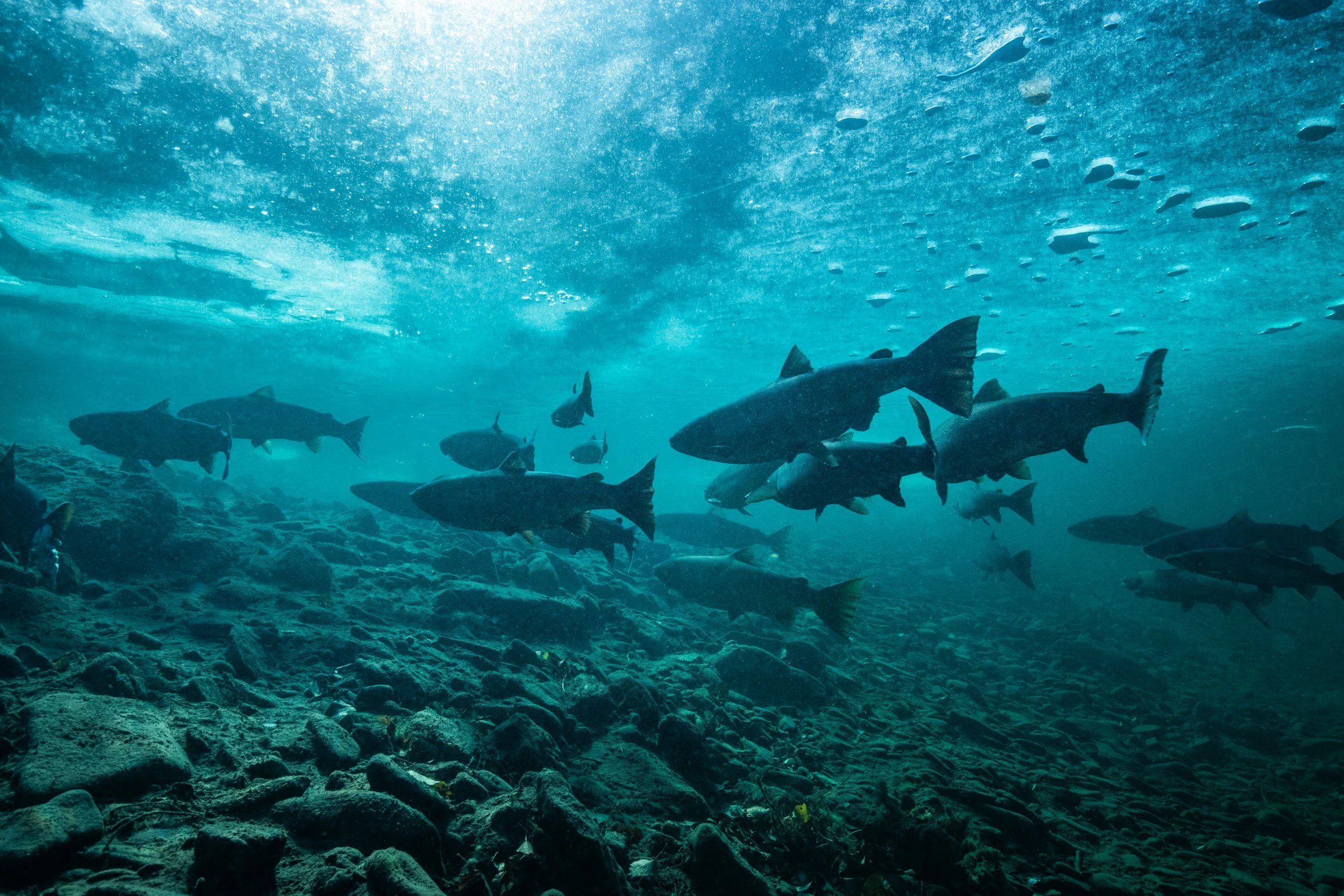
Atlantic salmon spend their lives moving between freshwater rivers and the North Atlantic, linking ecosystems separated by thousands of kilometres.
Nick Hawkins spent several years documenting the complete Atlantic salmon life cycle, working above and below the water to capture the species in rivers and marine environments. When some of the earliest stages proved impossible to film in the wild, he built a specialized studio to document young salmon as they developed. READ CANADIAN GEOGRAPHIC FEATURE
The project created what Nick describes as the largest and most comprehensive visual archive of the Atlantic salmon life cycle, with conservation organizations in North America and Europe now using the footage. The work also helped secure $950,000 USD for a feature-length documentary examining the impacts of open-net pen salmon farming, scheduled for release in 2027.
Atlantic Salmon: the fight to survive
FEATURED PROJECT
WHY BLACK BEARS NEED
OLD-GROWTH FORESTS
Ryan Tidman | Stolen Slumber: The Impacts of Old-growth Logging on Vancouver Island Black Bears
On Vancouver Island, black bears rely on an unusual feature of old-growth forests for winter shelter: cavities inside large, ancient trees.
Coastal British Columbia's winters make these trees particularly important. Large, hollow trees provide the cavities bears use to den, hibernate and ultimately, reproduce.
Working with biologist Helen Davis, Ryan Tidman spent three years documenting bears and their dens through photography, video and remote camera traps. To avoid disturbing hibernating bears, cameras had to be installed before winter and left unattended for months. Cameras frequently failed because of dead batteries or full memory cards, and bears occasionally tampered with the equipment. Ryan ultimately extended the project by a year to capture a key missing image and complete the story.
Stolen Slumber highlights a lesser-known consequence of old-growth logging: the loss of winter den habitat for black bears. The photographs and video will also support Davis’s ongoing work with land managers, conservation groups and forestry professionals, including outreach presentations and bear-den identification workshops intended to help safeguard denning trees and critical bear habitat.
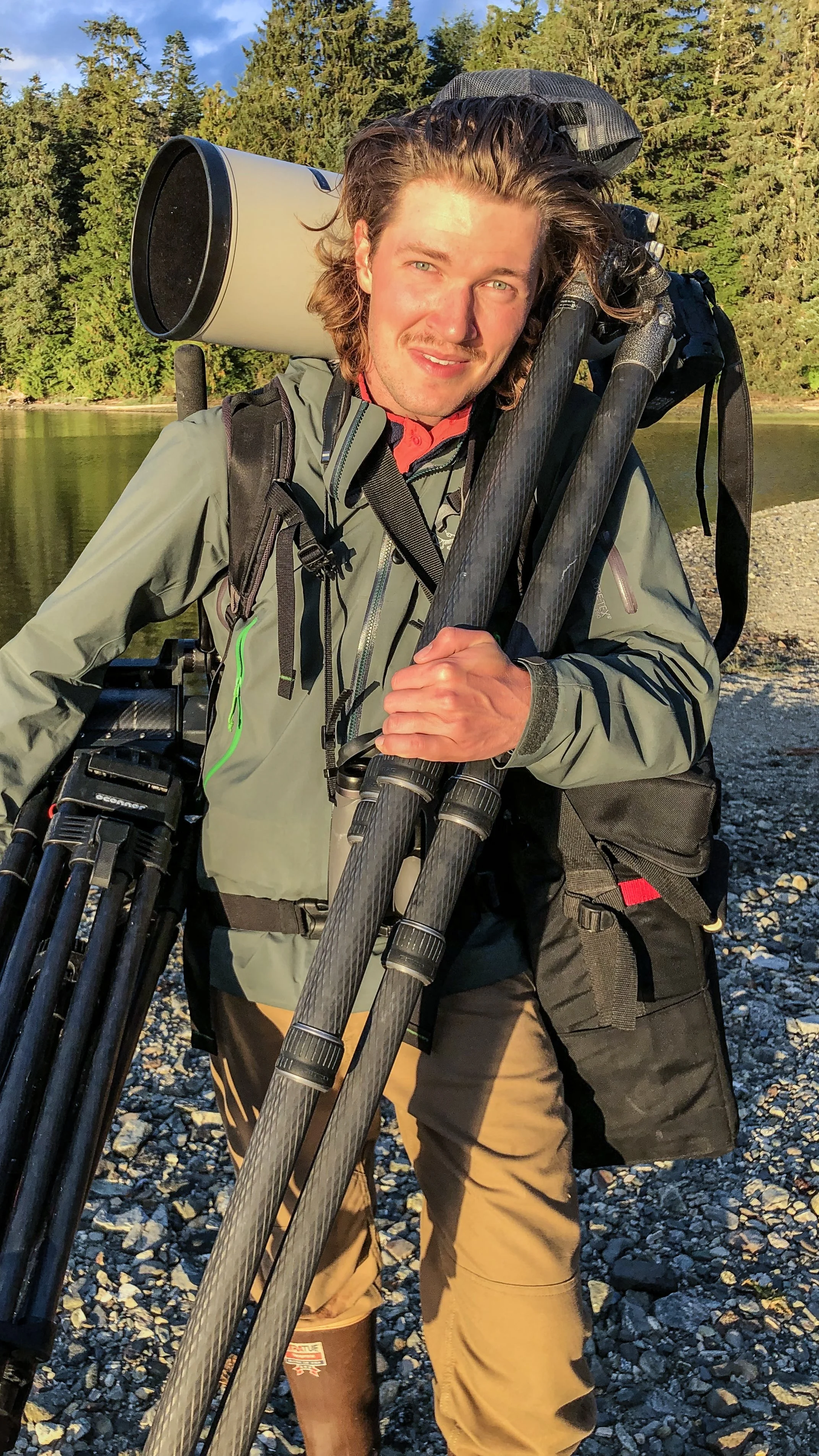
2022 Trebek Grantee | Ryan Tidman
Project Outcomes:
Three-year visual story documenting how Vancouver Island black
bears rely on old-growth trees for winter densPhotography and video documenting the loss of critical den habitat
as old-growth forests are loggedProject materials supporting biologist Helen Davis’s work to safeguard denning trees and critical bear habitat
Visuals used in outreach and training to help forestry professionals recognize black bear den trees
Project shared with wider audiences through a Canadian Geographic podcast and Can Geo Talk
Featured in the September 2026 issue of National Geographic
Digital feature in National Geographic in October 2026
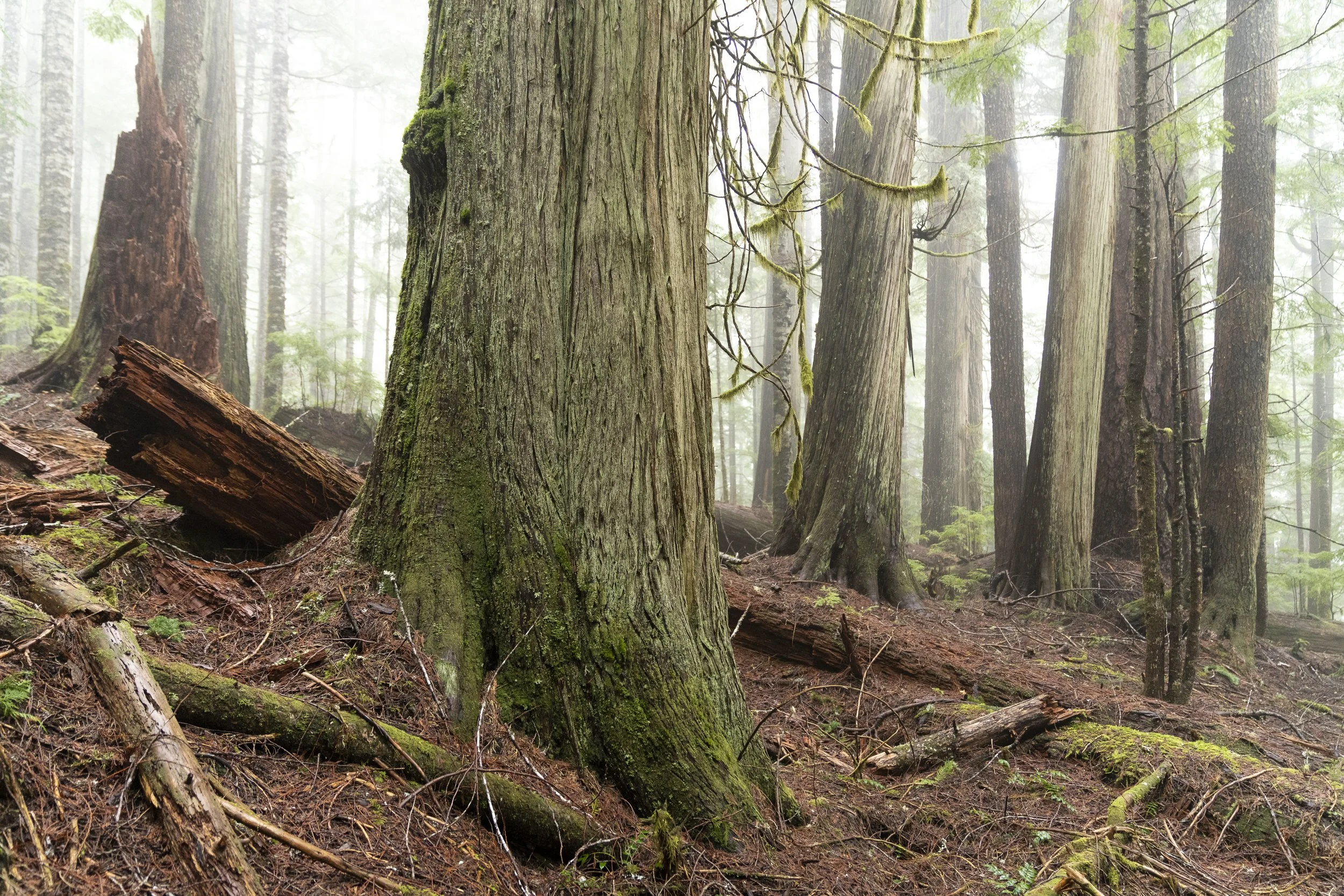
An old-growth forest on Vancouver Island is shrouded in early-morning mist. These forests contain large, hollow trees that black bears use for winter dens.
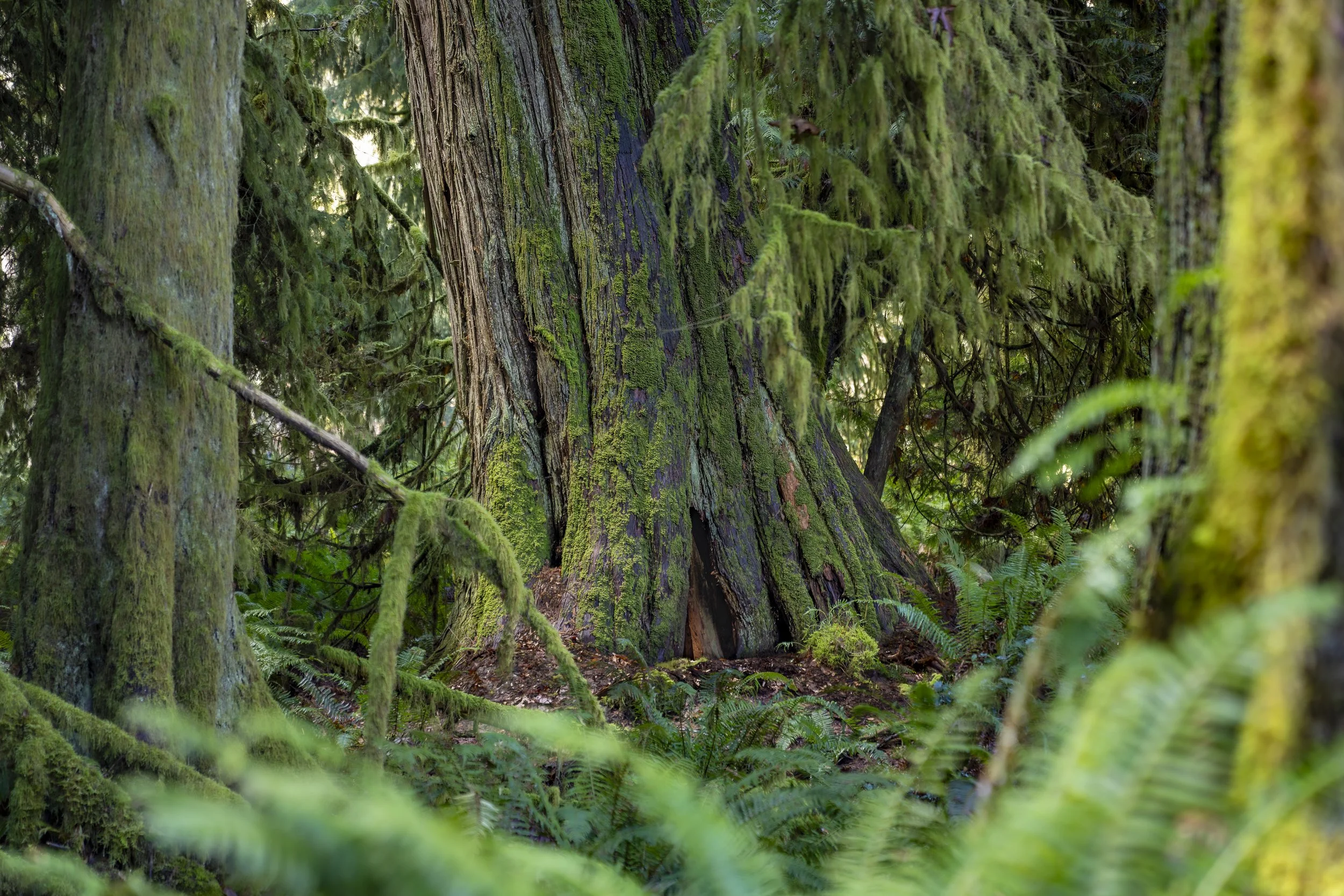
An old-growth cedar dwarfs the surrounding trees on Vancouver Island. At its base, a cavity provides sheltered space for a black bear to spend the winter.
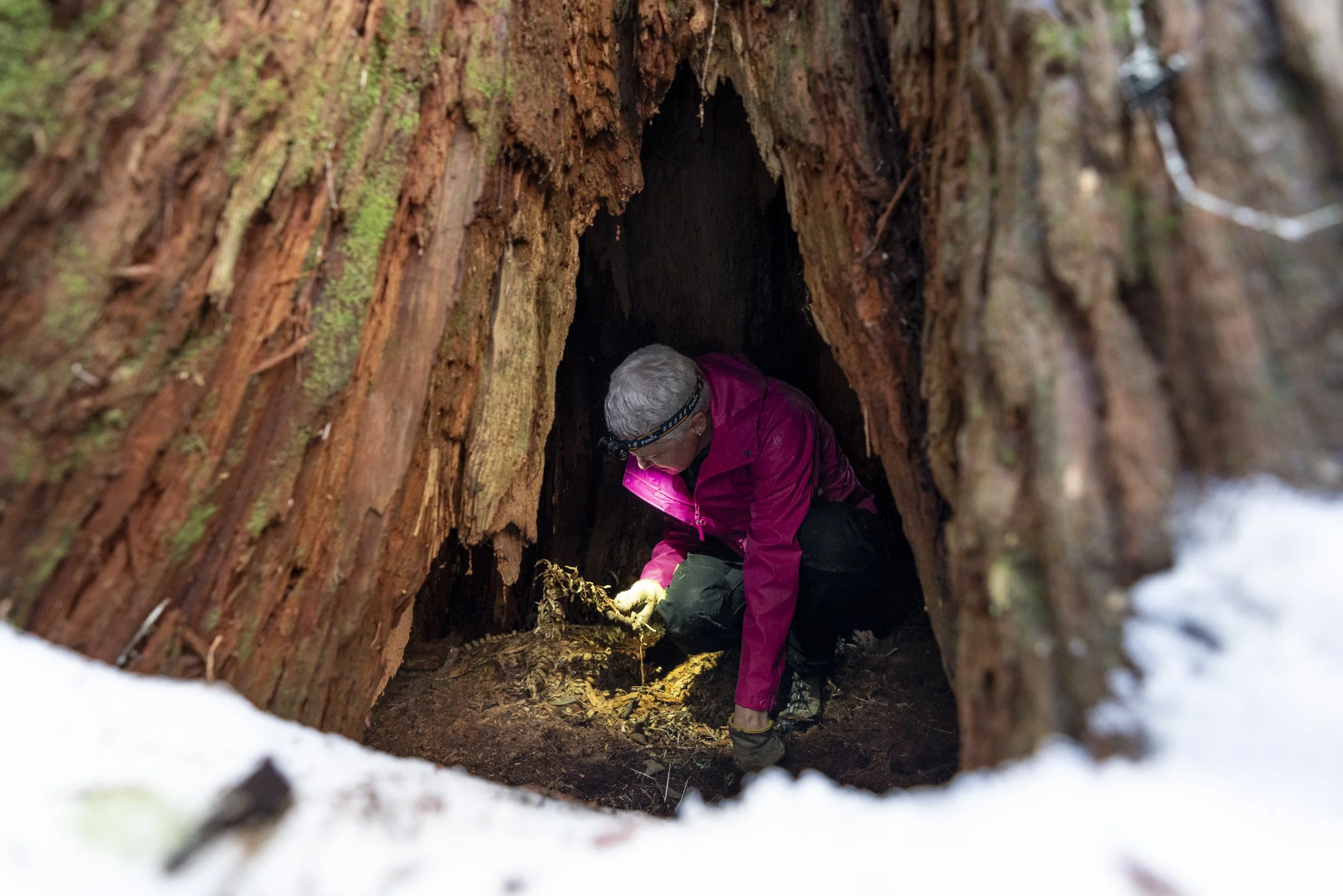
Bear biologist Helen Davis inspects leafy debris inside a black bear den on Vancouver Island. The colour of foliage in a den can indicate how recently it was used.
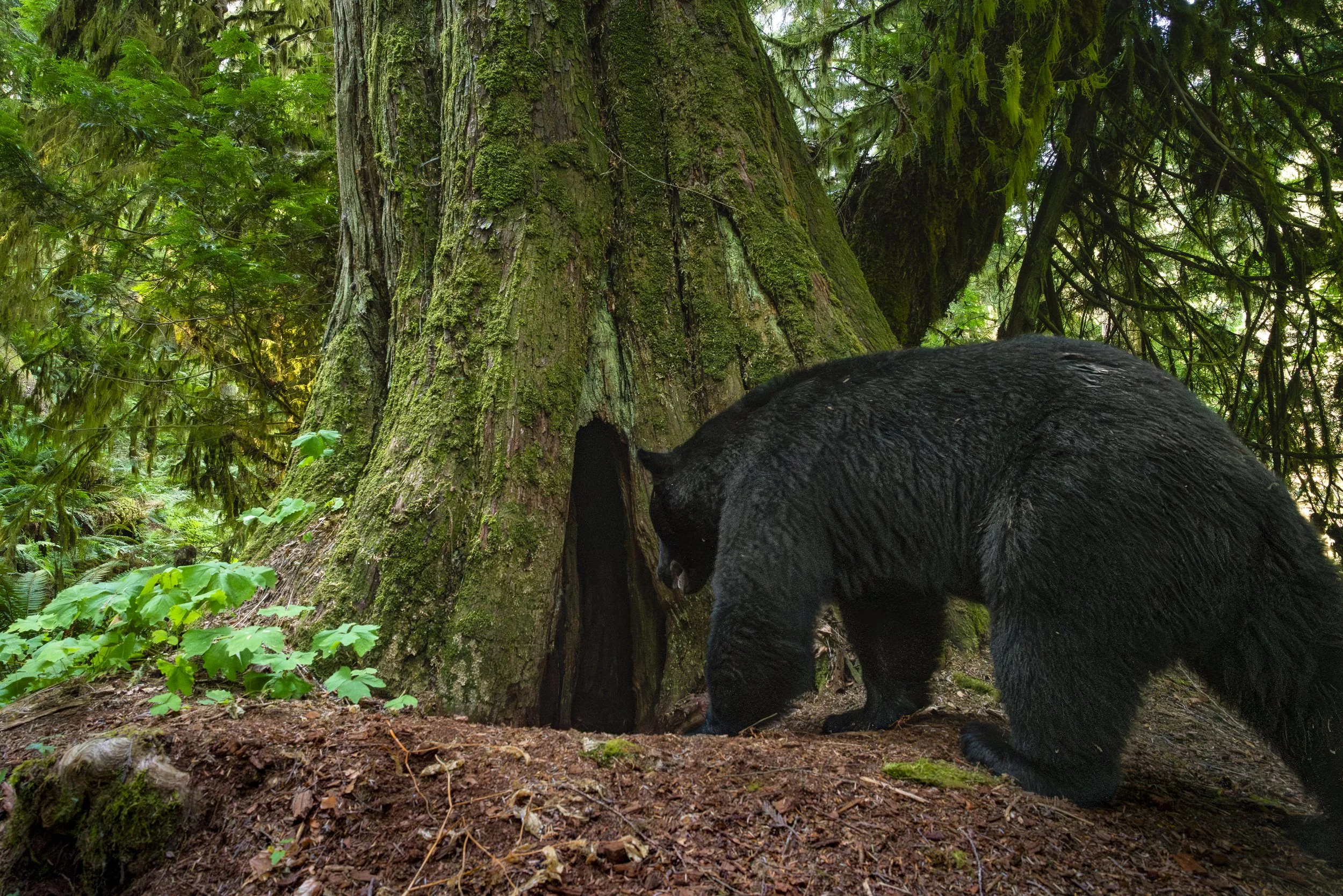
A black bear enters a den cavity at the base of an old-growth yellow cedar. A mound of earth at the entrance has accumulated through years of excavation and use.
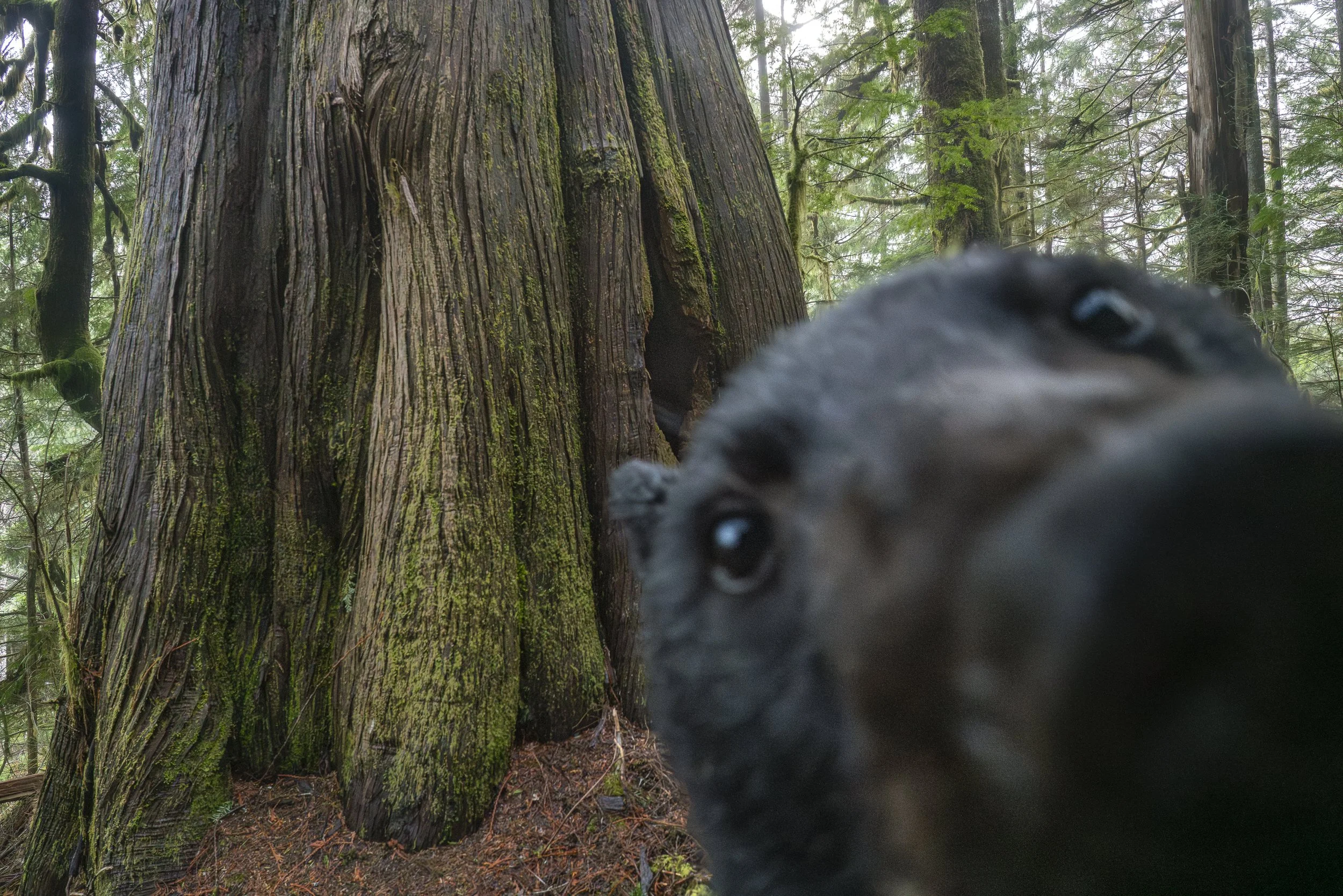
A curious black bear investigates one of Ryan Tidman’s remote cameras. Directly behind it is a den cavity in an old-growth cedar, one of the sites monitored during the three-year project.
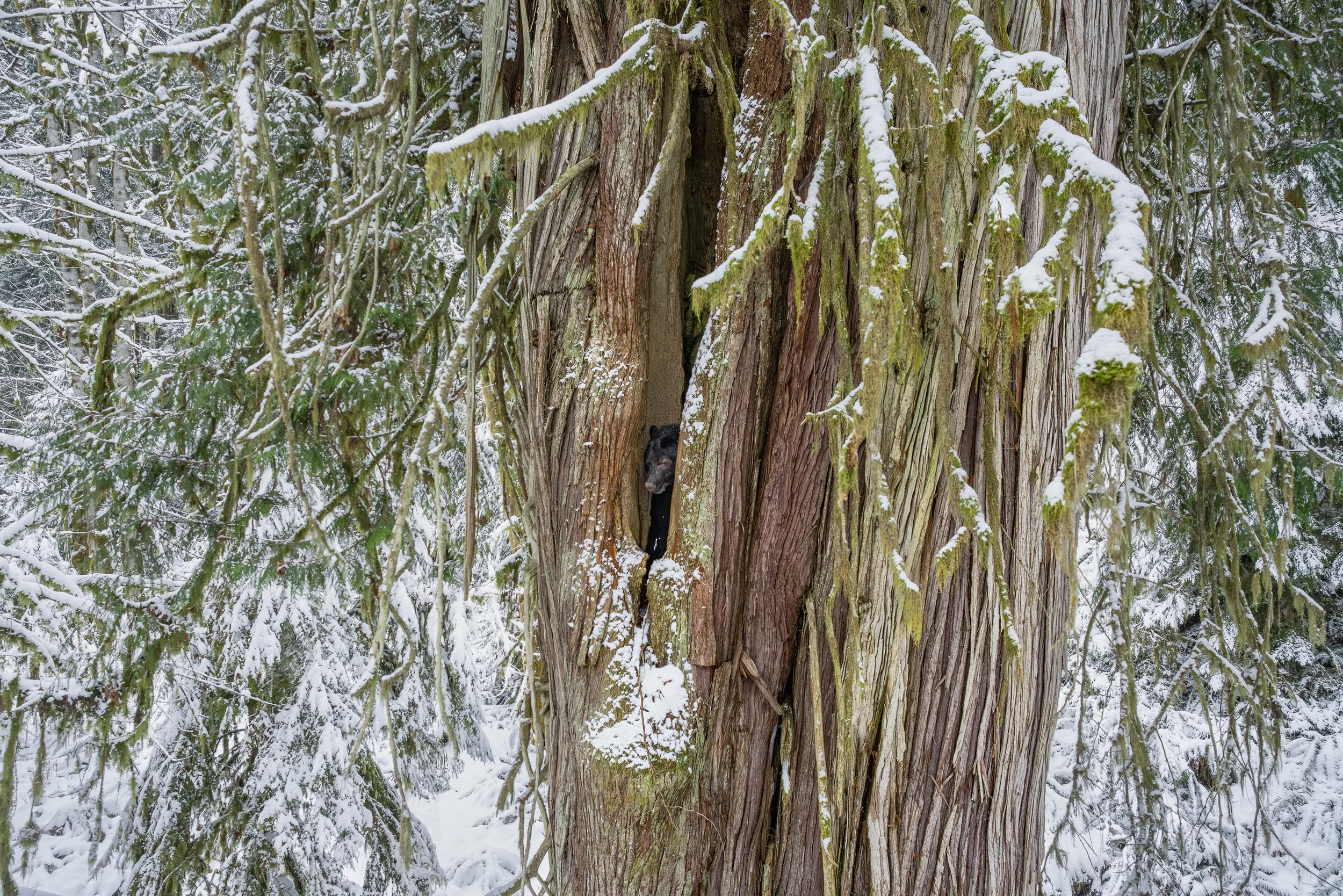
Nearly 30 feet above the forest floor, a black bear looks out at fresh snow from its arboreal den in a massive old-growth cedar. Trees must reach an exceptional size before cavities can become large enough to shelter a bear through winter.
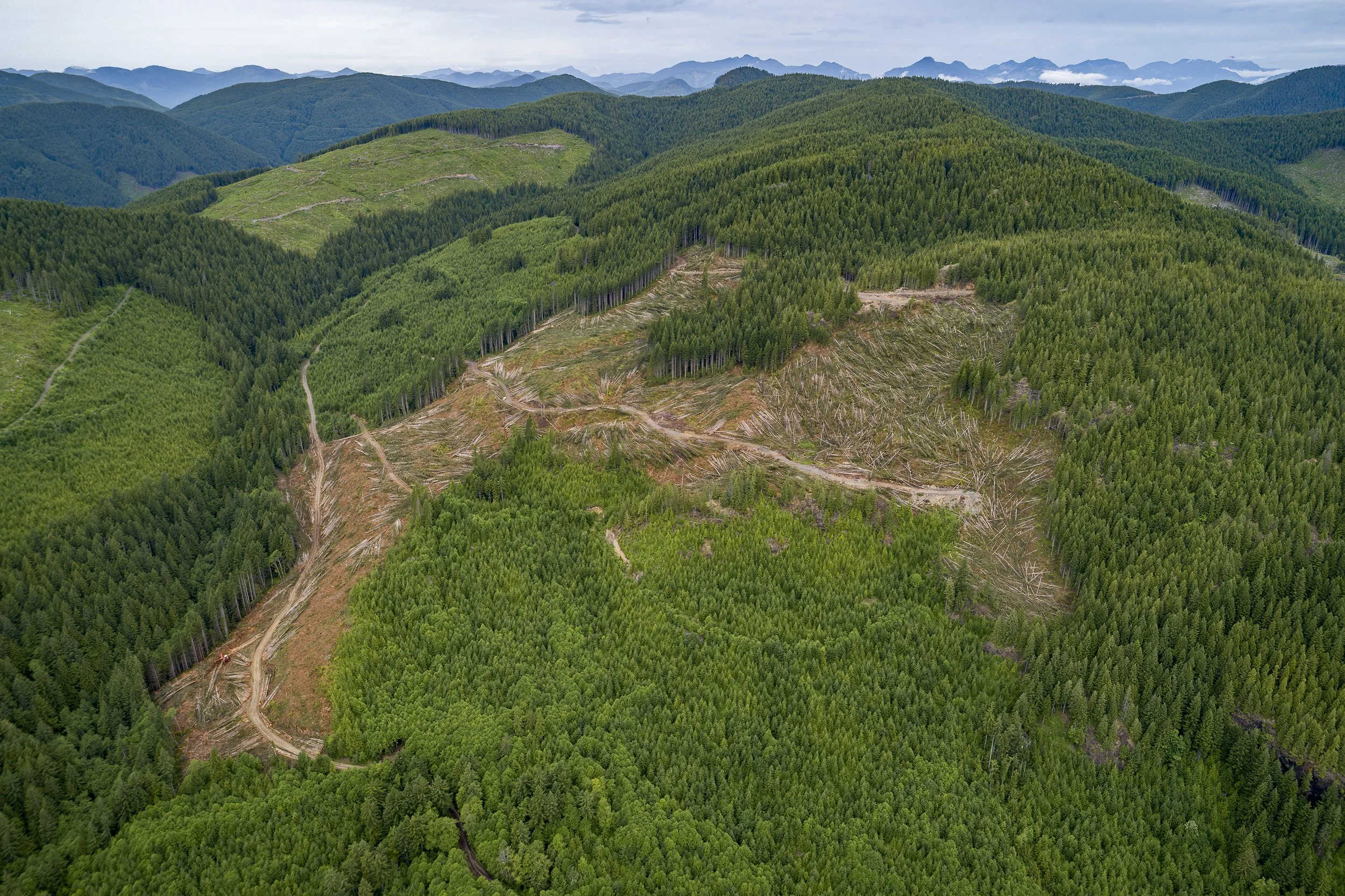
Cutblocks and logging roads cut across Vancouver Island's forested landscape. When loggers remove old-growth trees, the den cavities that black bears rely on for winter shelter can disappear with them.
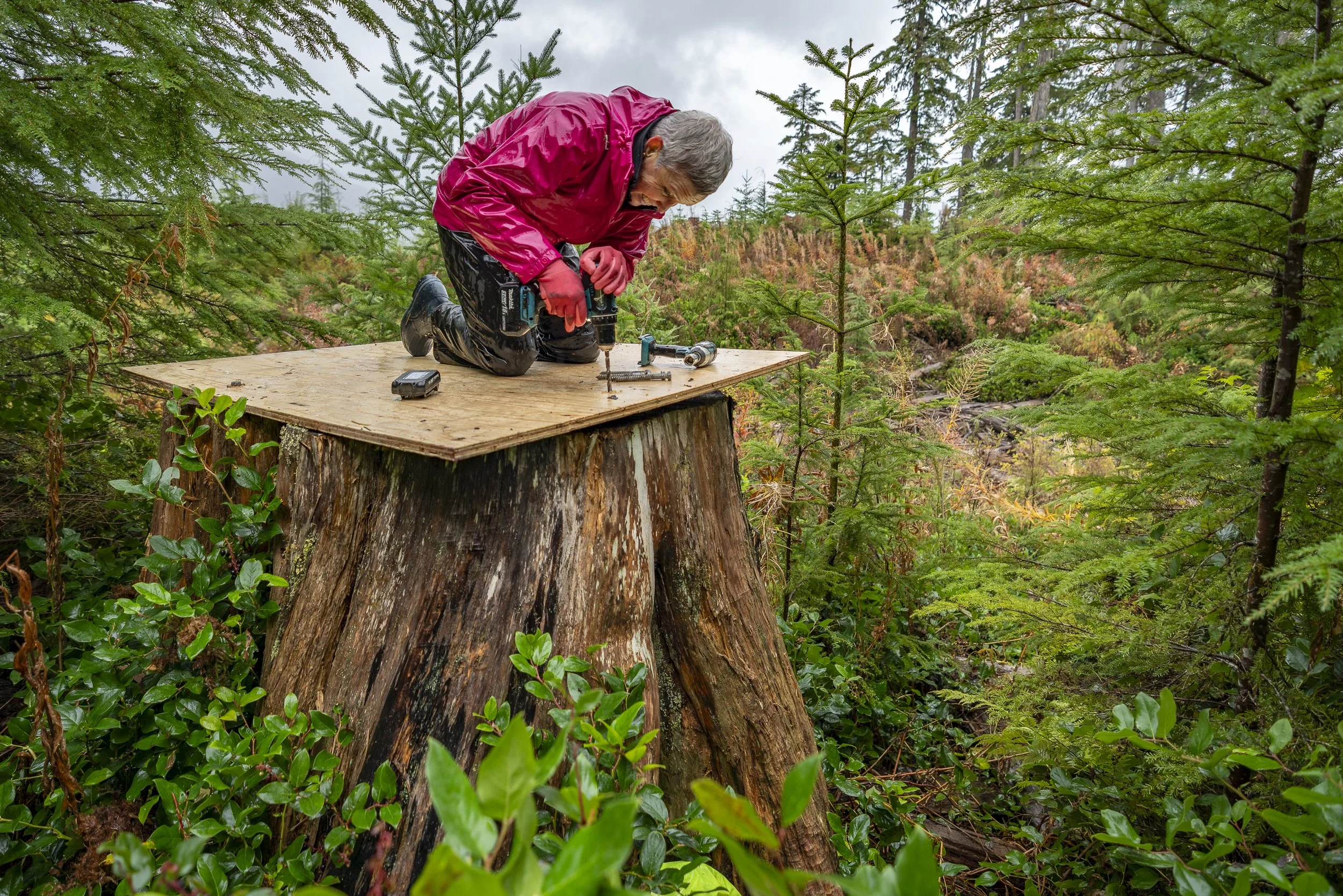
Bear biologist Helen Davis builds a temporary den in the remains of an old-growth stump on Vancouver Island. Known as “stump dens,” these structures can provide shelter as natural den sites diminish, but the stumps eventually rot away.
IMPACT BEYOND
THE TREBEK GRANT
FROM CERVID RESEARCH
TO LANDSCAPE LESSONS
Rhiannon Kirton | Comparing historic and current cervid
population estimates in the Shuswap Nation territory
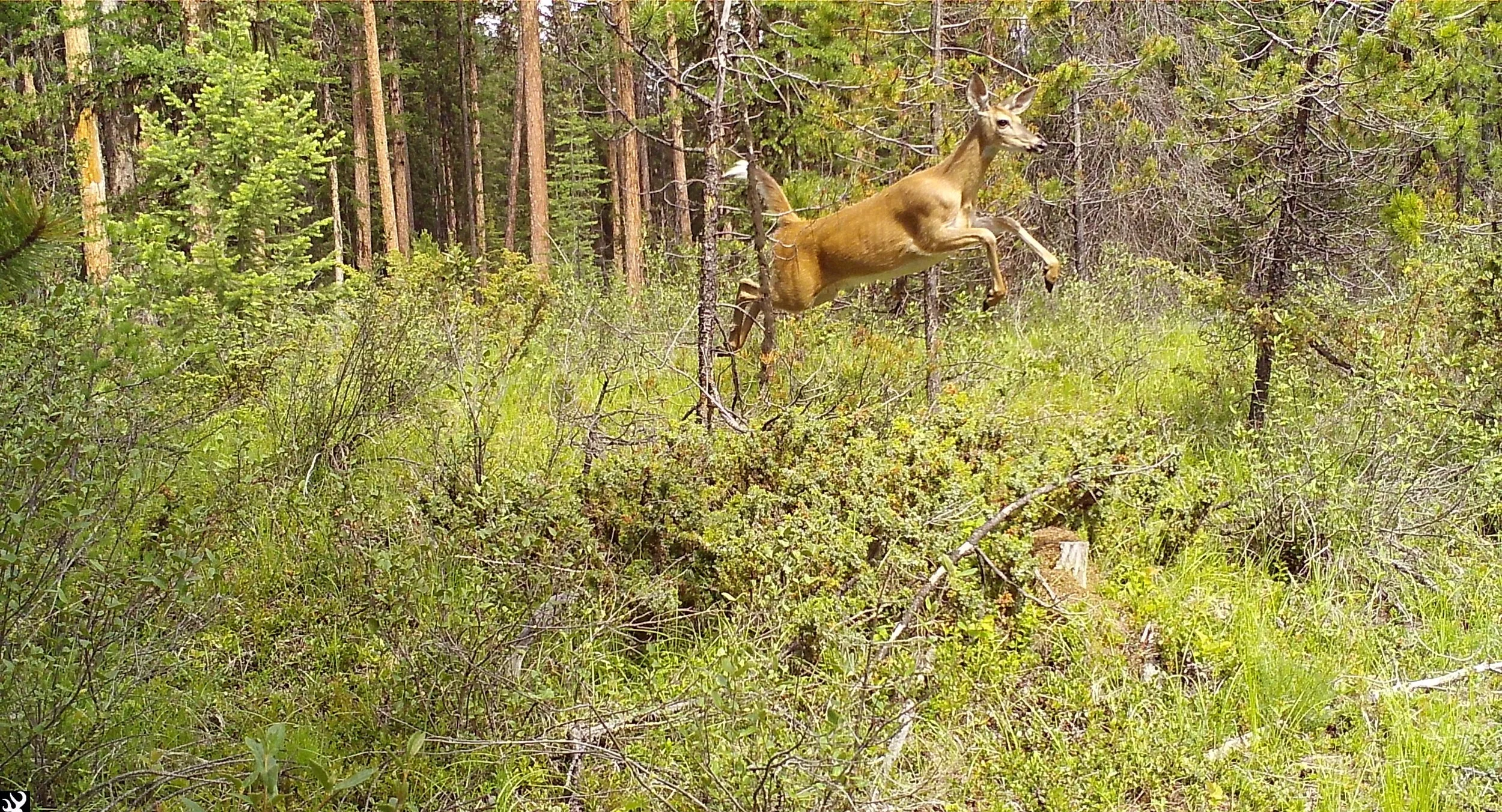
Across southeastern British Columbia, cervids (the deer family) depend on healthy grasslands for food and habitat. These same landscapes support Indigenous food systems and ranching, but decades of habitat loss and changing land use have placed them under increasing pressure.
Through her Trebek-supported project, Rhiannon Kirton worked with the Shuswap Band to better understand changes in cervid populations and strengthen wildlife conservation. Camera traps and community knowledge pointed to a larger issue: changes in habitat and forage were affecting wildlife across the landscape.
Building on what emerged from that work, Rhiannon spearheaded and helped organize What’s the Future of Grasslands and Rangelands in the East Kootenay? The three-day symposium brought together more than 130 people, including First Nations representatives, researchers, ranchers and land managers, to consider the future of the region’s grasslands and the wildlife and communities that depend on them. The event included partners from the Shuswap Band, Ktunaxa Nation Council and the Government of British Columbia, along with conservation and land-management organizations.
The gathering identified shared priorities for restoring grassland health and improving how people work together across the landscape. Its recommendations called for greater First Nations leadership and better coordination of restoration and land management across the region.
Rhiannon has continued to use the skills she learned through this work to build relationships and advance stewardship actions across the Province, whether assessing range health or monitoring other cervid populations, such as mountain caribou, using camera traps. She continues to build relationships and advance projects that support Indigenous communities to continue traditional activities on the land.
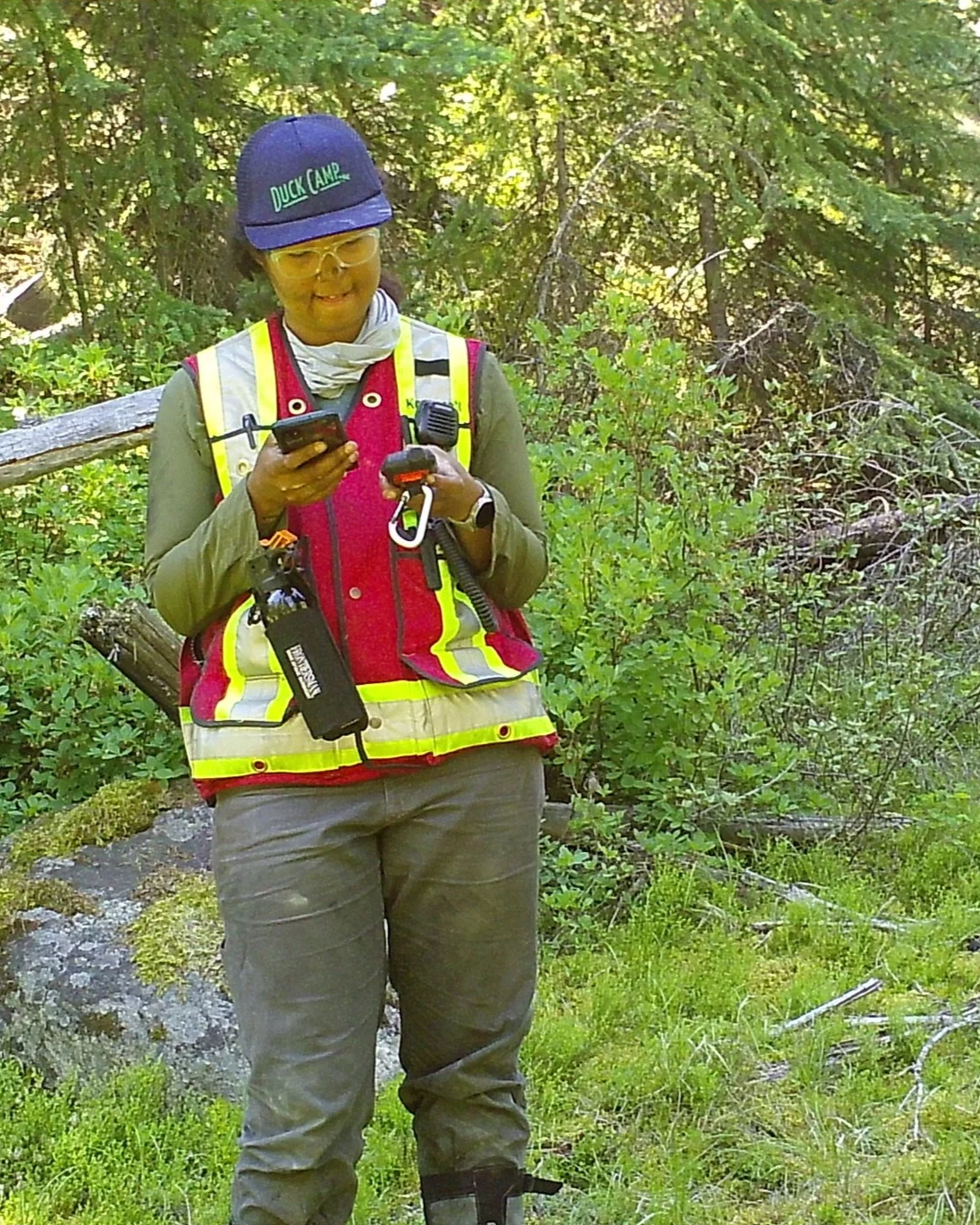
2021 Trebek Grantee | Rhiannon Kirton
Project Outcomes:
Provided an understanding of shifting baselines for elk populations compared to historical numbers
Identified nutrition and range health as potential factors affecting elk populations
Helped convene more than 130 people around the future of East Kootenay grasslands
Identified shared priorities for grassland restoration and land management
Provided knowledge that continues to support Indigenous communities in achieving stewardship goals
TREBEK AT THE ROYAL BC MUSEUM
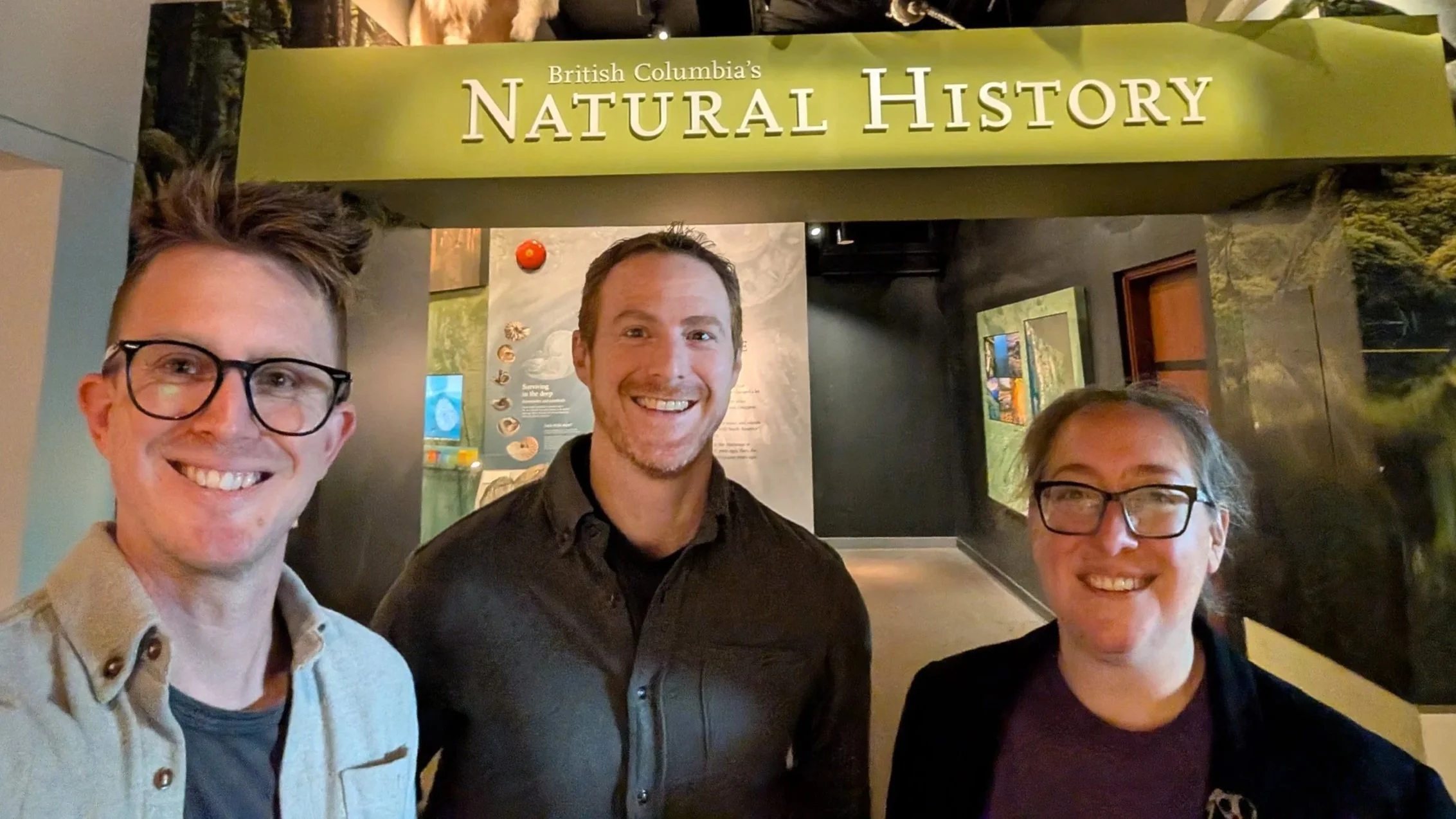
A new climate change exhibit brings together the work of three Trebek Grantees
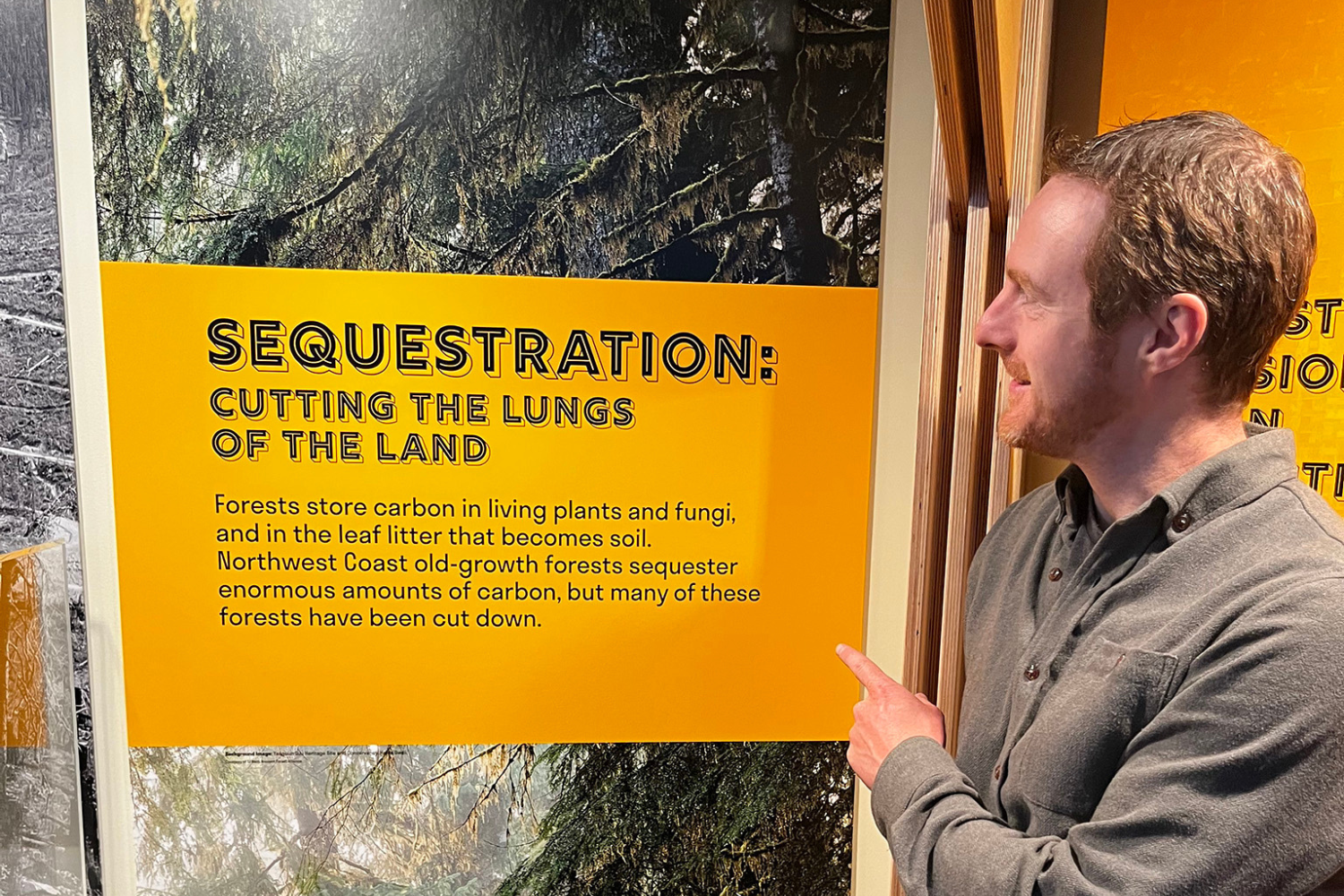
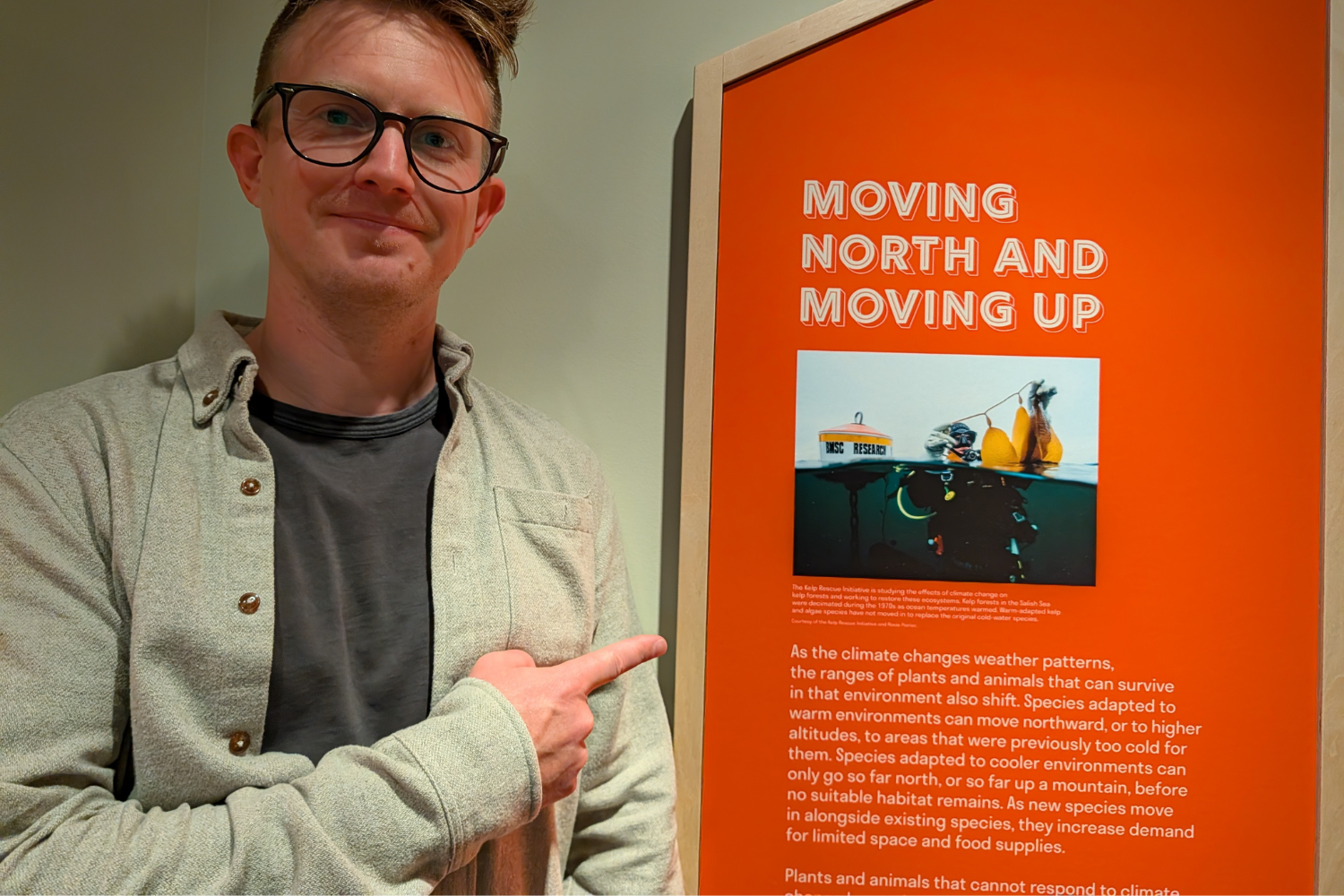
Changes in British Columbia’s climate are visible beneath the waters of the Salish Sea and in some of the province’s oldest forests.
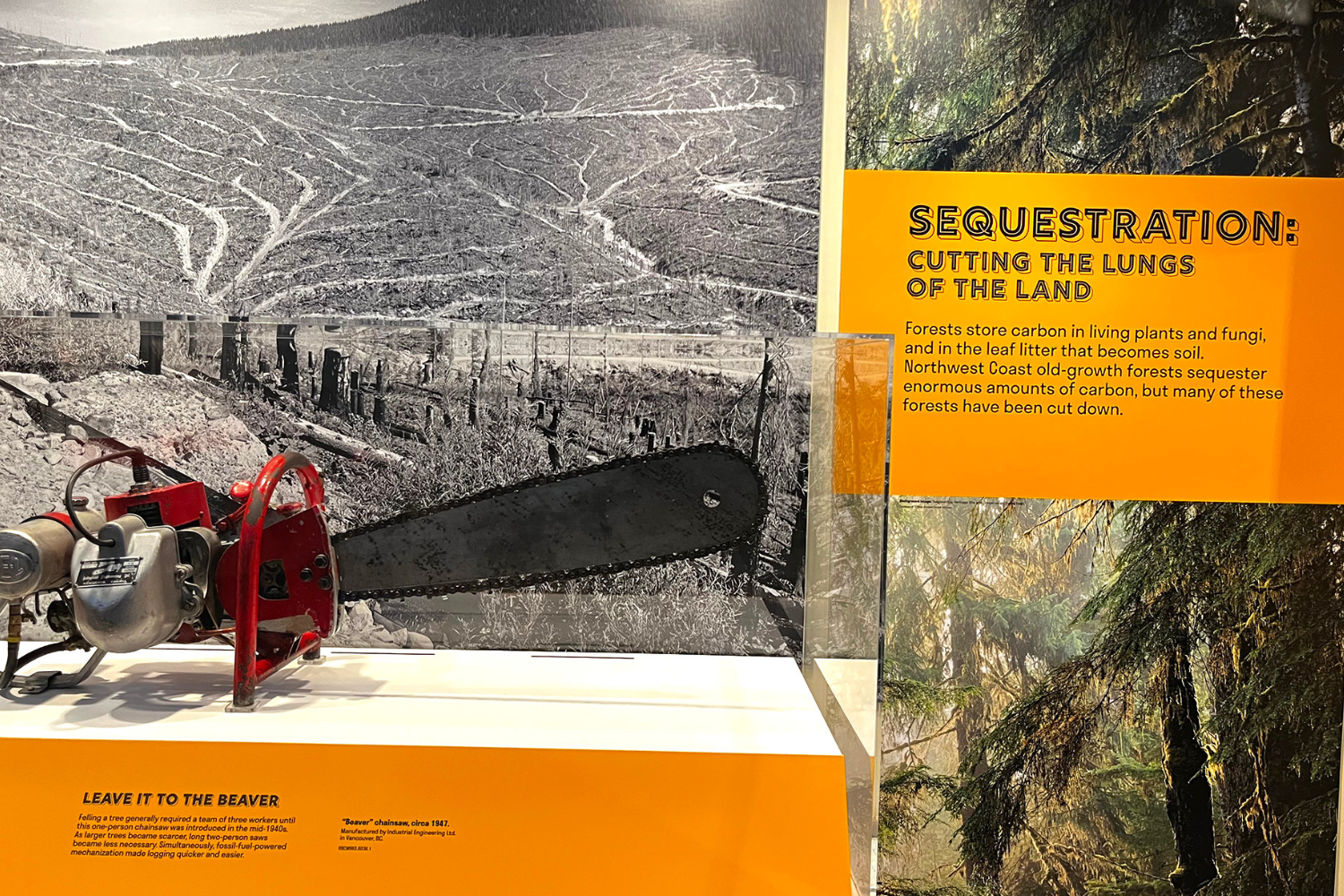
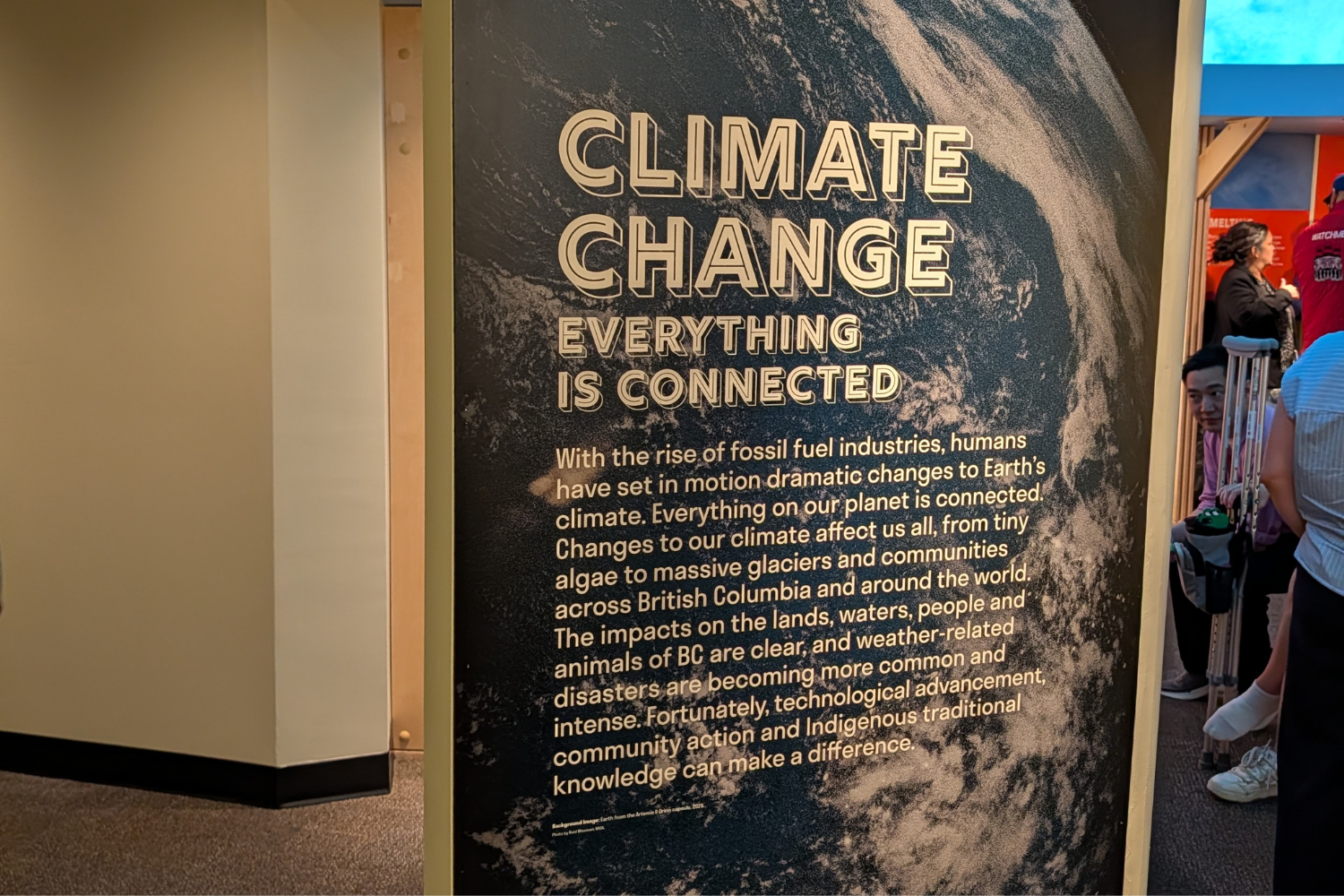
A new exhibit at the Royal BC Museum examines those changes through the work of three Trebek Grantees. Primarily curated by Trebek Grantee and Royal BC Museum palaeontologist Victoria Arbour, Climate Change: Everything is Connected draws on research by Brian Timmer and photography by TJ Watt.
Brian’s Trebek-supported research traces decades of change in Salish Sea kelp forests. TJ’s photographs of old-growth forests, including recent work from Haida Gwaii, show how these ecosystems store carbon and what is lost when they are logged.
The exhibit places their work within a broader examination of how climate change is reshaping British Columbia, from changing ocean conditions to the effects of forest loss.
GRANTEE AWARDS + RECOGNITION
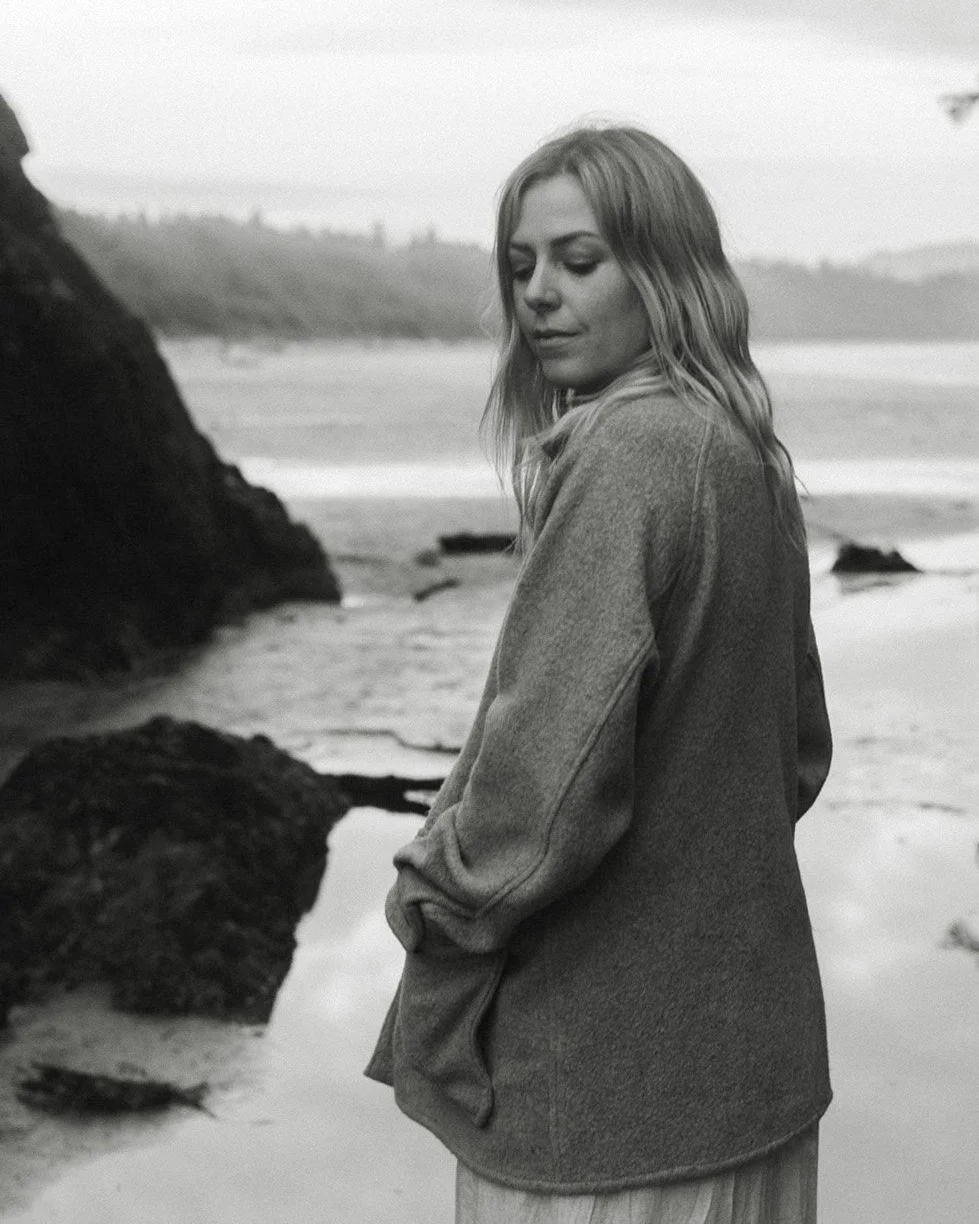
2025 TREBEK GRANTEE | MELISSA RENWICK | SEARCHING FOR THE REAL TOFINO
Melissa Renwick has been named a finalist for the 2025/26 Salt Spring National Art Prize for work from her Trebek-supported project, Searching for the Real Tofino.
Through photography and interviews, Melissa is documenting people whose lives are closely connected to the west coast of Vancouver Island, looking beyond Tofino’s image as a tourism destination to document the people who live and work there.
In a Q&A published by the Salt Spring National Art Prize, Melissa described how Trebek support allowed her to return throughout the seasons and spend more time with the people she photographs. Searching for the Real Tofino: A Q&A with Melissa Renwick
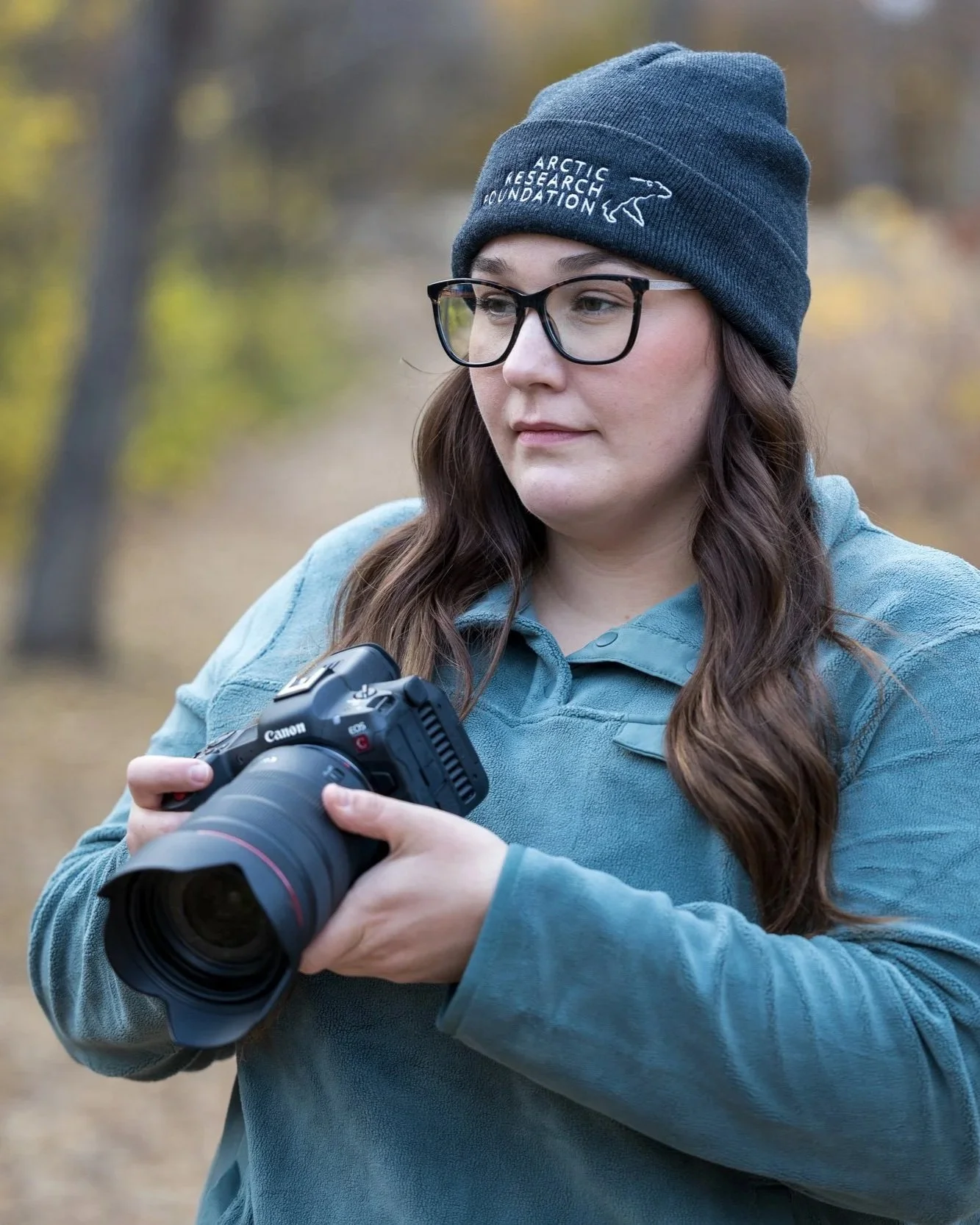
2025 TREBEK GRANTEE | KAITLYN VAN DE WOESTYNE | INUUSIVUT SAPIRNAQTUQ
Inuusivut Sapirnaqtuq – Our Life is Very Tough received four nominations at the 2026 Yorkton Film Festival: the Ruth Shaw Award – Best of Saskatchewan, Emerging Filmmaker, Outstanding Colour Grading and Documentary Science/Nature/Technology.
Created by Kaitlyn Van De Woestyne and Inuvialuk Knowledge Holder Angus Cockney, the documentary follows Angus as he returns to the land near Tuktoyaktuk, Northwest Territories. The film traces changes to the coastline and permafrost through his memories of growing up on the land, connecting environmental change with its effects on Inuvialuit life and culture. 2026 Yorkton Film Festival Winners & Nominees

2021 TREBEK GRANTEE | KEHKASHAN BASU | ENVIRONMENTAL EDUCATION
Kehkashan Basu has been named the 2026 YWCA Toronto Young Leader of Distinction, recognizing her work advancing environmental sustainability and creating opportunities for young people to lead change in their communities.
Through Green Hope Foundation, Kehkashan has built programs that move environmental education beyond the classroom. Her Trebek-supported project gave young people opportunities to turn concerns about climate and the environment into hands-on projects at their schools and in their communities, while developing the skills and confidence to lead projects of their own. YWCA Toronto 2026 Award Recipients
UPCOMING EVENTS

National Geographic Live brings leading explorers to audiences across Canada through a series of live events. These sessions extend fieldwork into public conversation, connecting audiences with the people and ideas shaping our understanding of the world.
November 8–10, 2026 | Toronto, ON
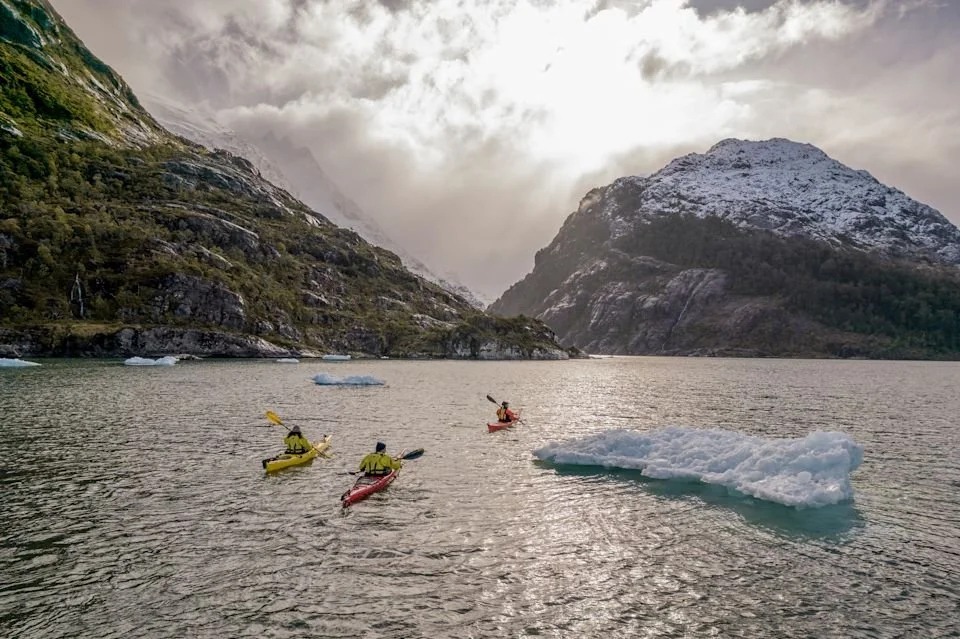
Gregg Treinish | Adventure for Change
Frozen peaks and remote rivers can hold scientific data that is hard to reach. Biologist and National Geographic Explorer Gregg Treinish works with outdoor adventurers to collect samples in some of the planet’s most inaccessible places, delivering data to scientists that could change how we understand the world around us.
November 1–2, 2026 | Calgary, AB
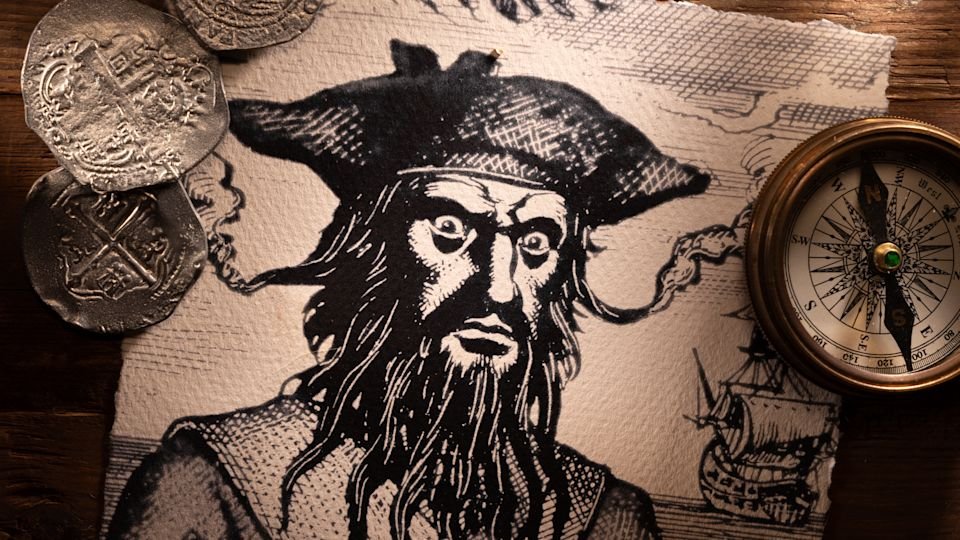
Lisa Briggs | A Pirate’s Life
Pirates were more than the legends they left behind. Archaeologist and National Geographic Explorer Lisa Briggs follows their trail from the Mediterranean Sea and the Roman Empire to China’s Pirate Queen and Blackbeard’s flagship, using archaeology to uncover what piracy can reveal about life and trade at sea.
January 24–25, 2027 | Calgary, AB
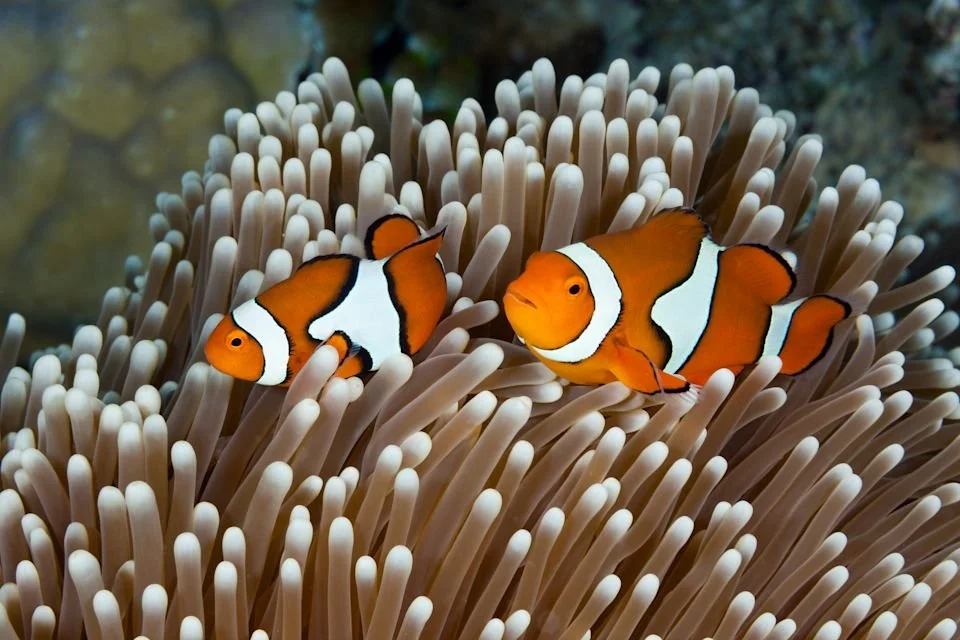
Erika Woolsey | Diving the Great Barrier Reef
Once a year, millions of coral polyps on the Great Barrier Reef reproduce, turning the water into an underwater snow globe. Behind the spectacle lies a harsher reality: more than half of the reef’s coral has died. Marine biologist and National Geographic Explorer Erika Woolsey dives into this changing ecosystem to meet its colourful residents and examine what remains in one of Earth's most celebrated reefs.
November 18, 2026 | Vancouver, BC
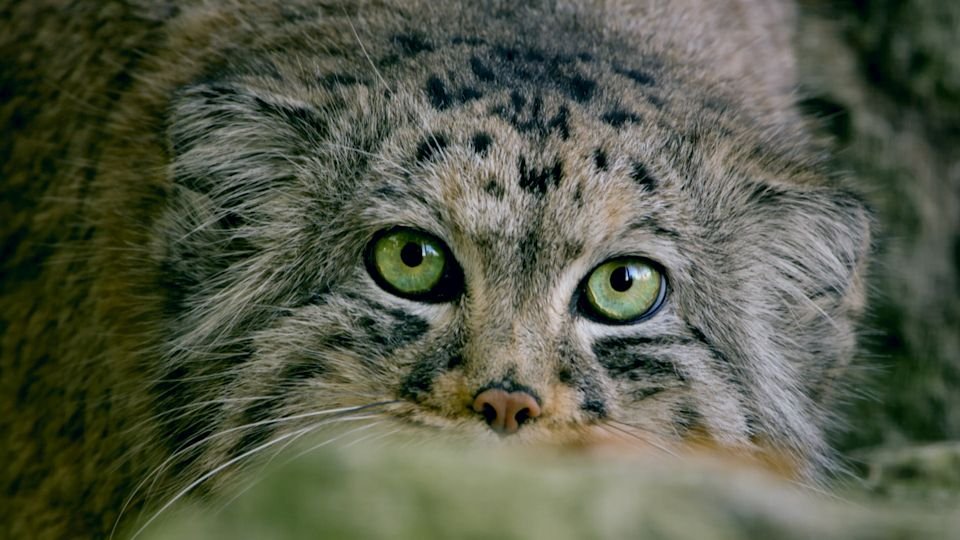
Sandesh V. Kadur | Wild Cats Revealed
Beyond India’s better-known big cats lives a remarkable cast of smaller felines. Photographer, filmmaker and National Geographic Explorer Sandesh Kadur searches for Pallas’s cats in the Himalaya, fishing cats that plunge into water for prey and elusive clouded leopards, bringing some of the country’s least-known wild cats into view.
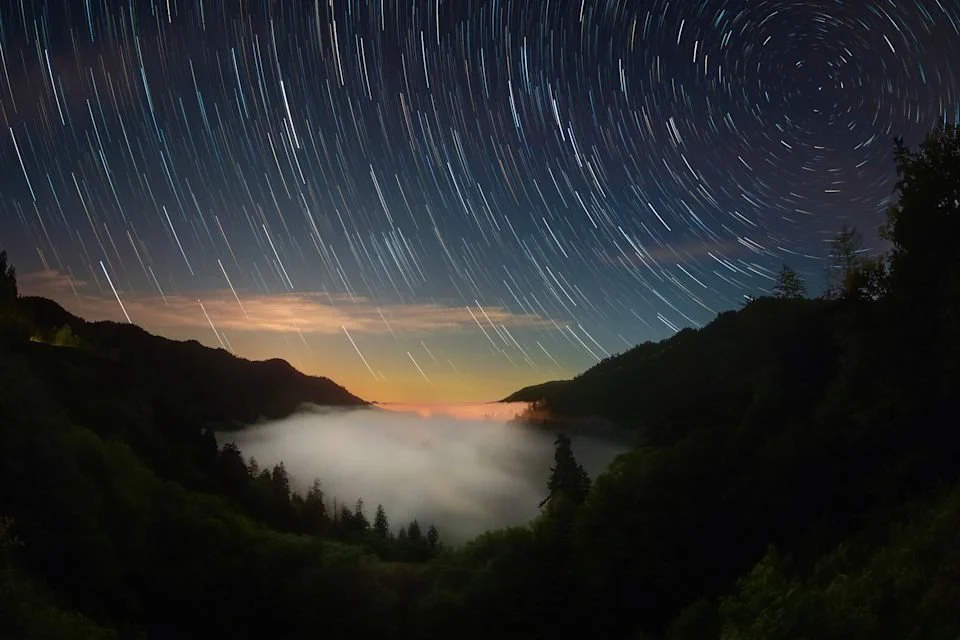
January 20, 2027 | Vancouver, BC
Babak Tafreshi | Earth After Dark
The world changes when the sun goes down. National Geographic Explorer Babak Tafreshi has spent his career photographing the Milky Way, meteor showers, wildlife and city skies after dark. His images move between Earth and the cosmos, revealing a night sky shared by all.

GEOGRAPHICA 2026
Canada's largest annual fundraiser for exploration and geographic education returns to Ottawa on November 4, 2026.
This year's Geographica, Journey to the Stars, will celebrate Canada's contributions to space exploration through an evening of storytelling, photography, film, cuisine, and conversation. Bringing together astronauts, explorers, researchers, educators, and supporters, the event highlights the people helping expand our understanding of the world and beyond.
Proceeds support the Royal Canadian Geographical Society's programs in exploration, education, and research.
Follow us on Instagram
@trebekinitiative
THANK YOU
Your commitment fuels our Trebek Grantees’ efforts to make a meaningful impact across Canada, whether they’re uncovering
solutions to urgent challenges, preserving cultural heritage, or inspiring the next generation of scientists, storytellers, and educators.
Together, we’re igniting a passion to preserve across Canada.
