Mapping Forest Vulnerability to Wildfire-Catalyzed Vegetation Change
2024 Trebek Grantee and National Geographic Explorer
Dr. Ellen Whitman
Fire Has Always Shaped Our Forests
Fire has always shaped Canada’s forests, acting as a force of renewal and transformation. Natural burn cycles cleared space for new growth, replenished soil nutrients, and maintained biodiversity.
But today, that balance is shifting. Wildfires have been burning more severely, over larger areas, and more frequently. Extreme fires disrupt natural recovery cycles, permanently altering some landscapes. The once-predictable relationship between fire and forest health is becoming more uncertain.
Some forests rebound stronger than before, benefiting from nutrient-rich soils and rapid regrowth. Others fail to regenerate, leaving behind ghostly stands of dead trees and barren soil. Understanding these differences is essential for conservation planning and wildfire management.
As the climate shifts, once-thriving woodlands struggle to recover. Tree seedlings fail to take root in increasingly inhospitable conditions. Some forests may never return without intervention, fundamentally altering Canada’s landscapes.
But fire also holds the key to renewal—if we understand how forests regenerate after fire, we can build more resilient landscapes.

“Quantifying ‘regeneration failure’ requires assessing whether seedlings have failed to establish within the context of historical vegetation, current and future climate, time since fire, seed availability, and ecosystem-specific regeneration dynamics.”
Source: A study by the University of Alberta and the Canadian Forest Service highlighting post-fire regeneration challenges in Western Canada (2019).
Understanding how wildfire reshapes forests means looking beyond the fire itself — tracking the land, the climate, the history, and the seedlings that try — and sometimes fail — to return.
When Wildfire Reshapes the Land
-
Some forests regenerate naturally after wildfire.
Others shift permanently into grassland, shrubland, or tundra.
As fires burn hotter and more frequently, recovery isn’t guaranteed.
-
Warmer, drier conditions make it harder for seedlings to survive.
In some places, forests can’t reestablish even decades after fire.
Recognizing these new realities is critical for conservation planning.
-
Forests protect biodiversity, store carbon, and shape our climate future.
Understanding where recovery is possible — and where it isn't — helps target restoration efforts.
Science gives us the knowledge to act before critical landscapes are lost.
Mapping the Future of Canada’s Forests
-
Ellen’s team investigates forests 30 to 38 years post-wildfire — a rare long-term view.
By tracking seedlings, soil health, and burn severity, they uncover hidden patterns of resilience and vulnerability.
These landscapes hold clues to how Canada's forests are adapting — or struggling — under climate stress.
-
Across Alberta, British Columbia, and the Yukon, researchers are mapping where recovery is holding — and where it’s faltering.
Predictive models reveal which forests are at greatest risk of permanent change.
These tools help focus reforestation and wildfire resilience efforts where they matter most.
-
This research moves beyond documentation — it provides real-world tools.
Results guide land managers, conservationists, and communities in making informed, proactive decisions.
In a changing climate, understanding these patterns is key to building a resilient future.
Decoding Fire’s Impact
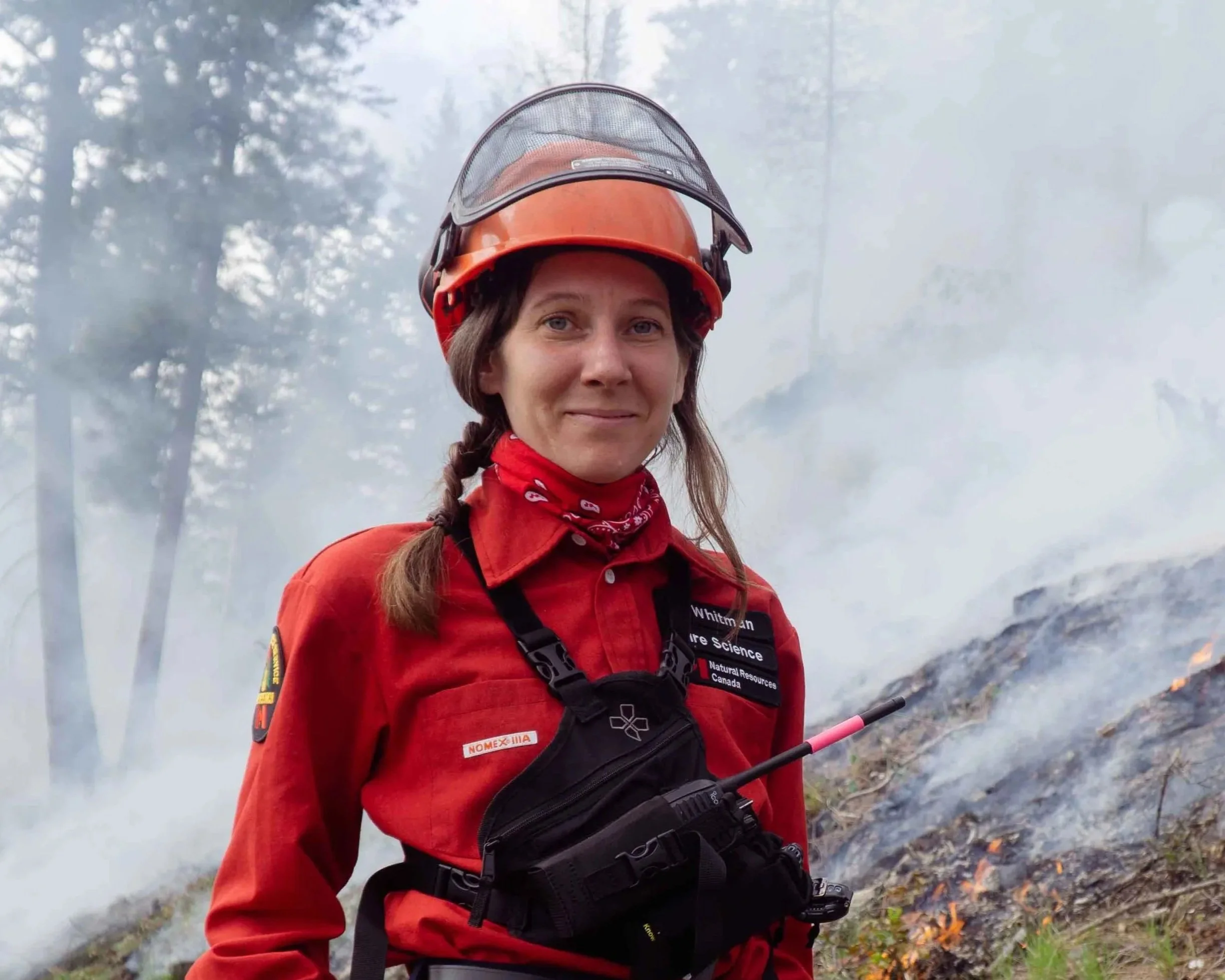
Dr. Ellen Whitman, a National Geographic Explorer and Trebek Initiative Grantee, on the scene of a recently burned forest.
The Pursuit of Resilient Forests
Led by wildfire scientist Dr. Ellen Whitman — a National Geographic Explorer and Trebek Initiative Grantee — this project examines how forests recover after wildfire, and why some landscapes struggle to return.
Drawing on decades of forest history, Ellen’s team combines detailed fieldwork, satellite imagery, and climate modelling to build predictive maps of post-fire recovery across western Canada.
They study seedling survival, soil conditions, burn severity, and climate shifts — uncovering the factors that determine whether forests rebound or transition to entirely new ecosystems.
This work spans four fire-prone regions, from prairie margins to the northern alpine, capturing a critical range of climate-limited forest edges. By focusing on landscapes 30 to 38 years after wildfire, the research reveals long-term patterns that short-term studies often miss — delivering practical insights and tools to strengthen forest resilience and help communities adapt to a changing climate.
EXPLORE THIS PROJECT

PHOTOS FROM THE FIELD
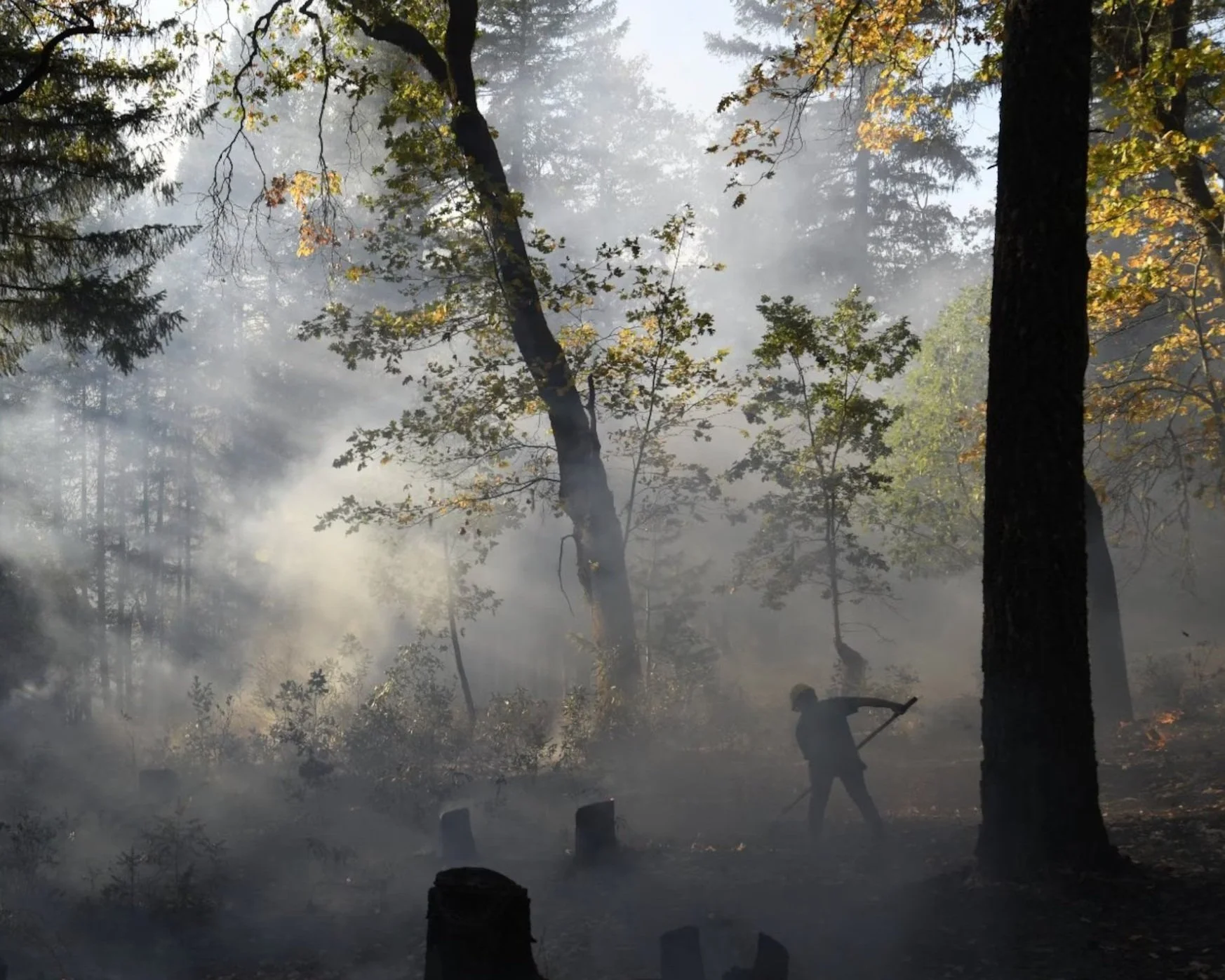
Explore the locations studied
From the grasslands of Crowsnest Pass to the high-elevation forests of Wildhorse Ridge, fire leaves a lasting mark on every landscape.
Some ecosystems recover quickly, while others face permanent change.
See what these diverse locations reveal about fire resilience and the future of Canada’s forests.
COLLABORATION
TEK Supports Fire Recovery
For generations, Indigenous communities have used fire to shape resilient northern forests.
As climate change disrupts traditional regrowth patterns, Indigenous fire knowledge is key to restoring balance in Yukon and boreal landscapes.

POST-FIRE FOREST RECOVERY RESEARCH
How to Study Forest Recvery
Forests don’t all recover the same way after a wildfire.
By studying burn sites over months, years, and even decades, researchers uncover patterns that shape the future of fire-adapted landscapes.
SCIENCE OF RECOVERY
How Do Forests Recover?
Some forests begin regenerating within months, while others require decades for any tree seedlings to establish.
What determines whether a forest will thrive or disappear? Scientists are uncovering four key factors that shape post-fire recovery.
Learn the patterns behind fire’s impact and what they reveal about future of Canada’s forests.
Meet Ellen Whitman
Scientist, Fire Ecologist, Wildfire Expert and National Geographic Explorer

Dr. Ellen Whitman, a National Geographic Explorer and Trebek Initiative Grantee.
Ellen didn’t set out to study wildfires, but wildfires found her. Growing up surrounded by Canada’s forests, she was drawn to the landscapes that now define her research.
A fire scientist with Natural Resources Canada and a National Geographic Explorer, Whitman has spent years tracking how forests recover—or fail to—after wildfires. Her work is not just about studying fire; it’s about understanding the intricate relationships between fire, climate, and ecosystem resilience.
From analyzing tree rings to using large-scale satellite data, Whitman’s approach blends traditional fieldwork with cutting-edge predictive modelling. She collaborates with Indigenous people, conservationists, fire managers, and policymakers to ensure her research informs the future of wildfire management in Canada and beyond.
Project Goals & Research Approach
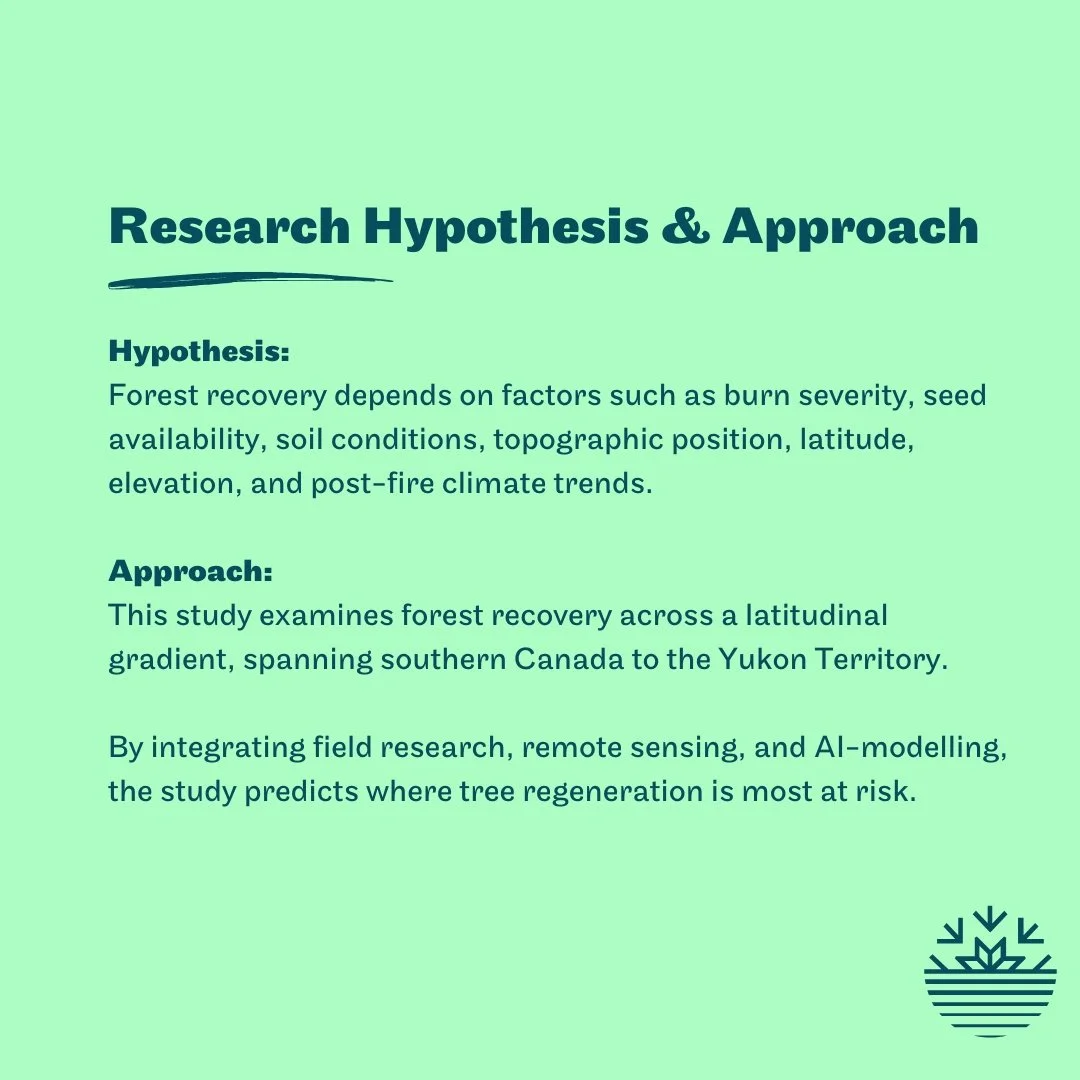
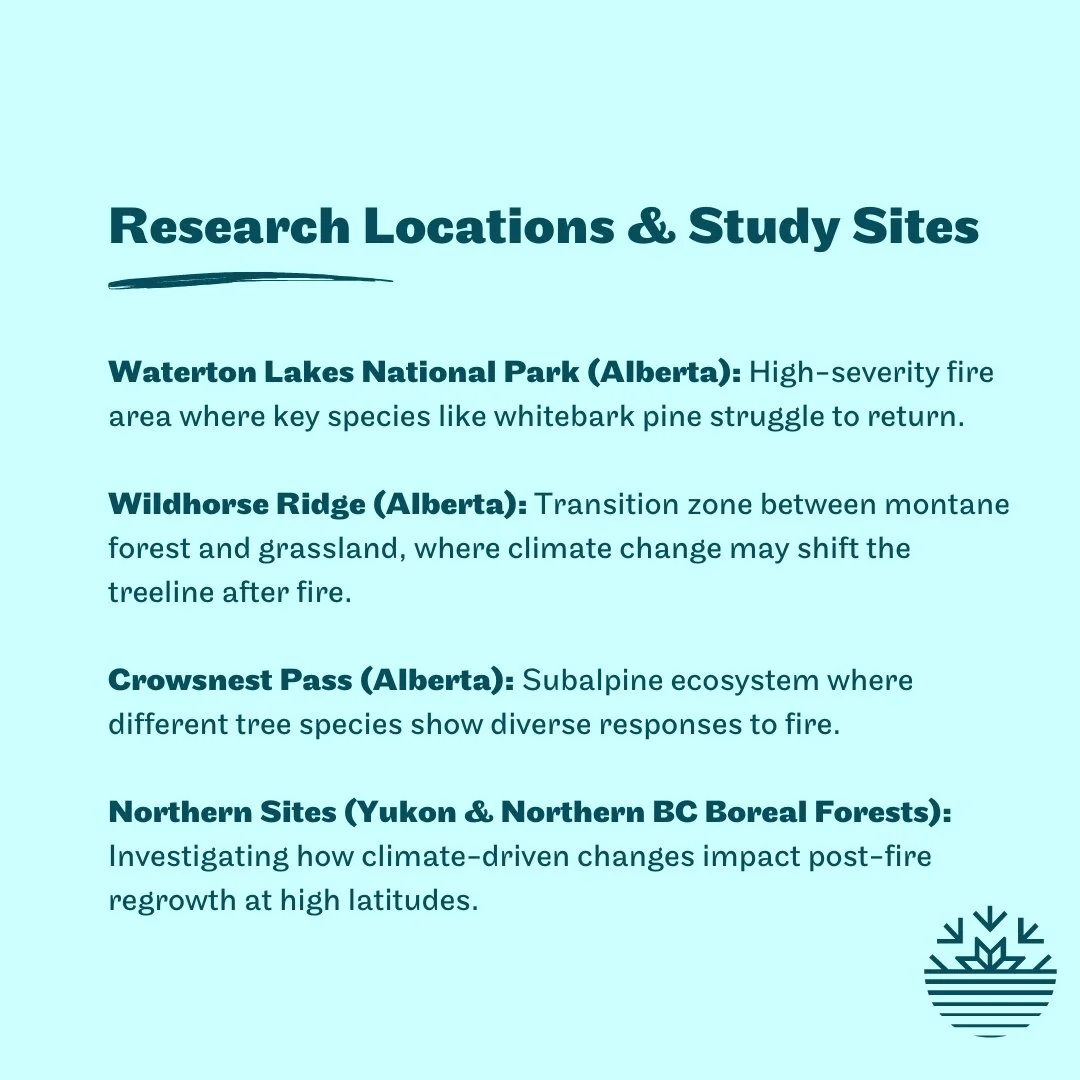


This project aims to provide the tools and knowledge needed to guide reforestation efforts, improve wildfire resilience planning, and support the long-term health of our forests.
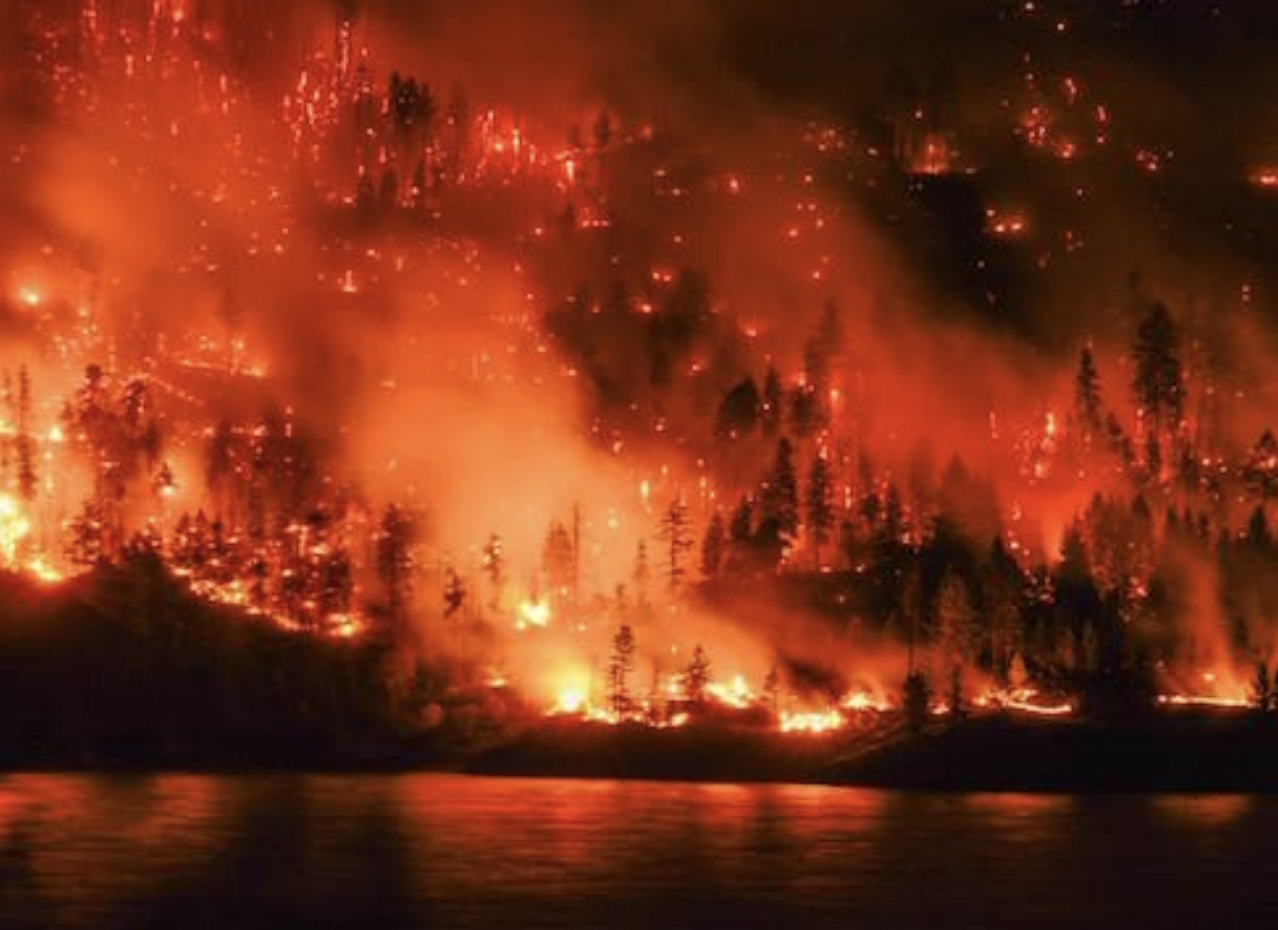
Wildfires Rising:
A Challenge for Indigenous Lands
Wildfires are becoming increasingly frequent and destructive, especially on Indigenous territories.
These uncontrolled fires threaten food security, cultural practices, and community resilience.
Changing climate and fire suppression policies have created the perfect storm, leaving Indigenous communities vulnerable to longer, more intense, and more damaging wildfire seasons.
How are Wildfires Changing?
-
The number of wildfires in British Columbia has increased, with an average of 1,600 wildfires annually over the past decade.
The 2023 wildfire season was the most impactful on record, with over 2.84 million hectares burned and tens of thousands of people evacuated.
Rising temperatures and prolonged drought conditions are key factors contributing to the increasingly severe wildfires.
-
Wildfire seasons start earlier and last longer; extending the period, fires can ignite and spread.
Deep drought conditions and expected warmer temperatures mean wildfire seasons start earlier and last longer.
-
Wildfires are becoming more intense, with higher temperatures and stronger winds driving more severe fires.
Increased fire intensity makes them harder to control, resulting in more widespread destruction.
-
The overall damage caused by wildfires has escalated, affecting larger areas and leading to substantial ecological and economic losses.
The 2023 wildfire season saw record-breaking destruction. Over 15 million hectares were burned across Canada, causing extensive damage to homes, infrastructure, and ecosystems.
Why are Wildfires on the Rise?
-
Rising temperatures (+1.4°C in summer over the last century) and prolonged droughts have made British Columbia's forests increasingly vulnerable to wildfires.
Decreased precipitation (both in the winter and summer months) has left landscapes drier and more prone to ignition.
Warmer and drier summer conditions have increased lightning frequency, producing more wildfires.
-
Climate change and human activities have caused vegetation shifts, increasing the available fuel for wildfires.
Invasive species like Scotch broom and gorse have spread widely, displacing native plants and creating denser, more flammable vegetation.
-
Deforestation, land development, and accidental ignitions significantly contribute to wildfires.
Logging activities throughout British Columbia leave behind vast amounts of wood waste, and can fuel fires during the wildfire season.
Agricultural burns, recreational campfires, and industrial logging are sources of unintended ignitions. These activities often lead to fires that spread quickly, especially in dry, remote areas with limited fire control resources.
Off-road vehicle use and discarded cigarette butts are additional human-caused factors that ignite wildfires.
-
A century of fire suppression and a changing climate in British Columbia have created unnatural fuel accumulations, increasing wildfire risk.
Without cultural and lightning ignitions providing a continuous cycle of mixed-severity fires (low, moderate and high) in areas such as Gitanyow Nation's territory, the forests have become densely packed with underbrush and combustible materials.
These dense forests are now susceptible to intense wildfires, as they lack the natural thinning process that controlled burns and wildfires once provided.
The build-up of dry fuel, such as fallen branches and dead trees, has turned these forests into tinderboxes waiting for ignition.
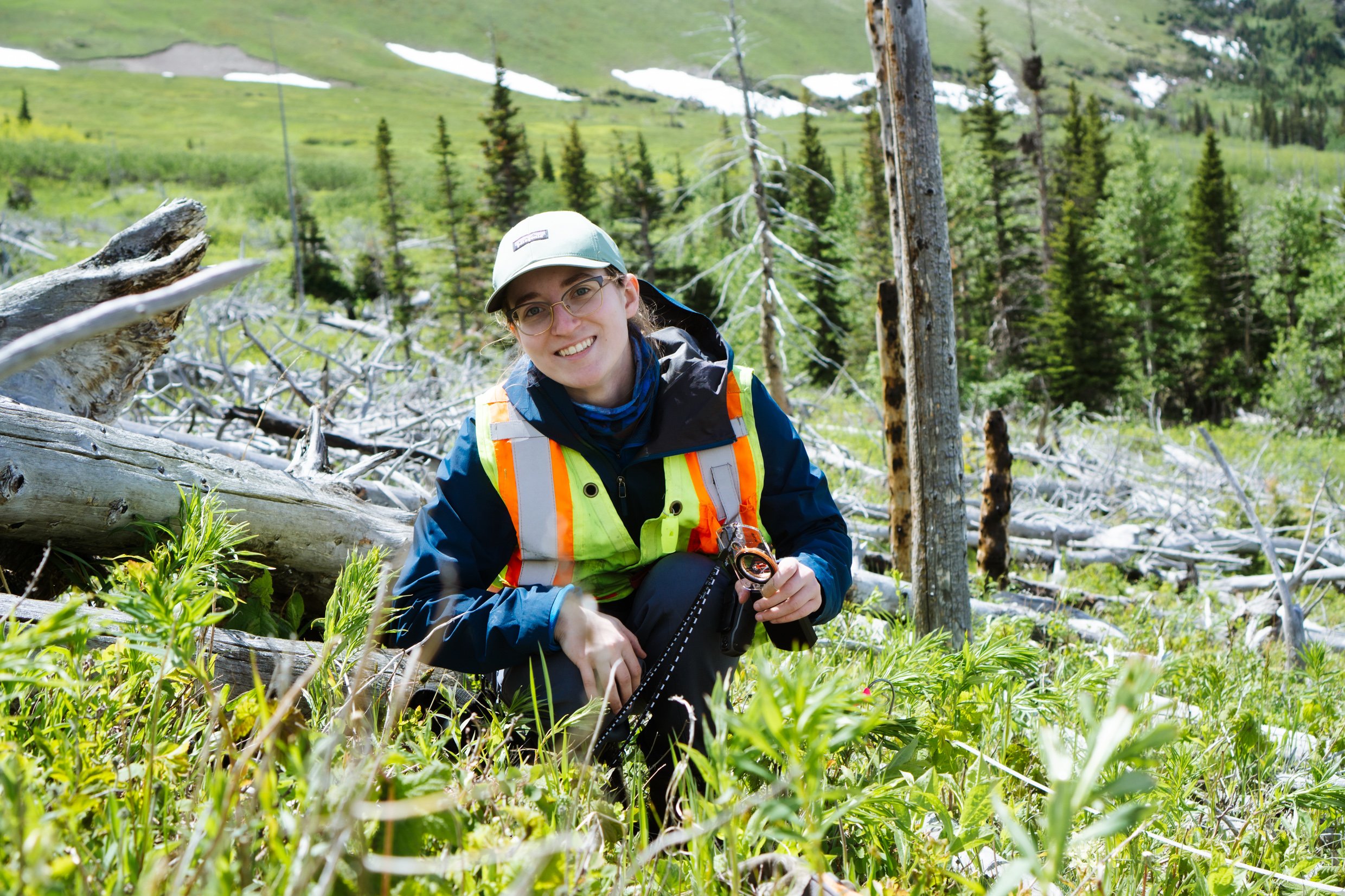
“We need to understand not only how fire is reshaping our forests but also how we can guide these landscapes toward more resilient futures.
This research will help us predict where intervention is needed and inform strategies that support regeneration while acknowledging the role of fire in ecosystem dynamics.”
How to Study Forest Recovery
Whitman’s research spans three diverse locations over multiple years, structured around three distinct phases—each revealing how wildfire shapes ecosystems over time.
By studying Crowsnest Pass, Waterton Lakes, and Wildhorse Ridge, her team is capturing a comprehensive picture of post-fire recovery, from valley floors to high alpine ridges.
There are Three Phases to the Research:
Three Key Phases of Research
The first years after a fire determine whether a forest will regenerate or struggle to recover.
Comparing burned areas with unburned control sites, the team examines the earliest signs of regrowth and potential obstacles to forest recovery.
Phase 1: The First Years After Fire
-
Effects of burn severity on vegetation recovery after fire.
Post-fire soil moisture availability
Comparing burned and unburned areas to track early-stage vegetation changes.
-
Monitoring how drought, extreme temperatures, and precipitation impact regeneration.
Investigating whether recovery rates differ across ecosystems.
Phase 2: Decades Later Tracking Regeneration (2024-2026)
Not all forests recover at the same pace. This phase revisits burned landscapes decades later to assess whether ecosystems are rebounding or transitioning into entirely new environments.
Fire management agencies and conservation land stewards use these findings to inform wildfire mitigation and ecosystem restoration strategies.
-
Measuring tree survival rates and biodiversity shifts over time.
Identifying which species return and which fail to re-establish.
-
Determining how interannual climate extremes disrupt forest recovery patterns.
Evaluating whether moisture availability stabilizes or declines over time.
Investigating whether increasing wildfire frequency outpaces the rate of forest recovery and treeline change.
-
Collaborating with fire management agencies to adapt land restoration strategies.
Using data to guide conservation planning in fire-prone landscapes.
Identifying priority areas where intervention may be needed to support long-term recovery.
-
Crowsnest Pass: Determining whether forests that initially began recovering continue to thrive or shift to permanent grassland.
Waterton Lakes: Monitoring whether whitebark pine seedlings survive and reach maturity.
Wildhorse Ridge: Analyzing whether fire and climate change are permanently shifting the tree line.
Phase 3: Mapping the Future of Fire-Scarred Forests
-
Identifying landscapes least likely to regenerate naturally.
Determining where conservation interventions may be necessary.
Assessing how past fire events shape future burn site vulnerability.
-
Analyzing how repeated wildfires alter long-term forest composition.
Understanding whether fire frequency is outpacing natural recovery cycles.
Using downscaled climate datasets (e.g., TerraClimate, ERA-5 Land) to predict future forest resilience.
-
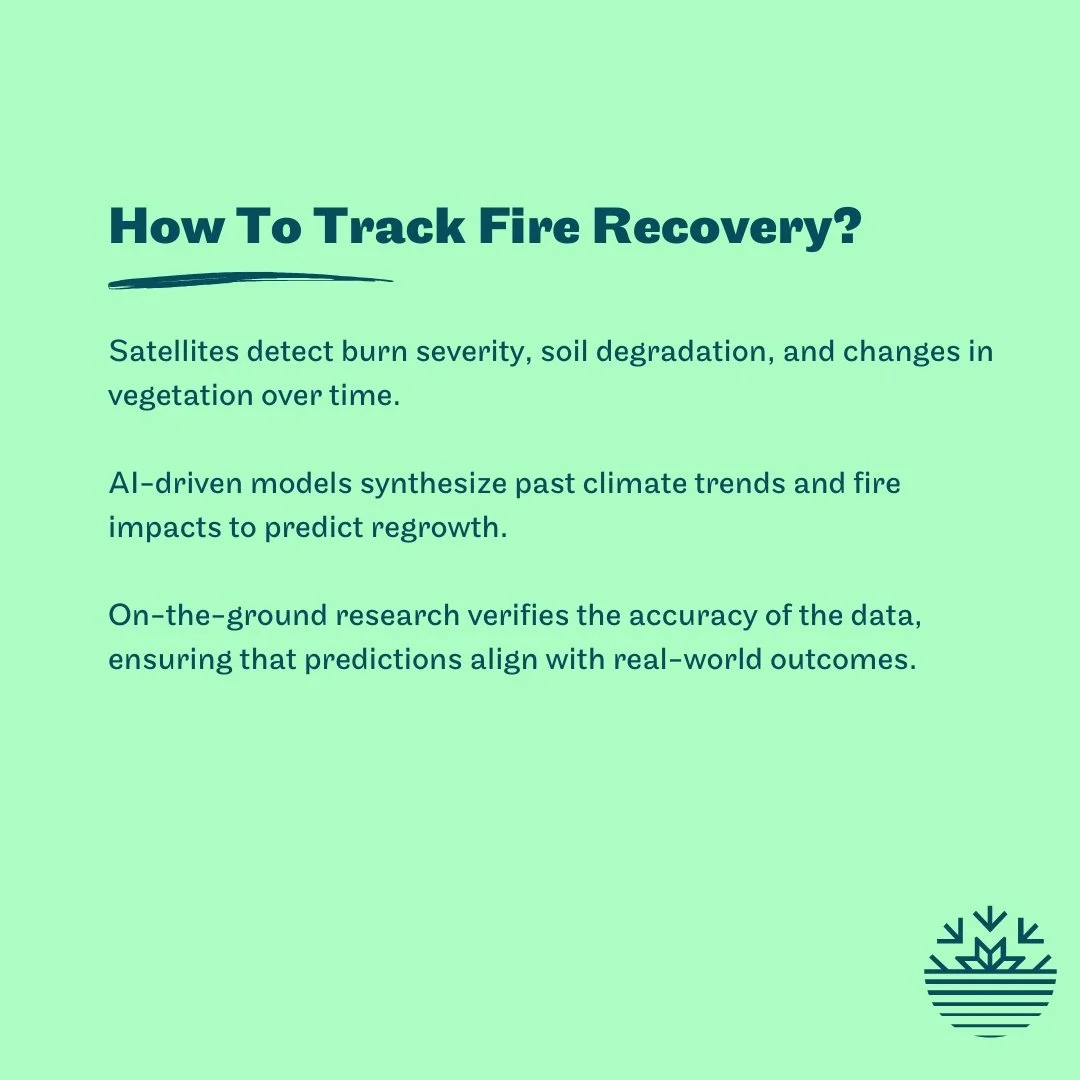
Using AI and remote sensing to create predictive fire recovery models.
Providing fire management agencies with data to inform proactive interventions.
Identifying regions where rapid response conservation efforts could prevent permanent ecosystem loss.
-
Crowsnest Pass: Modelling whether recent forest recovery will continue or if repeated fires will push landscapes toward permanent grassland expansion.
Waterton Lakes: Predicting whether whitebark pine populations can sustain themselves under future fire conditions.
Wildhorse Ridge: Determining whether treelines will continue to retreat, permanently converting former forests into alpine tundra.
Whitman’s research is evolving beyond individual field sites to provide broader insights into wildfire recovery across western Canada.
The next steps will refine predictive tools, validate burn severity indicators, and establish long-term monitoring systems to guide conservation and fire management efforts.

Integrating TEK into Fire Recovery
Collaborating with Indigenous Communities
For thousands of years, Indigenous fire stewardship has successfully shaped Canada’s landscapes, using controlled burns to maintain biodiversity, reduce wildfire severity, and enhance ecosystem resilience. Despite their effectiveness, modern fire management strategies often exclude these practices.
Dr. Ellen Whitman’s research actively collaborates with Indigenous land stewards, firekeepers, and conservation leaders to integrate Traditional Ecological Knowledge (TEK) into post-fire recovery science. By combining Indigenous fire stewardship with research, this partnership enhances wildfire recovery efforts and ensures that forests are better equipped to face future challenges.
A Collaborative Approach to Fire Recovery
Indigenous-led fire stewardship and Western fire science are often seen as separate approaches, but Whitman’s research bridges these perspectives to create a more effective recovery model.
By working with Indigenous firekeepers and conservationists, this collaboration strengthens fire resilience efforts across Canada’s forests.
Combining TEK with Modern Science
-
Whitman’s team integrates Indigenous fire stewardship data with satellite-based burn severity assessments to refine fire recovery models.
TEK provides insights into fire-adapted species, burn severity, and long-term ecosystem shifts that remote sensing alone cannot capture.
Collaboration ensures that Indigenous expertise is valued as an essential part of fire recovery science, not just supplementary knowledge.
-
Whitman’s team participates in seasonally controlled burns led by Indigenous firekeepers, observing fire behaviour and regeneration firsthand.
Researchers document how prescribed burns influence soil health, seed dispersal, and forest regrowth.
Field visits highlight how modern fire suppression policies have disrupted natural fire cycles, leading to increased fire severity and ecosystem imbalance.
-
Regular knowledge-sharing sessions and joint research workshops ensure that Indigenous expertise is actively integrated into recovery planning.
Collaborative fieldwork fosters trust and long-term partnerships, keeping traditional ecological knowledge (TEK) central to future wildfire strategies.
These efforts are already informing national and regional fire management policies, advocating for Indigenous-led approaches to land stewardship.
Future Applications for Fire Management
By combining traditional fire knowledge with modern science, Whitman’s work is advancing wildfire recovery strategies that are grounded in historical practice and designed for future resilience.
The findings from this research are already helping shape fire management policies and ensuring that Indigenous leadership remains at the forefront of protecting Canada’s forests.
How Does This Work Help?
-
Research findings will support policy changes integrating Indigenous burning practices into wildfire prevention.
TEK is proving effective in reducing fire severity and improving forest resilience, strengthening the case for broader implementation.
Strengthening Indigenous leadership in fire management ensures long-term ecological balance and sustainable stewardship.
-
Local communities and land stewards will use this research to develop customized wildfire adaptation strategies.
Collaborative programs will integrate TEK with modern fire science to create place-based, sustainable fire management practices.
Educating communities on fire dynamics enhances preparedness, reduces risks, and empowers local action.
-
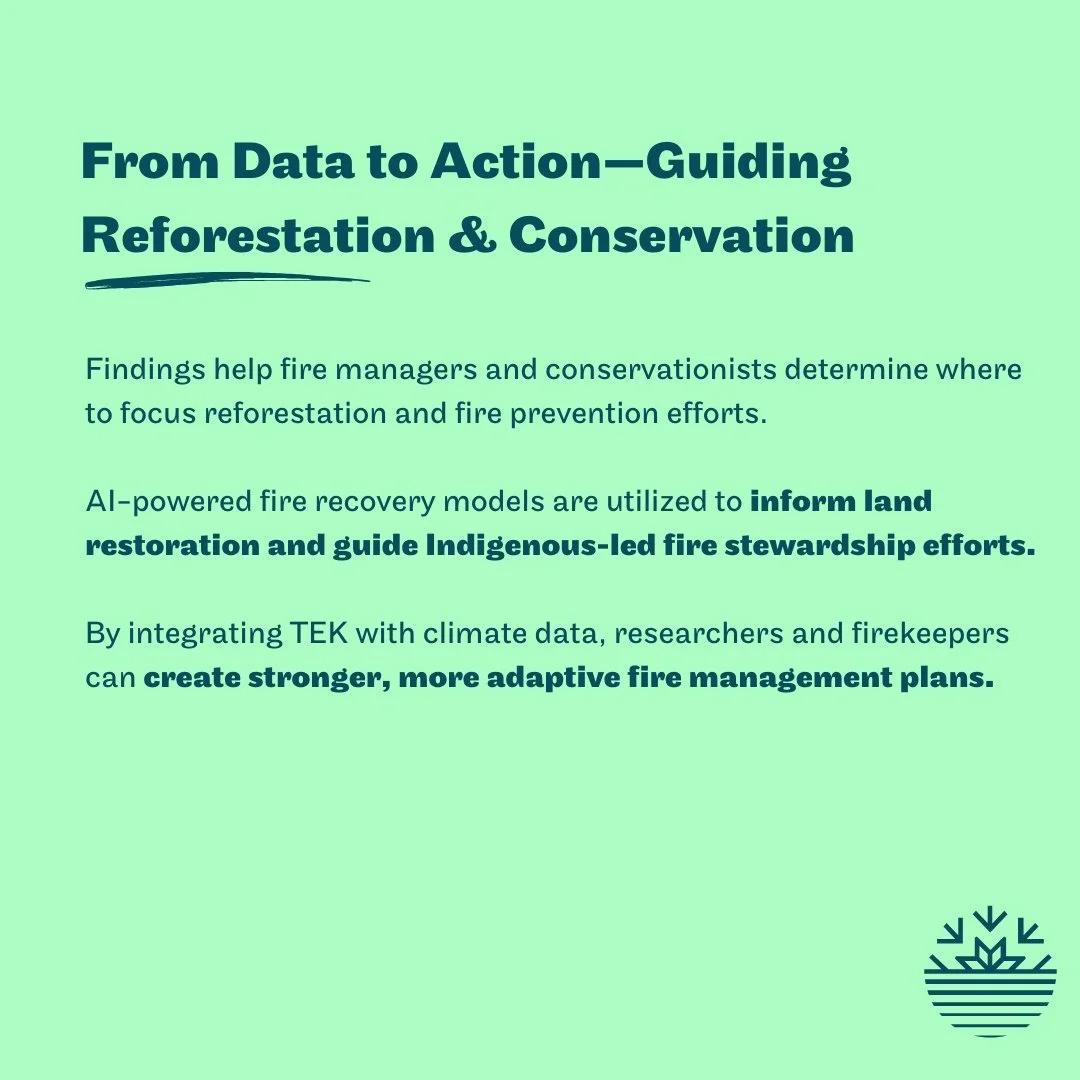
Data-driven insights will inform national and regional conservation strategies to protect fire-adapted ecosystems.
Research findings will guide targeted reforestation and habitat restoration in high-risk fire zones.
Government agencies will have concrete evidence to invest in Indigenous-led land stewardship and restoration efforts.
-
These insights already influence wildfire prevention and land management strategies, ensuring a proactive approach.
Community-led fire stewardship programs reduce environmental risks, protect biodiversity, and strengthen ecosystem recovery.
By merging scientific advancements with Indigenous fire strategies, this research creates a future where forests are healthier, more adaptive, and better protected for future generations.
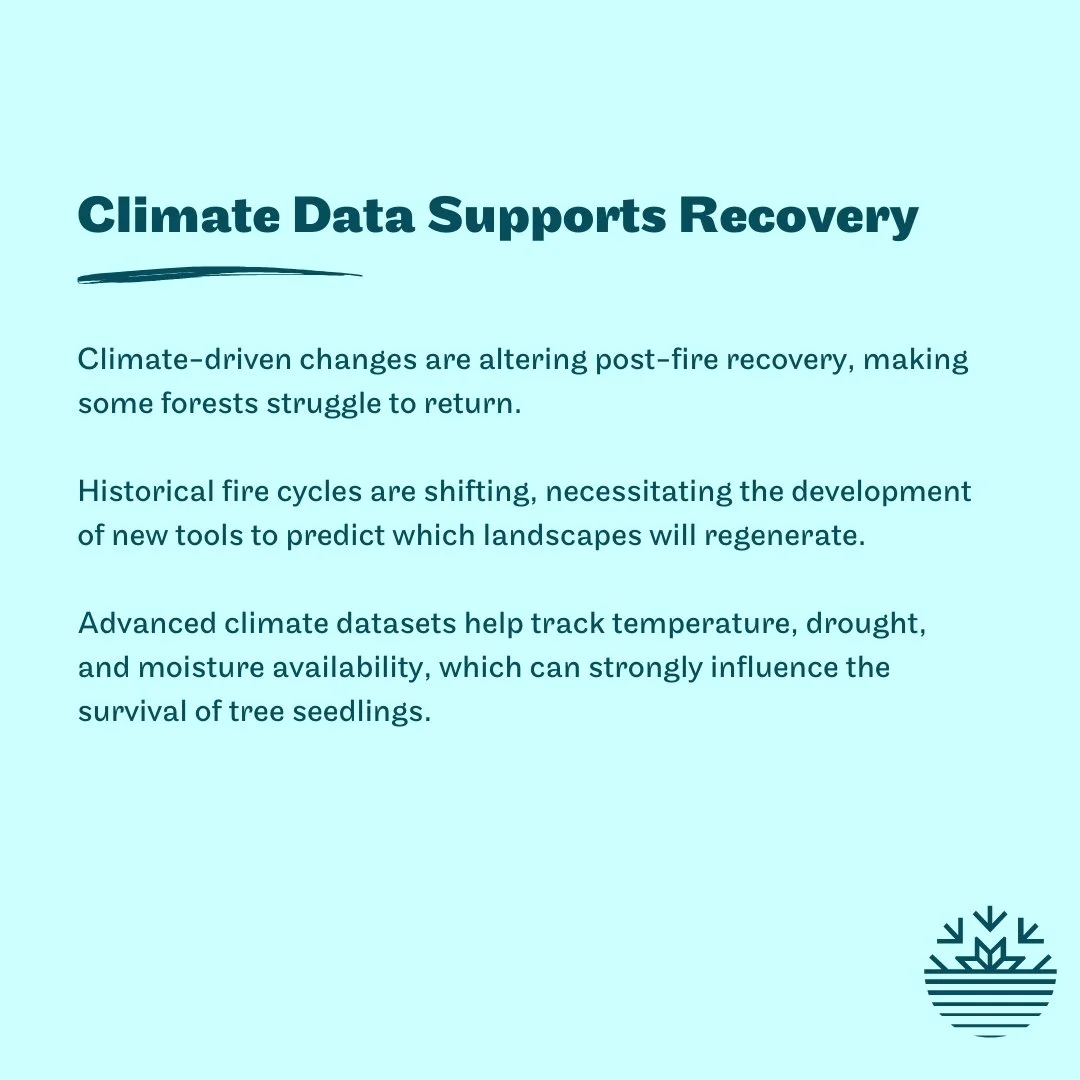
How Climate Data Powers Fire Recovery Models
Wildfires don’t just reshape forests—they leave behind uncertainty. Will the trees return? Will the soil hold moisture? Can the land heal, or will fire-scarred landscapes become permanent?
By analyzing past weather, fire severity, and ecosystem responses, Whitman’s team can predict where forests are most at risk and guide conservation efforts before it’s too late, and anticipate desirable changes when using fire as a tool. This data-driven approach helps fire managers, conservationists, and Indigenous land stewards make informed decisions about reforestation, prescribed burning, and long-term forest health.

A Mystery To Drive Discovery
Why Do Some Forests Recover, While Others Remain Barren?
Wildfires are not a uniform force—they impact different landscapes in vastly different ways. Some forests begin regenerating within months, while others remain treeless decades later.
What determines whether a forest will recover or disappear? Research highlights four critical factors that shape post-fire recovery: What determines whether a forest will thrive or fail to recover?

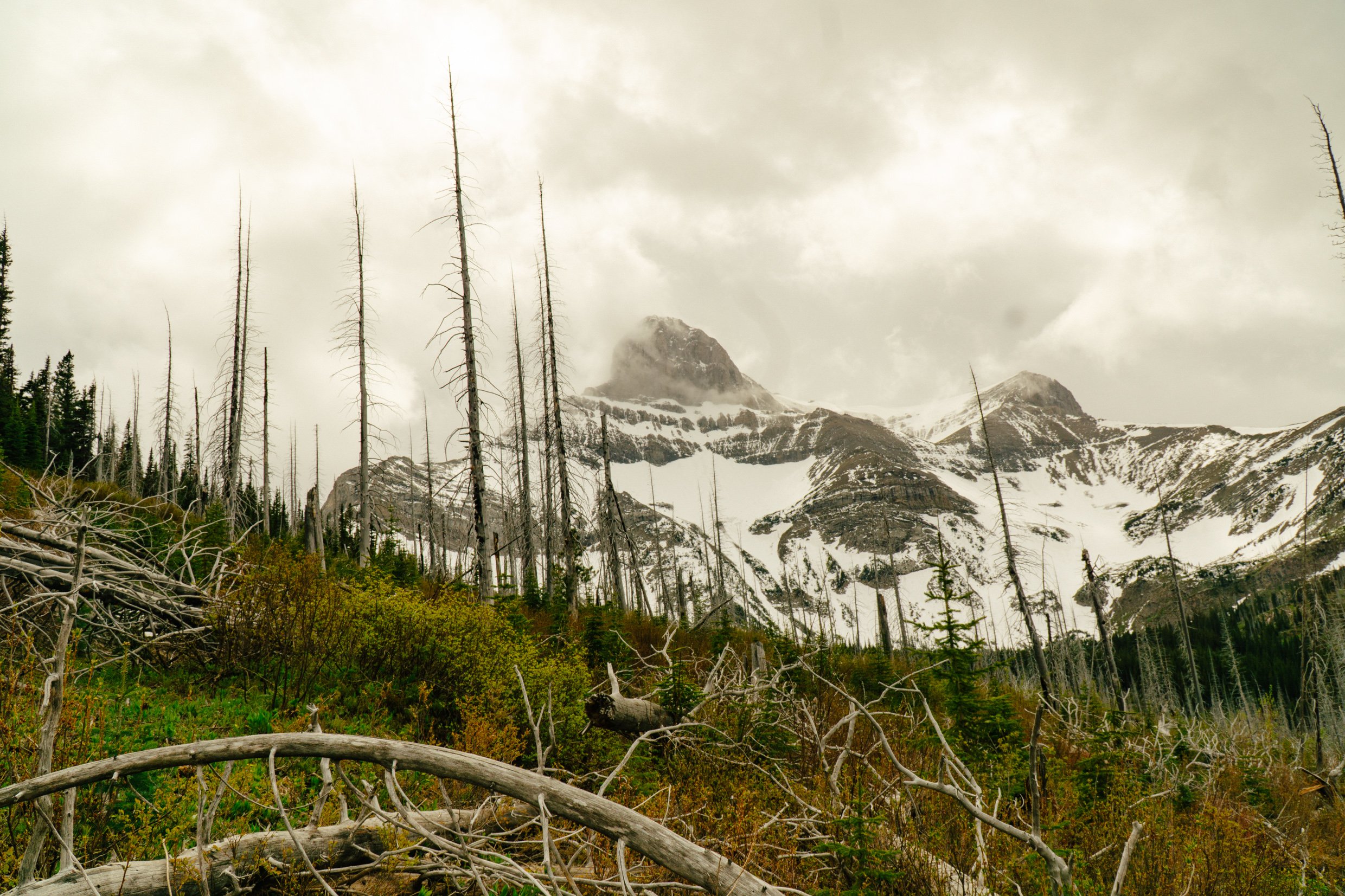
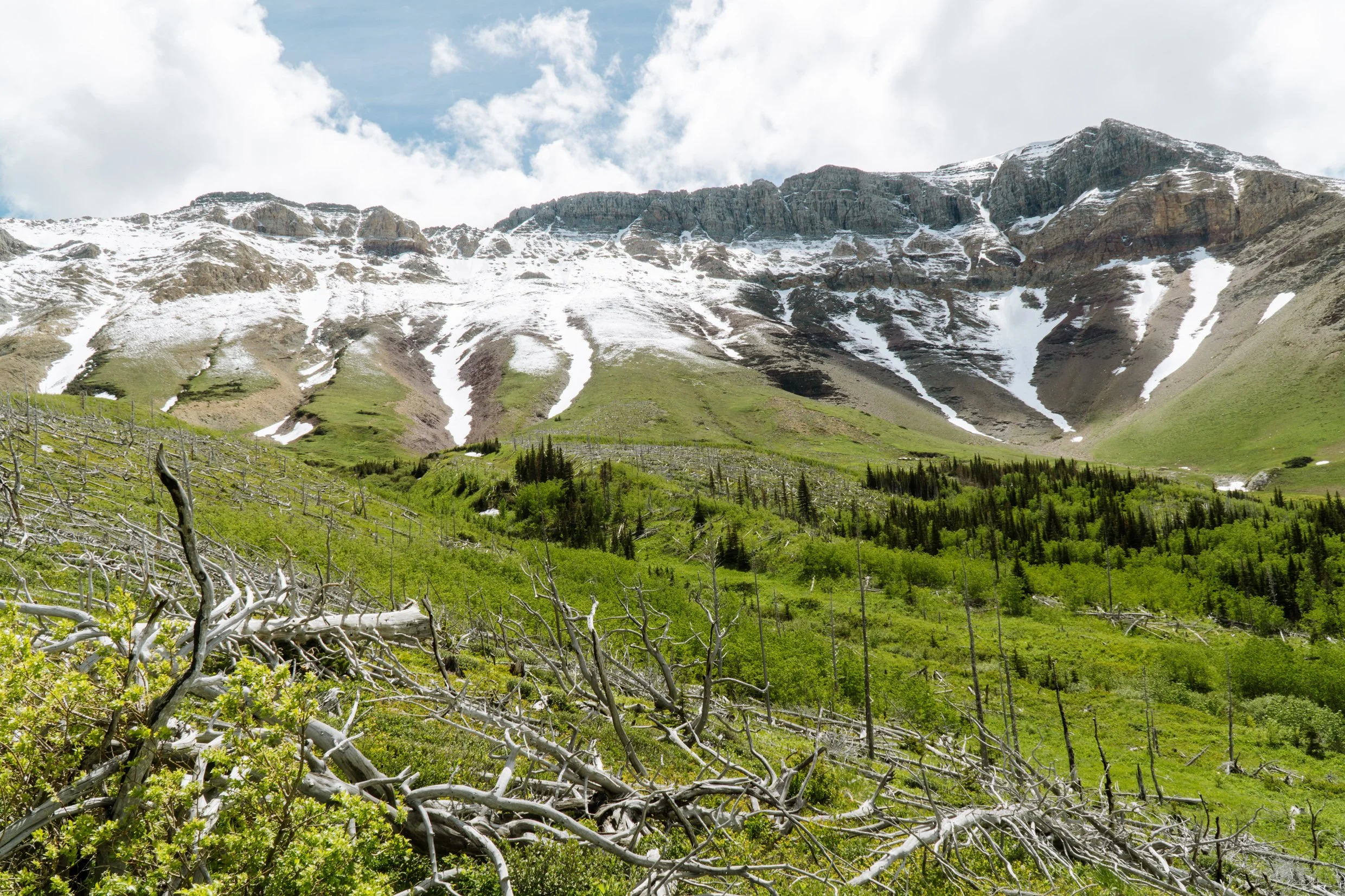
This high-severity burn area starkly reminds us of wildfire’s lasting impact. Fire—killed trees stand among alpine grasslands. Despite the devastation, slow regeneration is underway, with resilient plant species returning with time.
Four key factors influence post-fire recovery
-
Some tree species, such as lodgepole pine, rely on fire to release their seeds, ensuring rapid regrowth, while others depend on nearby surviving forests for seed dispersal.
In high-severity burn zones, where few mature trees survive, the lack of a seed source can stall regeneration for decades, leaving behind grasslands and shrublands instead of forests.
-
Fires can enrich soil with nutrients, encouraging regrowth.
Some high-intensity burns can combust organic matter, alter soil structure, and reduce moisture retention—making it difficult for young trees to establish themselves.
-
Rising temperatures and prolonged droughts make it harder for young trees to survive.
Even in areas with viable seeds and healthy soil, shifting rainfall patterns and drier post-fire conditions can slow recovery, leading to long-term ecosystem changes.
-
Low-severity burns clear out dead vegetation while leaving mature trees intact, creating ideal conditions for regrowth.
High-severity fires can eliminate seed sources, scorch the soil, and permanently alter the landscape.
Ecosystems that are adapted to high-severity fire have a resilient response and naturally recover, but changing climate and fire frequency can alter this relationship.
Not all forests respond to wildfire in the same way. Some landscapes recover quickly, while others struggle to regenerate for decades, if at all.
To uncover why, Ellen Whitman’s research focuses on three dramatically different ecosystems—each offering a unique lens into wildfire recovery and long-term forest transformation. Work began in 2024 with southern Canadian mountain ecosystems, which are some of the most moisture-limited forests. Research in montane and northern ecosystems makes up the next phase of the project.
By studying these diverse environments, Whitman’s team is identifying the tipping points that determine whether forests will recover or be lost for good.
Why Study These 3 Locations?
Each Region Has a Unique Fire Story



“Understanding how forests regenerate after fire is key to long-term resilience. Indigenous knowledge provides critical insights into fire-adapted landscapes—lessons that can help shape more sustainable management practices in a changing climate.
”
Crowsnest Pass
Different Responses From Different Tree Species
Wildfires don’t just burn trees—they can shift the balance between species.
In Crowsnest Pass, tree species show different responses to fire, ranging from rigorous regeneration of lodgepole pines to poor establishment of fir. This region serves as a critical case study for understanding how fire determines the long-term fate of ecosystems.

Crowsnest Pass is a traditional territory shared by the Blackfoot Nations (Piikani, Kainai, and Siksika) as well as the Tsuu T'ina, and the K'tunaxa (Kootenay) peoples.
How Fire is Reshaping Crowsnest Pass
-
Some slopes are experiencing rapid regrowth, with pine seedlings reclaiming areas that were burned.
Other areas, however, have a slower recovery of subalpine fir, with pine replacing fir in drier regions.
-
In high-severity burn zones, seed sources are sparse, making regeneration nearly impossible.
The absence of tree cover accelerates soil erosion, further reducing the chances of recovery.
-
Scientists are monitoring post-fire regeneration to determine whether the landscape is permanently changing—or if the balance between tree species is shifting.
Crowsnest Pass
Photos From the Field

Research team traverses diverse terrain, studying forest regrowth in fire-affected landscapes.

A closer look at fieldwork among burned and unburned forest patches.
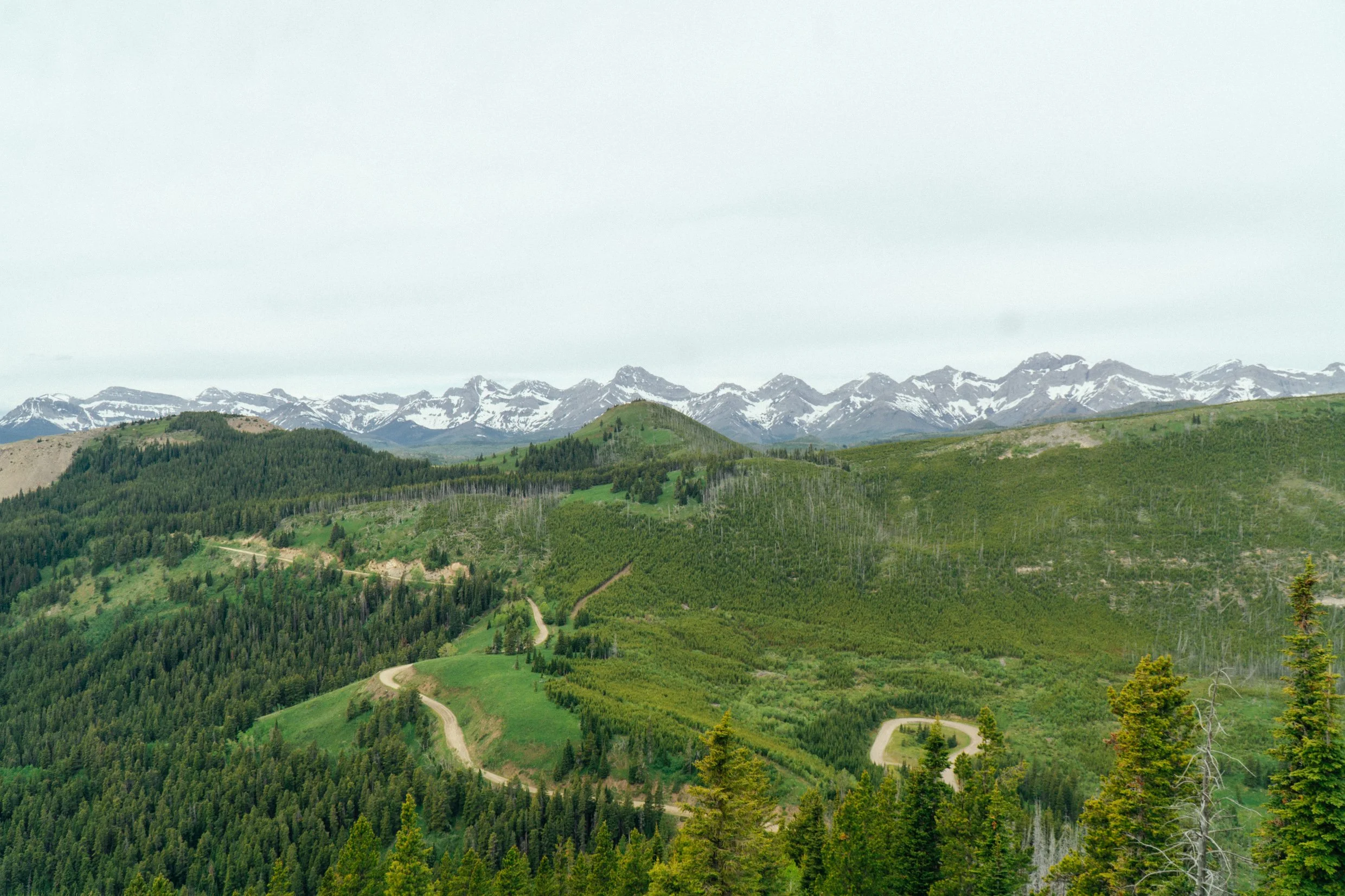
A striking contrast of charred remnants and young trees, revealing the mosaic of post-fire recovery.

High-elevation forests show signs of resilience as live trees emerge on the grassy summit.

Field team studies burn intensity’s impact on vegetation recovery.
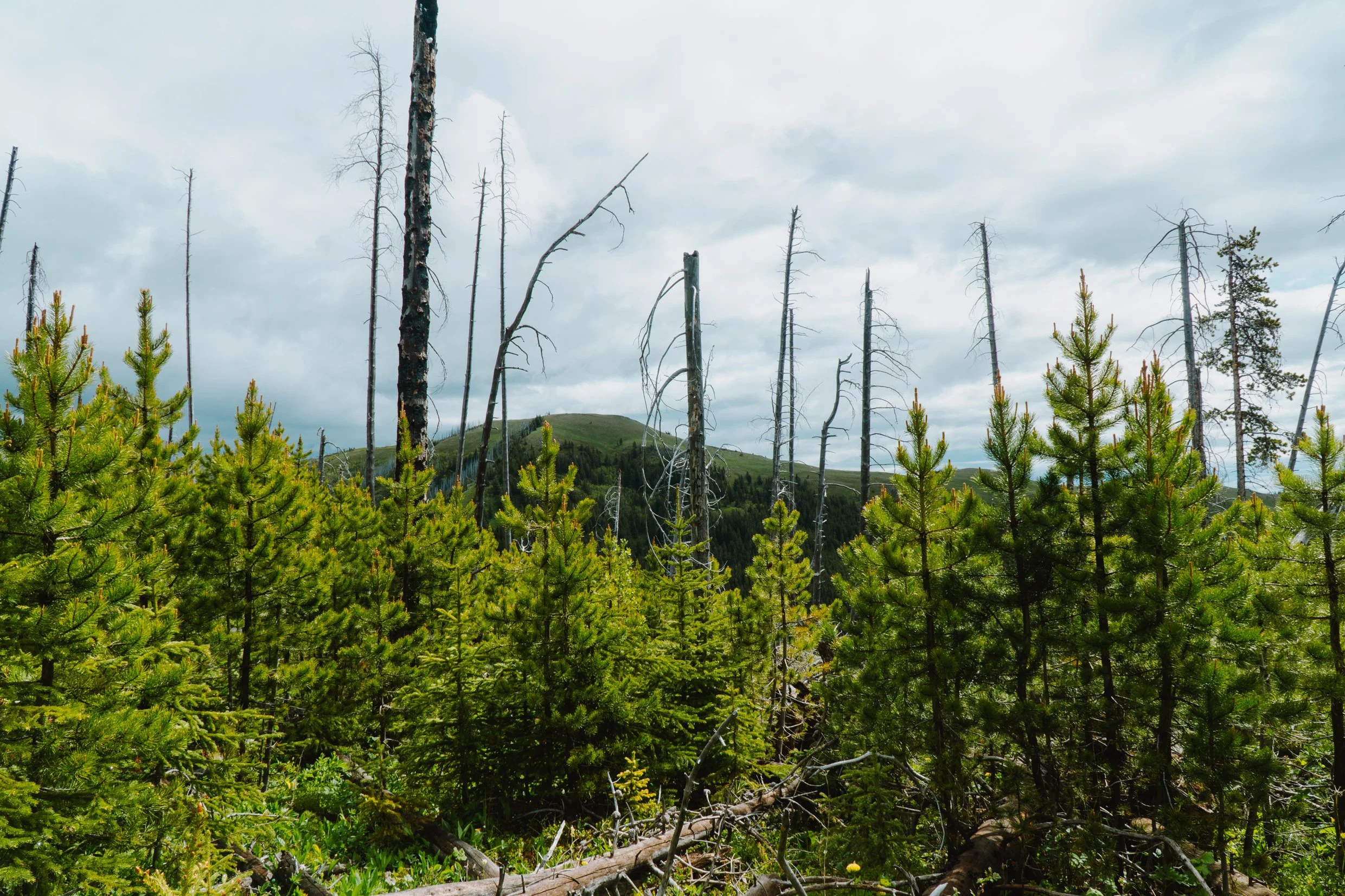
Pine seedlings push through the ash, hinting at slow but hopeful regeneration.

A broad perspective on the diversity of regrowth across fire-affected slopes.

Mist rolls over recovering forests, highlighting the unpredictability of post-fire landscapes.

A severe burn patch where shrubs are the first to reclaim the scorched land.
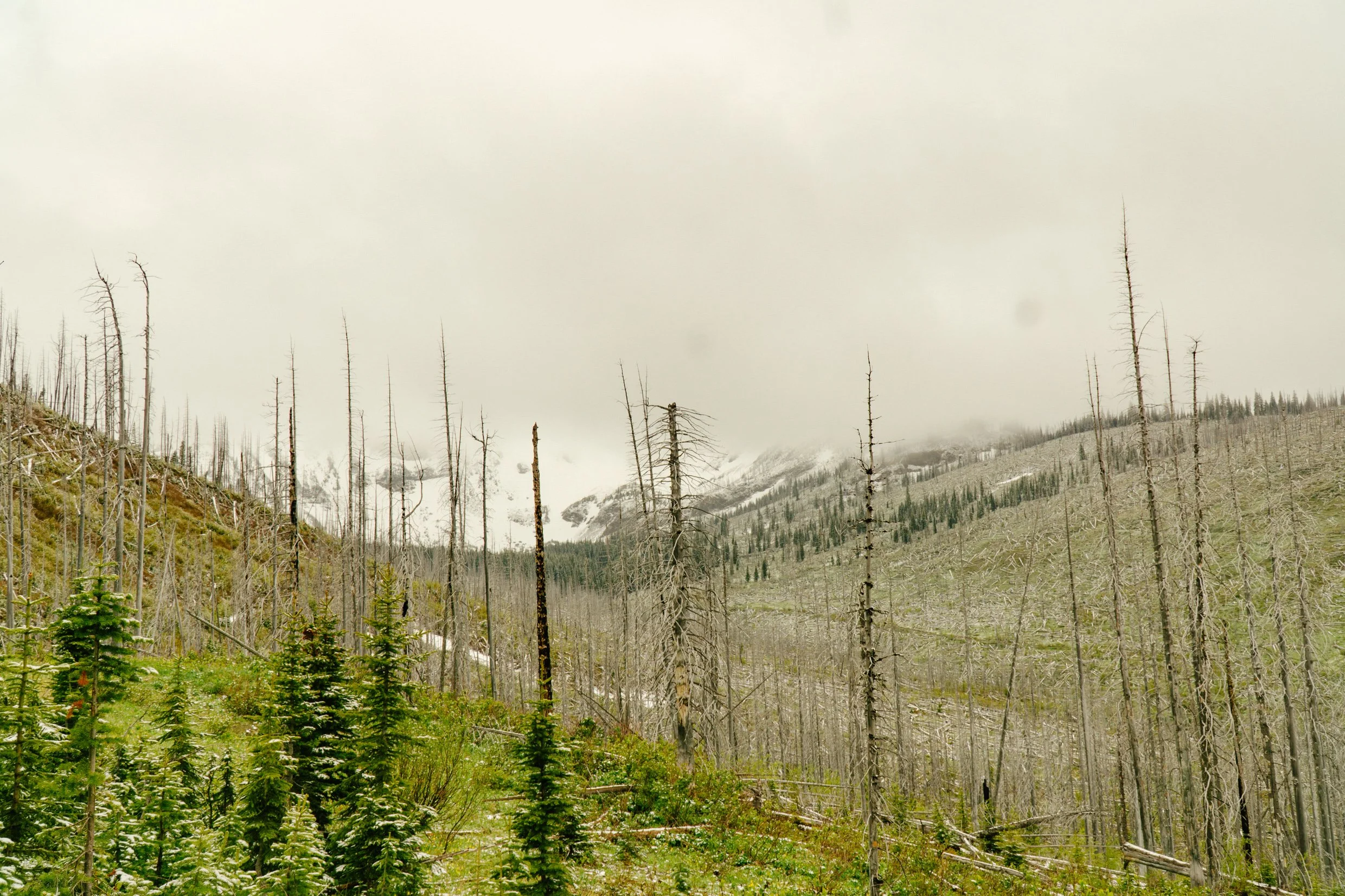
A cold, foggy burn site where tree seedlings struggle against the elements.
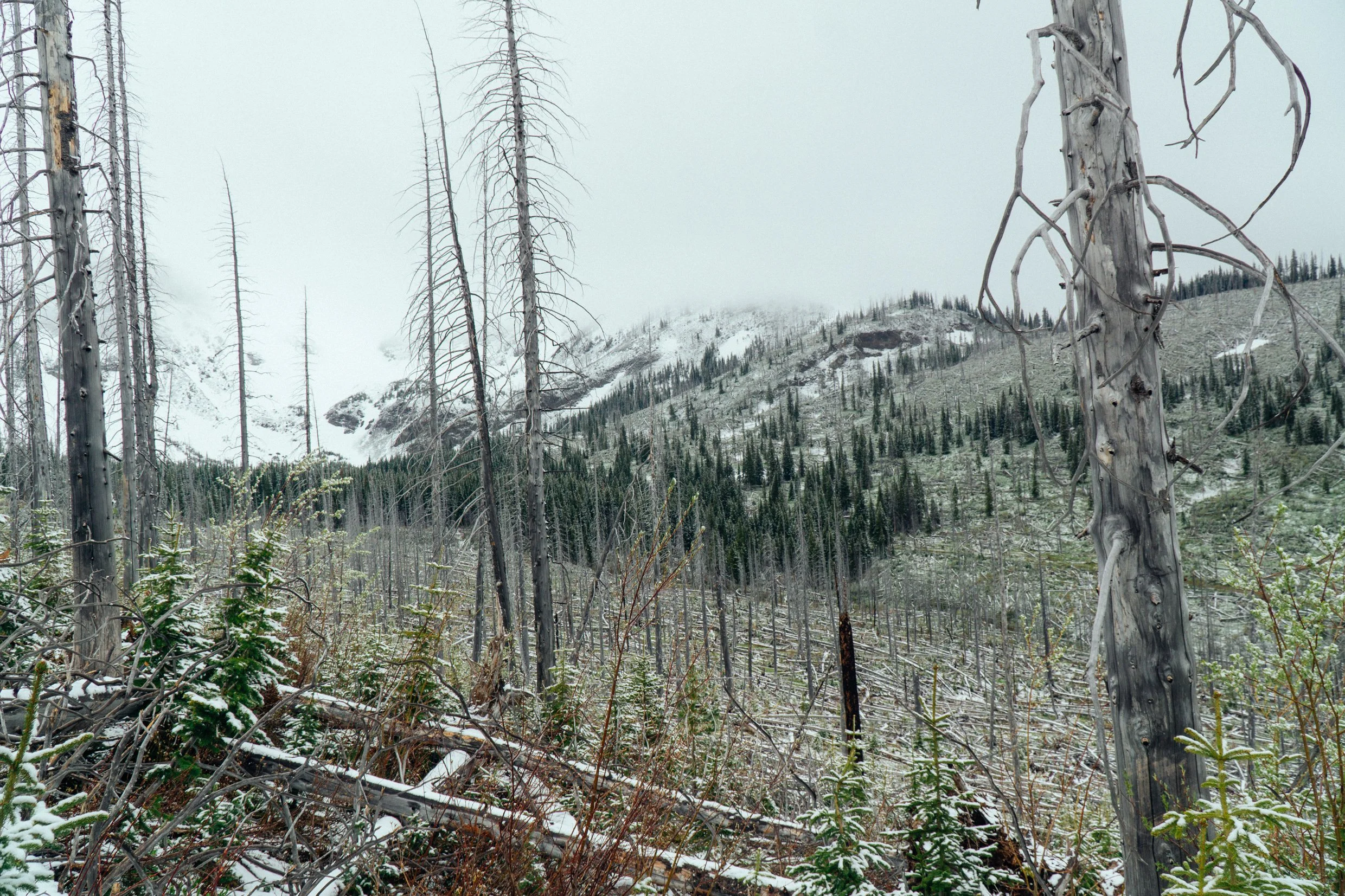
The delicate balance of regrowth amid standing dead trees in a fire-altered ecosystem.

A stark example of poor regeneration in severely burned areas.

A close-up of a fire-scarred tree, telling the story of past infernos.

Sparse seedling recovery in a foggy, post-fire landscape.

A dramatic view of regrowth struggling against harsh mountain conditions.

Evidence of slow regeneration as scattered seedlings rise among fire-killed trees.
Waterton Lakes National Park
When Fire Tests the Limits of a Forest
Waterton Lakes National Park is home to fire-adapted species like Douglas-fir and lodgepole pine, but severe wildfires can push these ecosystems to their limits.
A few very large fires have swept through this landscape in recent decades, leaving behind a patchwork of resilience and loss.

The park is situated on the traditional lands of the Blackfoot Confederacy, comprising the Siksika, Piikani, and Kainai First Nations.
Can Fire-Adapted Forests Keep Up with Climate Change?
-
High-severity fires leave behind standing dead trees and exposed soil.
Without surviving trees to provide seeds, some burned areas are struggling to regenerate, making recovery even more challenging.
-
Scientists are mapping areas of seedling establishment to understand where forests are rebounding—and where regeneration is failing.
Rising temperatures and prolonged droughts make recovery increasingly unpredictable.
Data from this research will help predict whether these forests can recover—or if fire is permanently shifting the treeline.
Waterton Lakes National Park
Photos From the Field

A high-severity burn site, where forest recovery is uncertain.
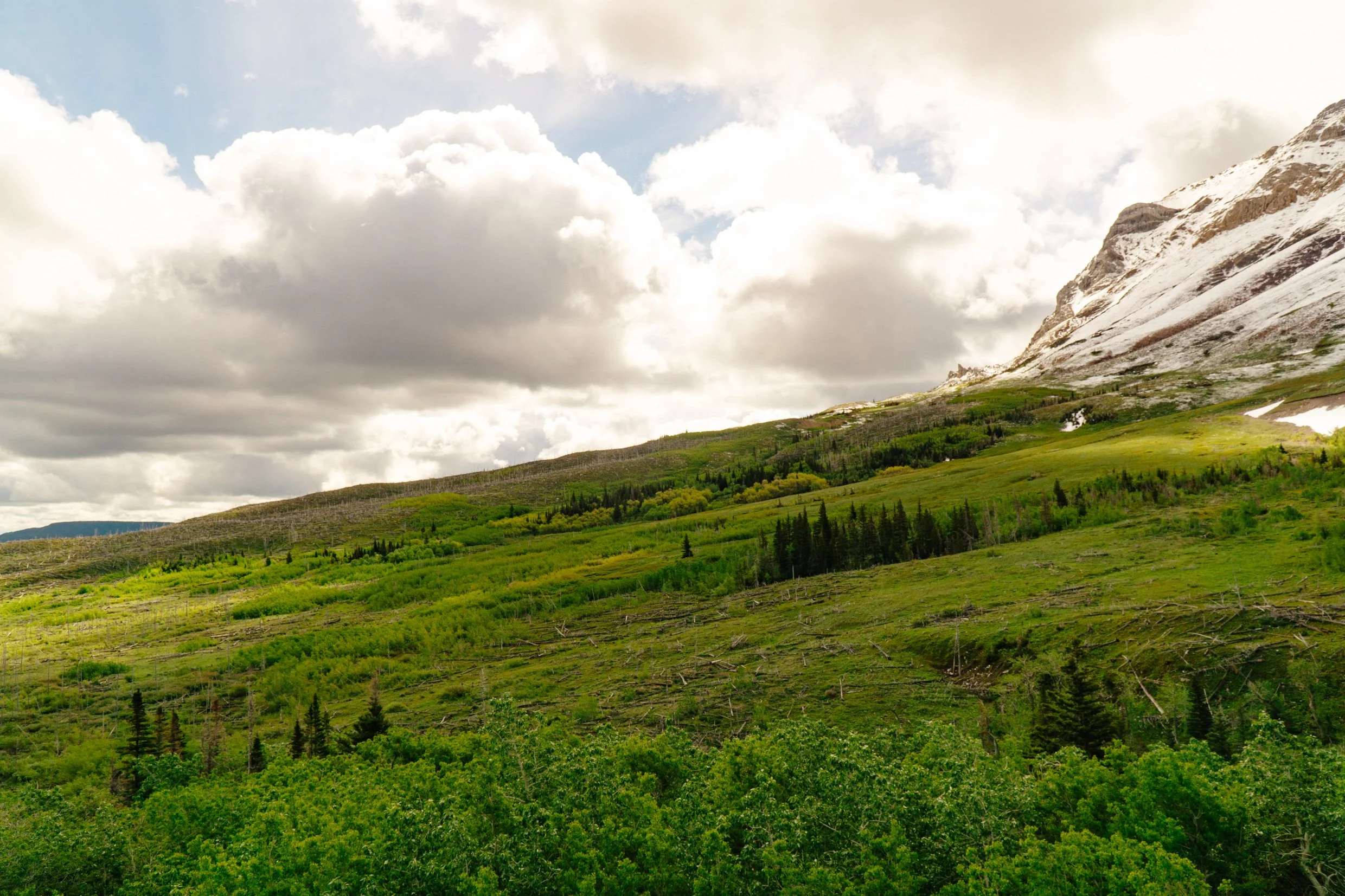
A mix of burned and surviving trees showing fire’s uneven impact.
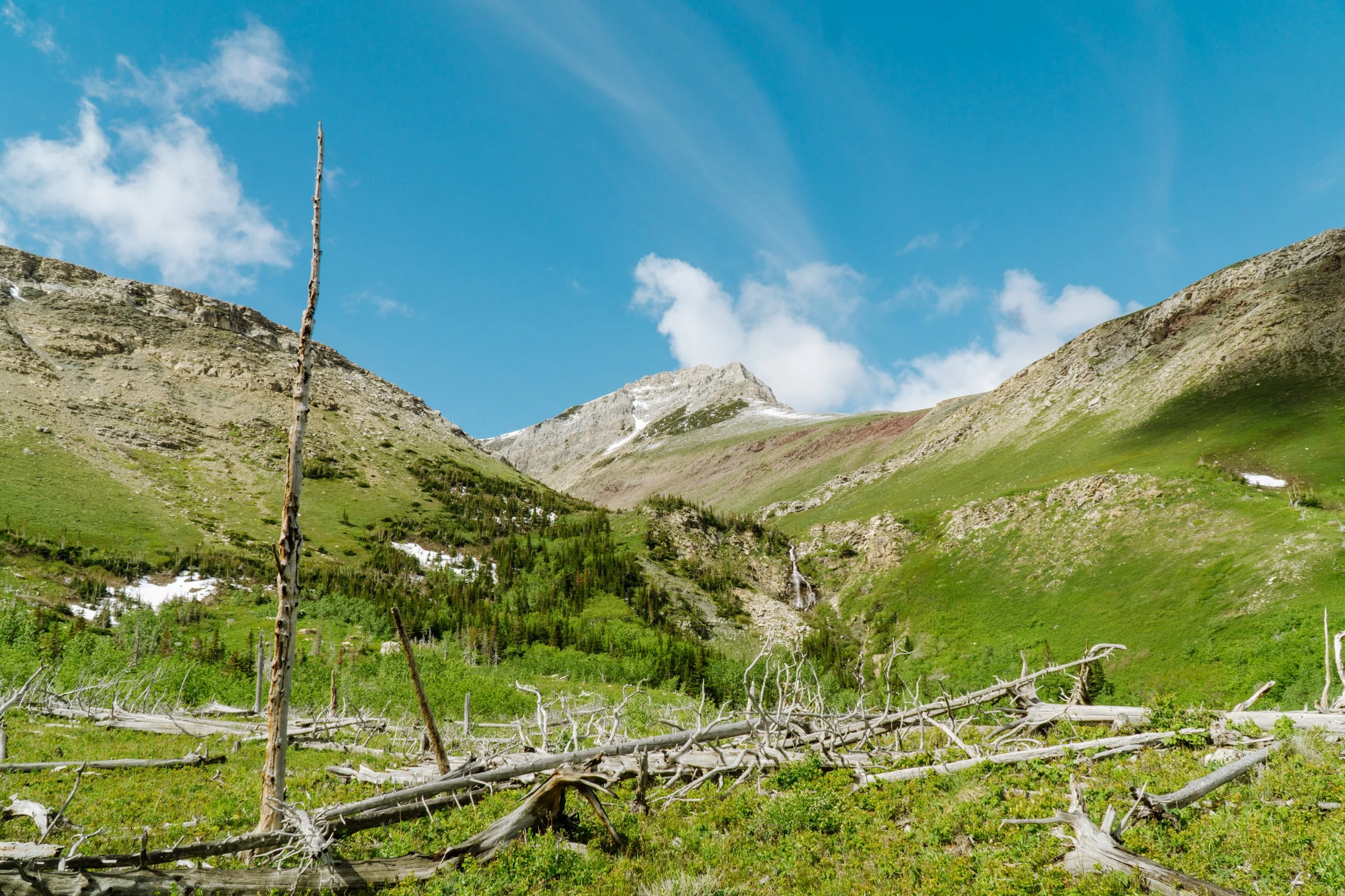
A resilient landscape where water and fire have shaped the forest.

Whitebark pine skeletons—a species struggling to regenerate after fire.
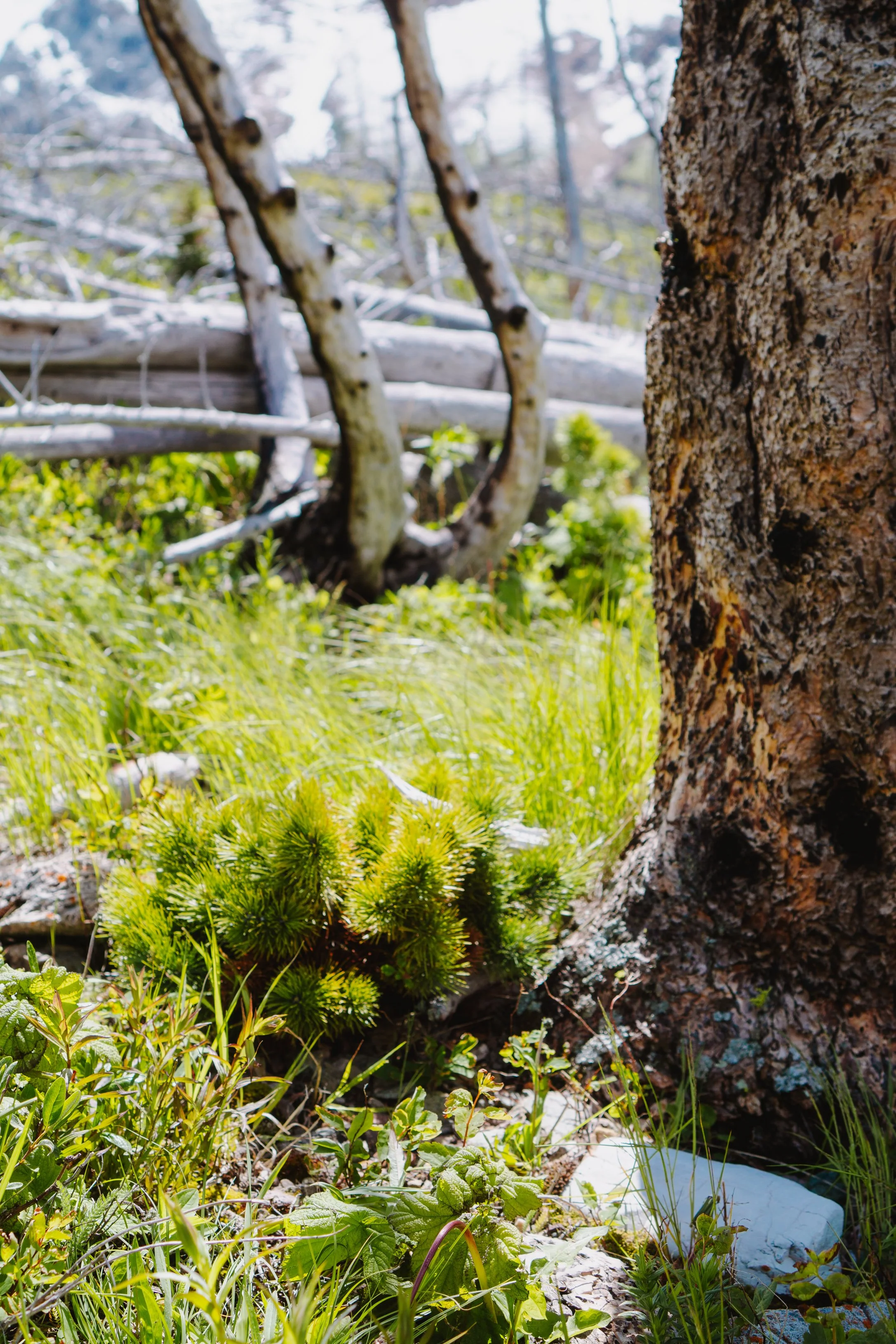
A rare success: a single seedling grows among lifeless trees.
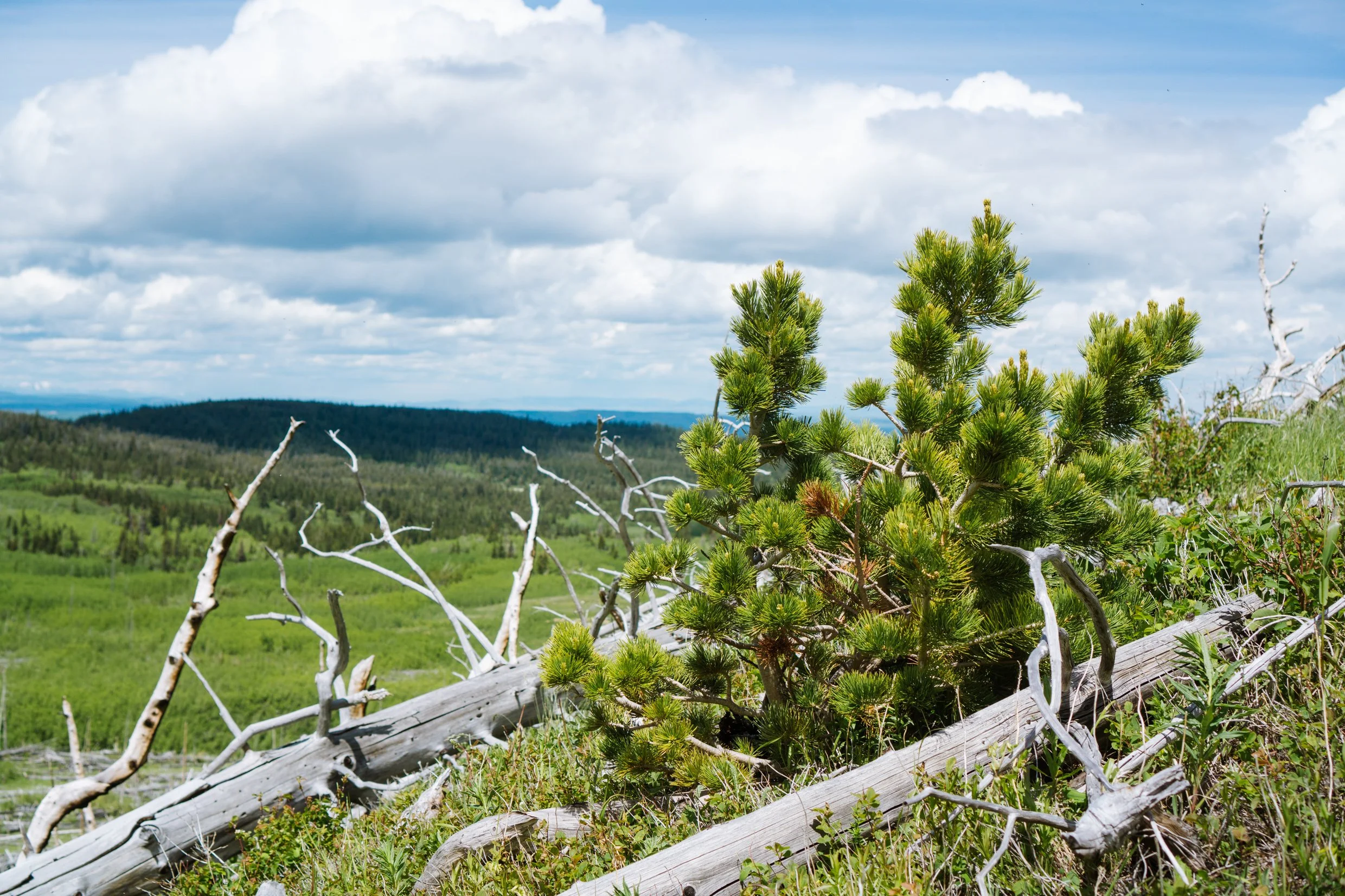
Hope for regeneration as new growth emerges in a burned forest.
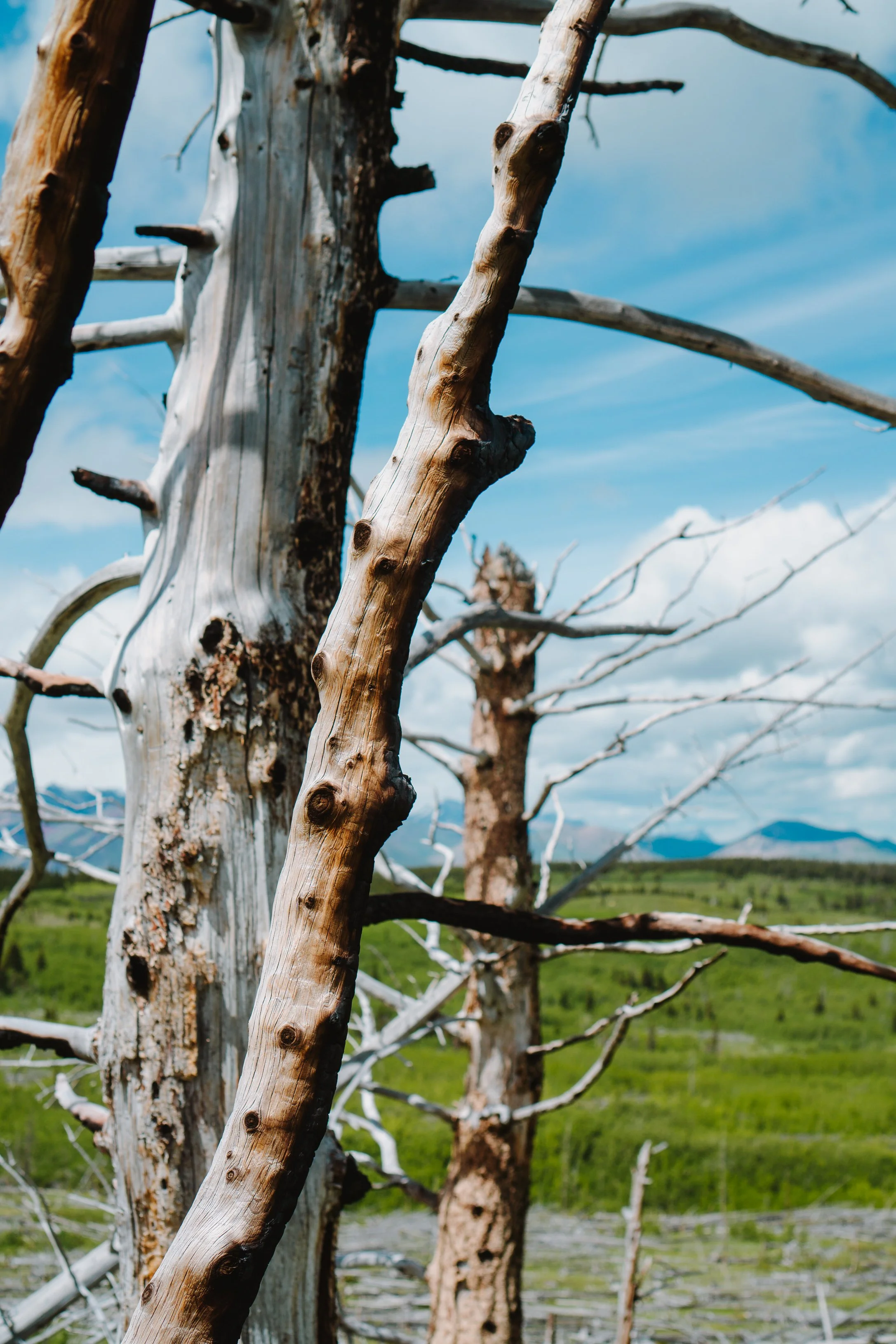
A haunting view of dead whitebark pines against a changing climate.

A stark contrast between fire-killed trees and regenerating vegetation.

Some burned areas remain lifeless, with little evidence of regrowth.

Dead trees stand tall in a grassy area, marking the long-term effects of wildfire.

A severe burn zone where regeneration is nearly absent.
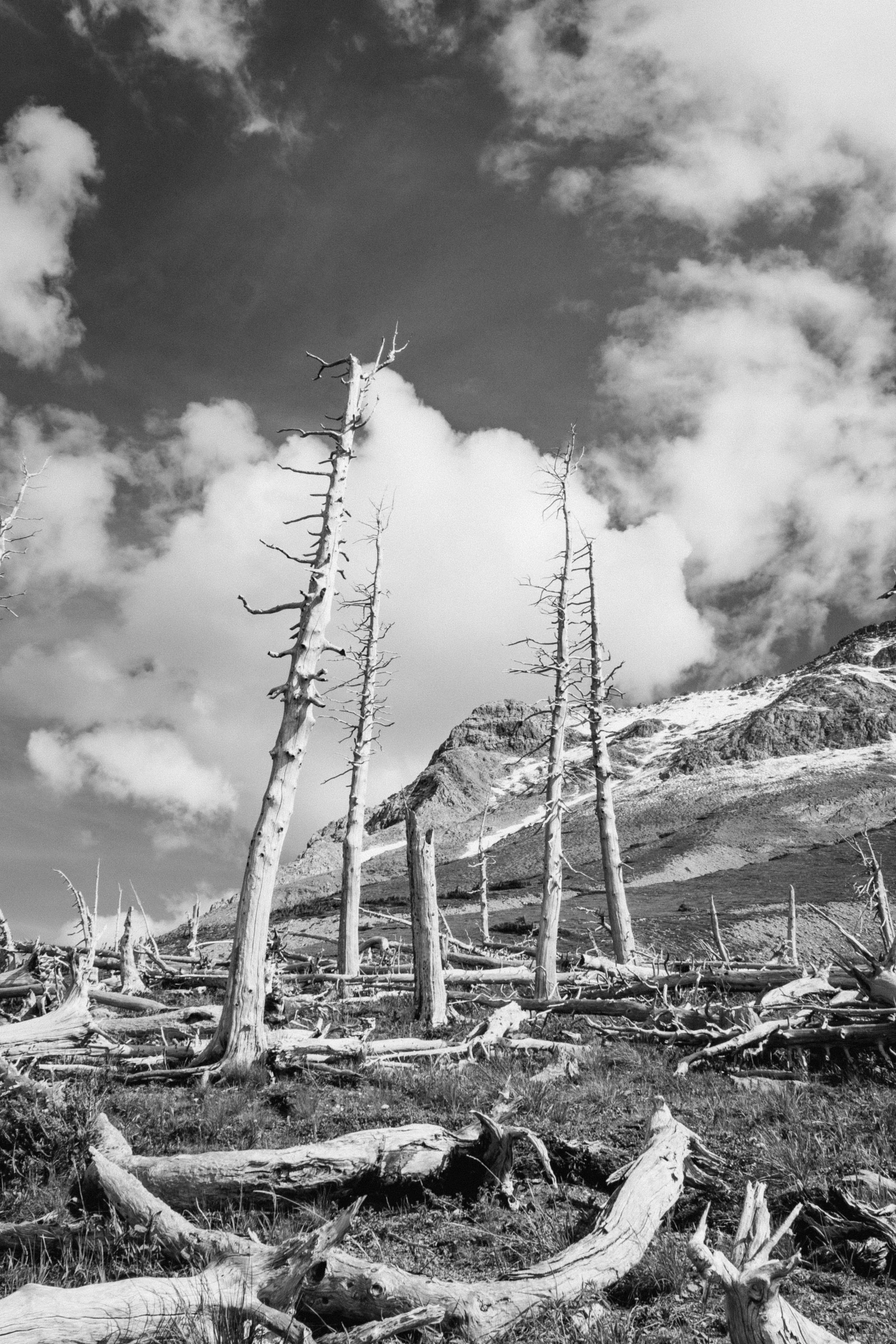
Whitebark pine, a keystone species, faces increasing threats from severe wildfires.
Wildhorse Ridge
Fire at the Edge of the Tree Line
Wildhorse Ridge, located in the subalpine and alpine zones, presents one of the most extreme environments for post-fire recovery. Here, fires not only clear forests but can permanently shift treelines, altering ecosystems for centuries.
This site provides insight into the challenges of post-fire recovery at high elevations, where trees are already near their physiological limits due to cold temperatures, short growing seasons, and low soil fertility.
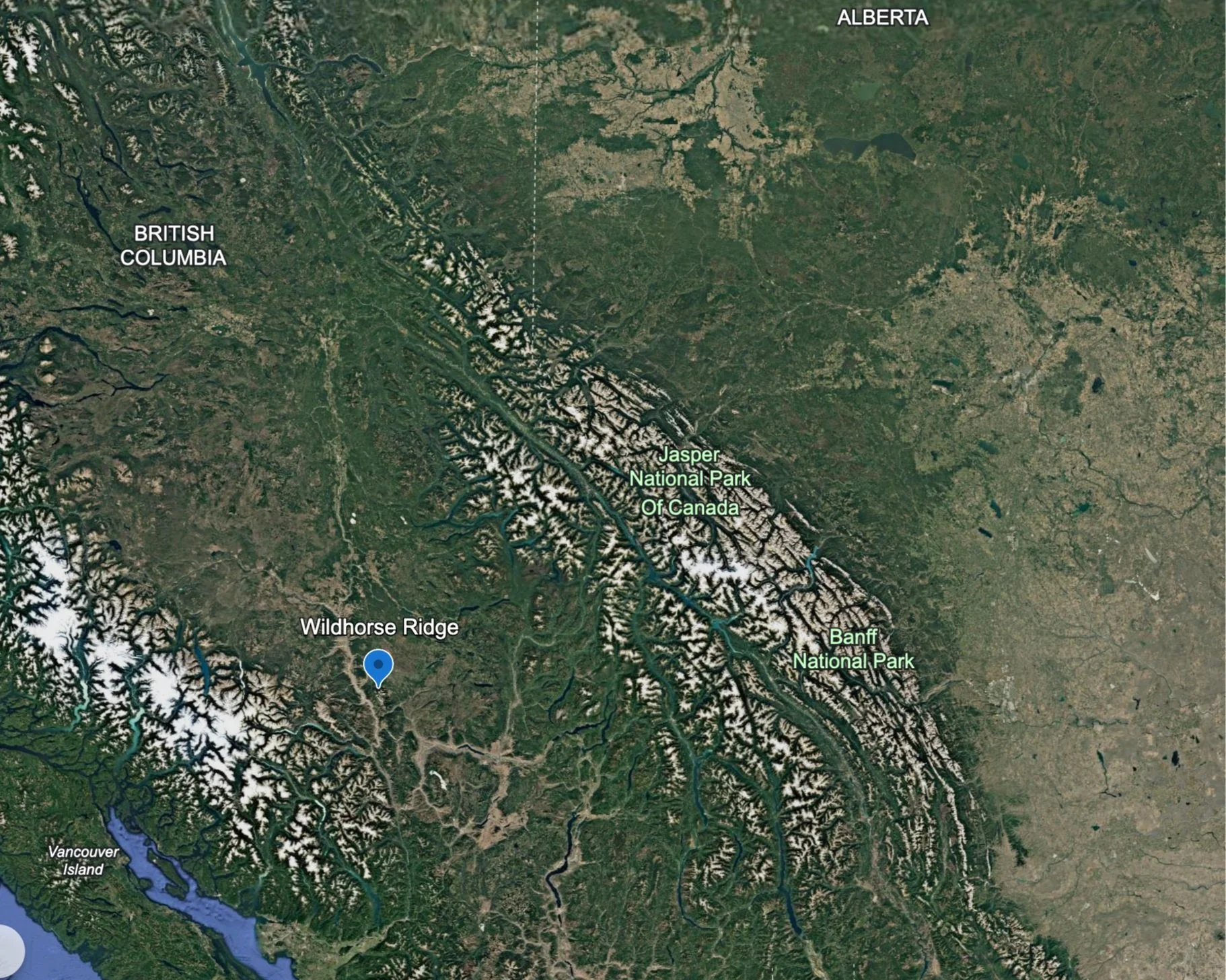
Wildhorse Ridge is situated in Treaty 7 territory, within the traditional lands of the Blackfoot Confederacy, comprising the Siksika, Piikani, and Kainai First Nations, the Stoney Nakoda, and the Tsuut’ina.
How Fire is Reshaping the Alpine Treeline
-
Some ridges remain bare decades after burning, suggesting that these forests may not recover at all.
Whitman’s team is analyzing tree recruitment to predict where treelines are shifting permanently.
-
Post-fire conditions here are unlike those at lower elevations—cold temperatures, high winds, and a short growing season make tree survival a challenge.
Even where seeds are present, seedlings can struggle to survive due to frost and moisture loss.
-
Data collected from this site will help predict whether these landscapes will regenerate or transition into open alpine terrain.
If tree recruitment continues to fail, this may mark the permanent retreat of forests from high elevations.
Wildhorse Ridge
Photos From the Field
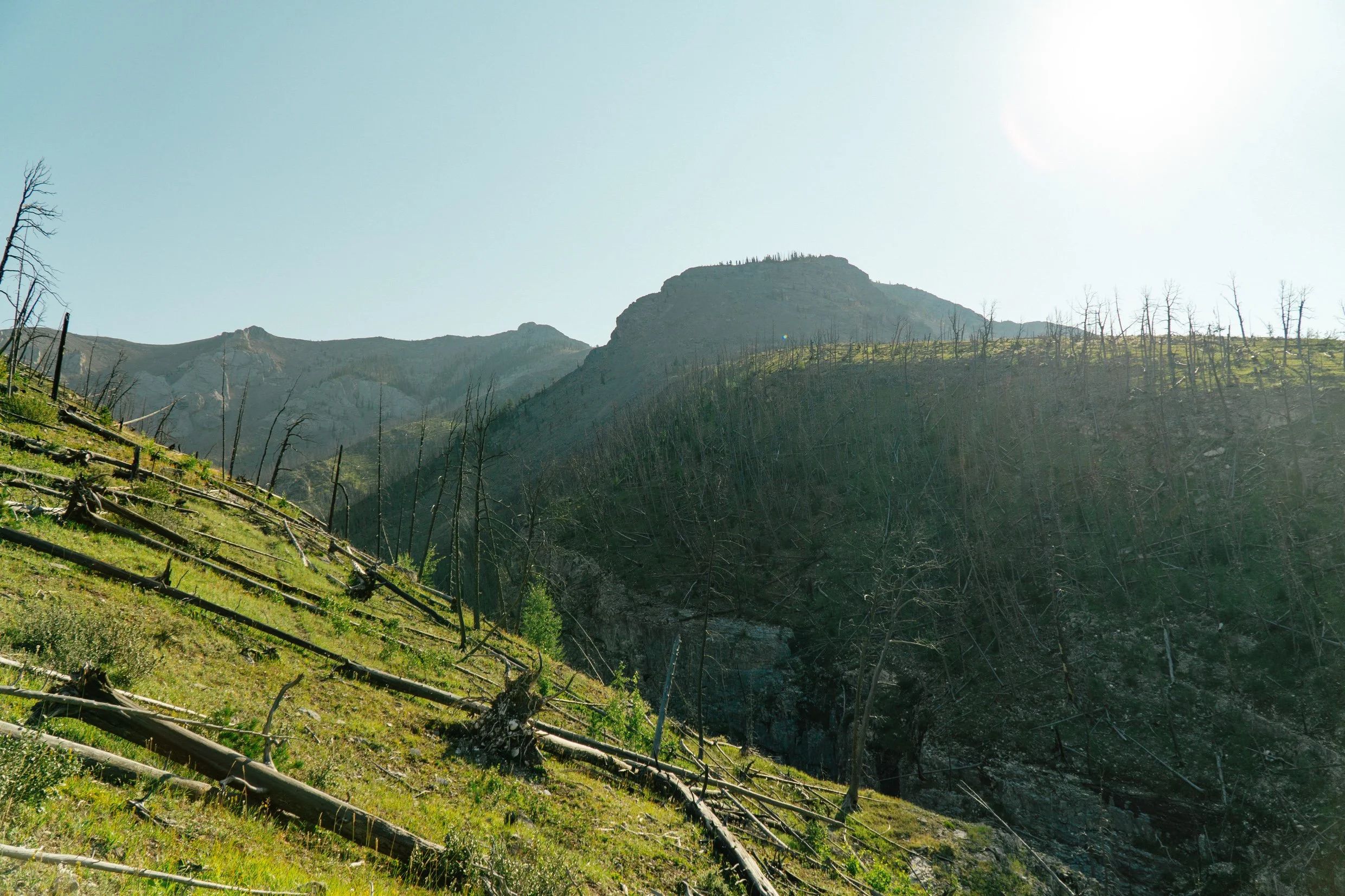
A few seedlings struggle to take hold on a steep, fire-impacted slope.

A mix of forest types and fire severity, showing uneven recovery.

A burned patch where scattered seedlings are beginning to reclaim the land.

High-elevation burn zones where recovery faces extreme conditions.

Alpine landscapes show slow signs of life returning.
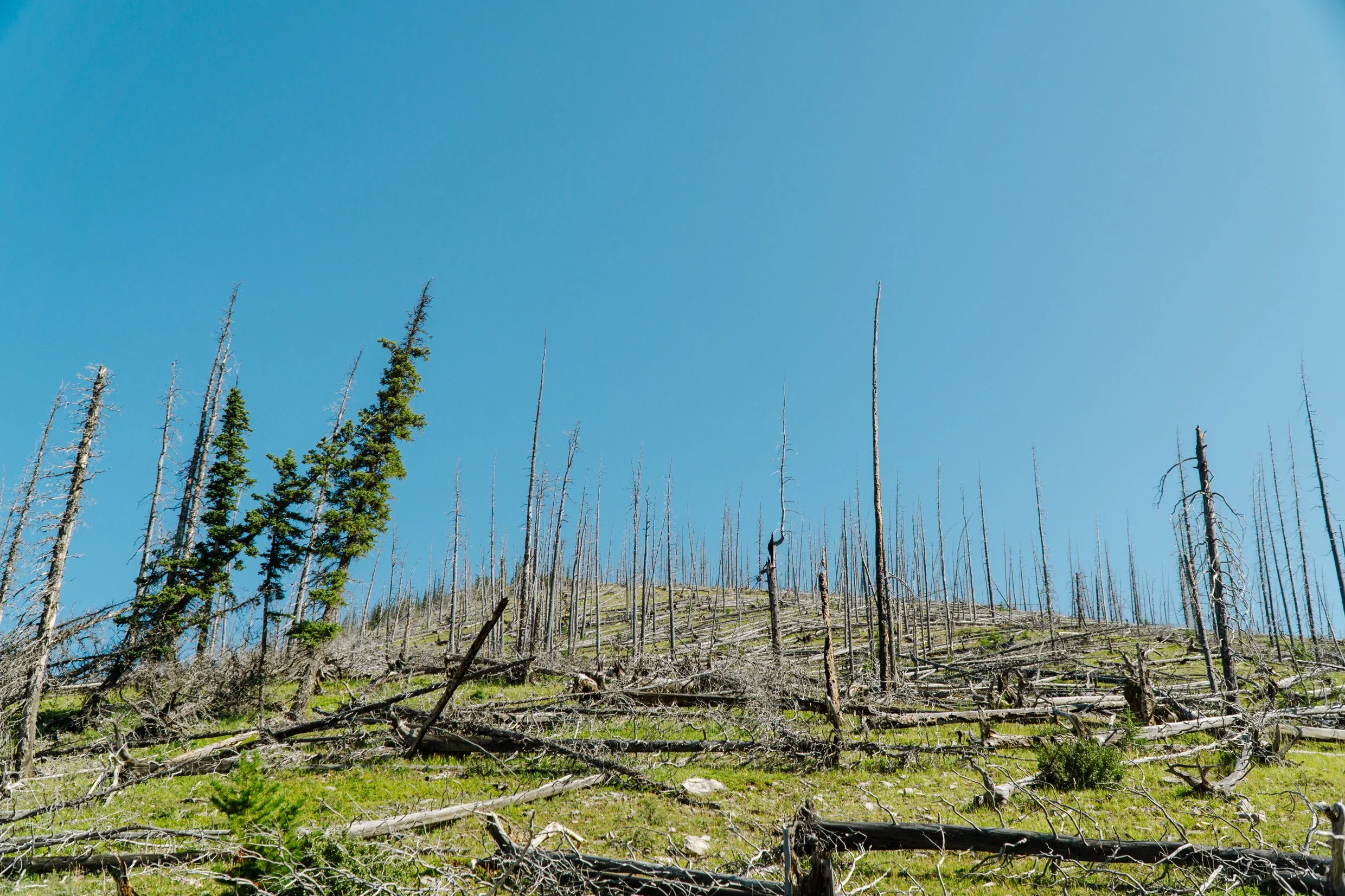
A resilient spruce tree stands amid a field of fire-killed trunks.

Scattered pine seedlings struggle in a harsh post-fire environment.
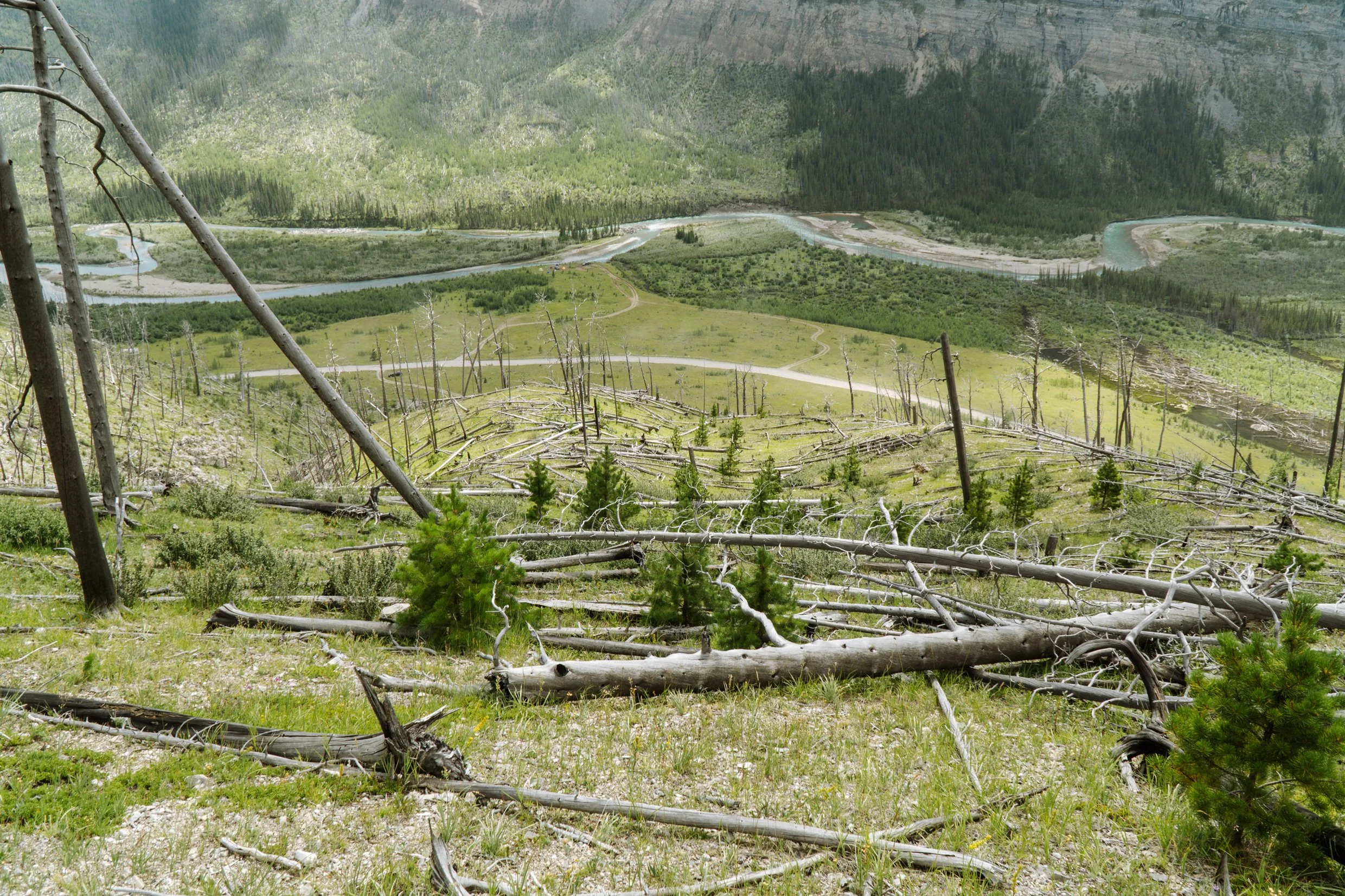
A valley landscape where regrowth is patchy and uncertain.
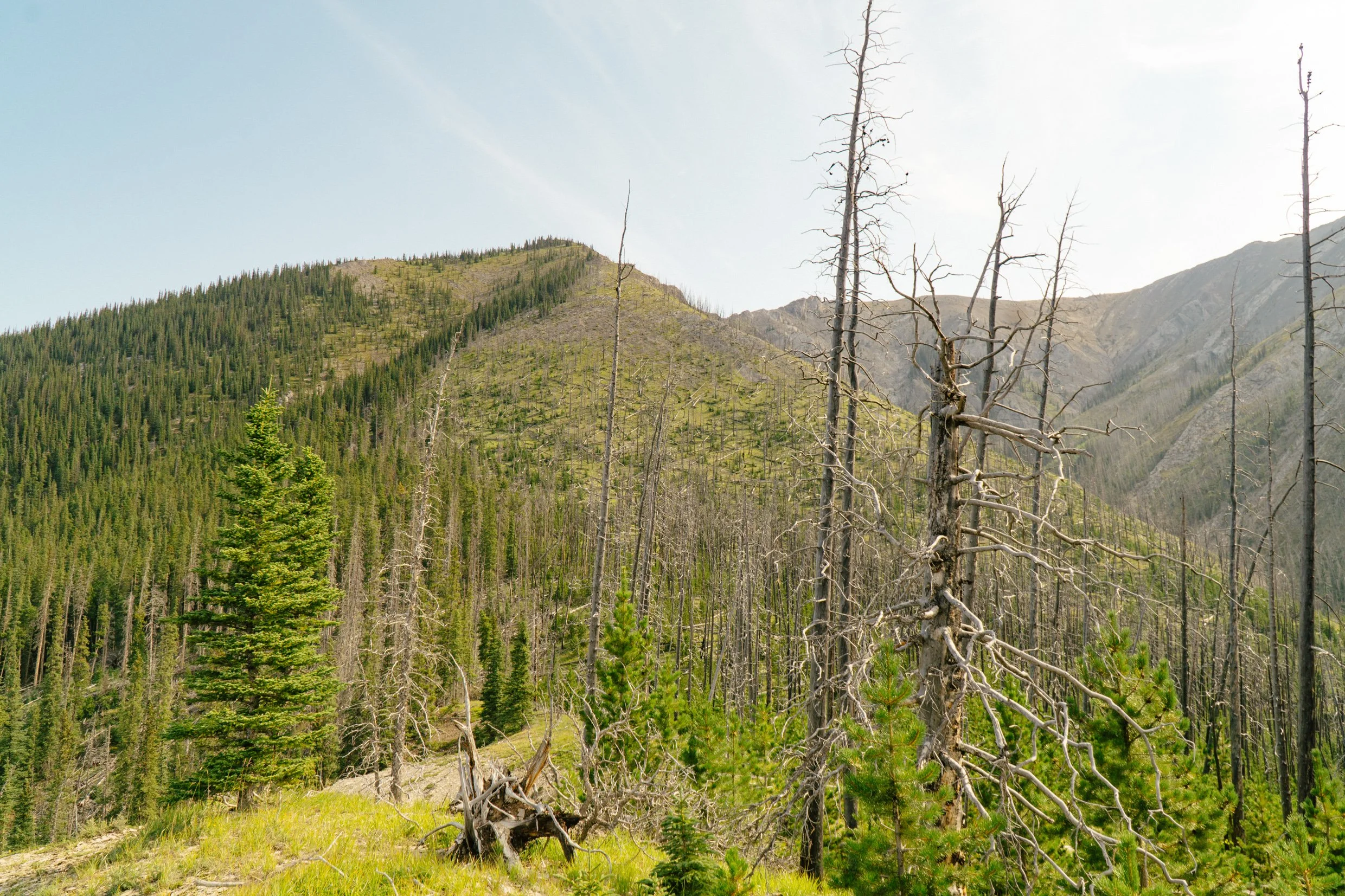
The edge of a burn zone, where seedlings push through the charred remains.

Seedlings emerge in a burned area, with a healthy forest in the background.

A steep slope where whitebark pine struggles to return.
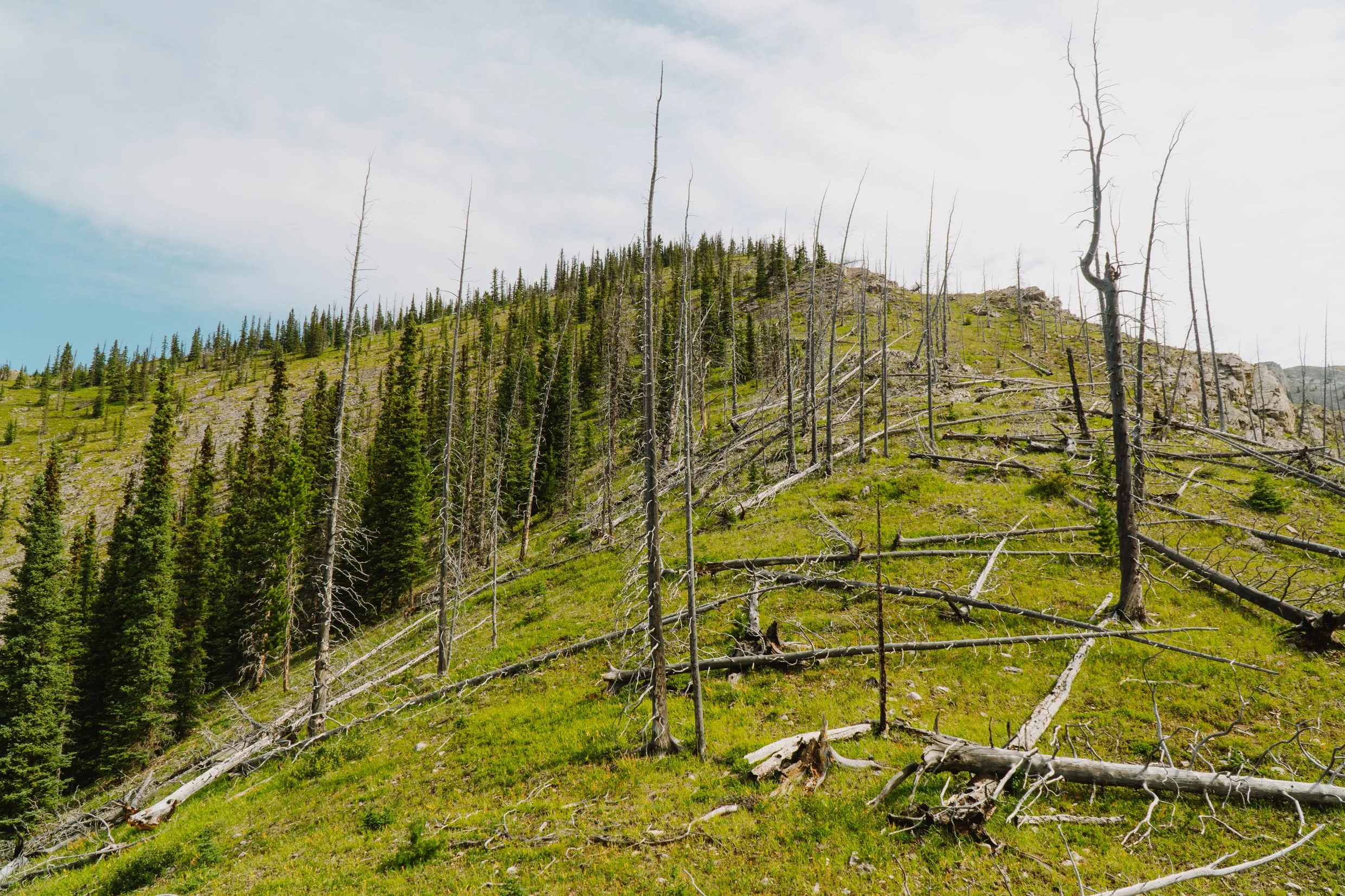
Fire’s boundary is marked by live and dead trees standing side by side.
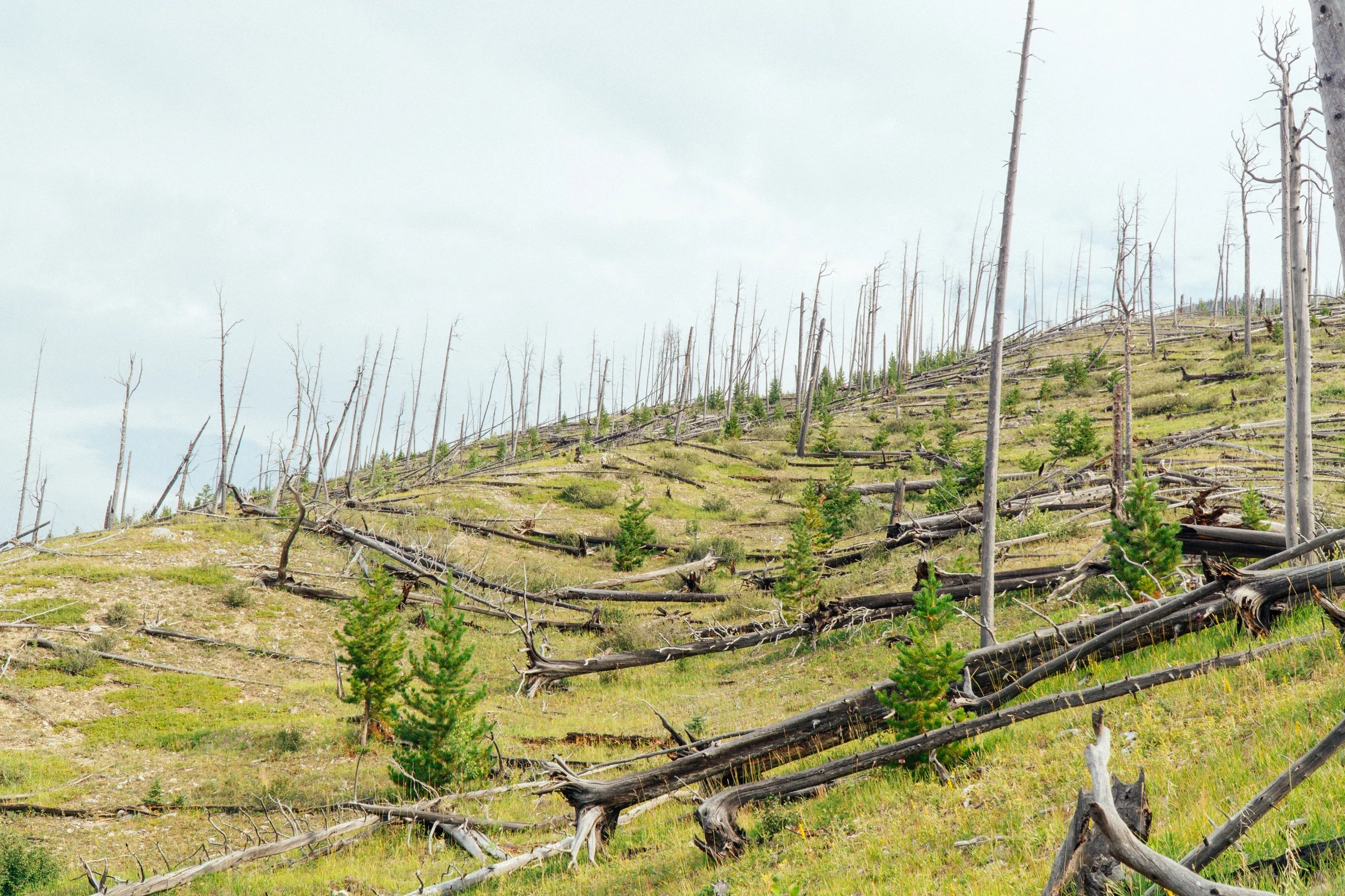
A hopeful sign of regeneration as scattered pines emerge.
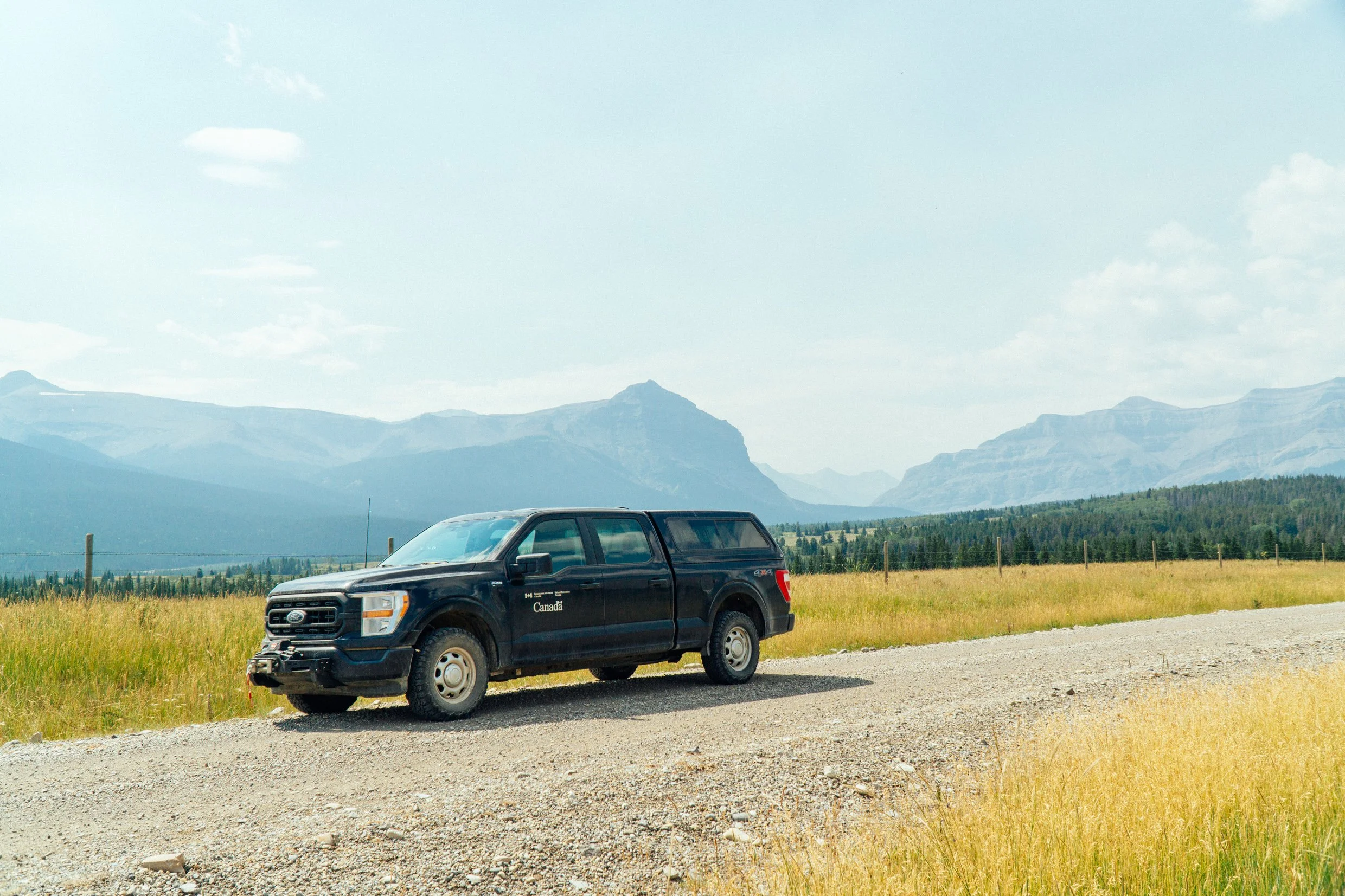
Field crew’s vehicle parked against a dramatic post-fire landscape.
Proactive Fire Stewardship and Post-Fire Recovery
Fire has always shaped Canada’s forests - serving as both a force of renewal and a natural challenge to ecosystem stability.
Dr. Ellen Whitman and Dr. Kira Hoffman, both National Geographic Explorers and Trebek Initiative Grantees, are leading research that reveals two vital sides of wildfire resilience:
Connecting Wildfire Research:
Ellen’s project examines how forests regenerate—or fail to recover—after wildfires.
Her team analyzes burn severity, seed dispersal, soil conditions, and climate impacts to determine why some forests thrive after fire while others struggle.
This research helps predict where intervention is needed to support regeneration and prevent ecosystem collapse.
Post-Fire Recovery
Dr. Ellen Whitman (2024 Trebek Grantee)
Kira’s research focuses on Indigenous-led cultural burning—a practice that has maintained forest balance for thousands of years.
Cultural burning reduces fuel loads, decreases the severity of wildfires, and supports biodiversity.
By integrating traditional fire knowledge with modern science, fire stewardship can improve wildfire resilience and increase food security for communities.
Proactive Fire Stewardship
Dr. Kira Hoffman (2023 Trebek Grantee)
Explore Trebek Grantee and National Geographic Explorer - Dr. Kira Hoffman’s research on Indigenous fire stewardship and see how cultural burning can potentially improve wildfire management and increase food security.

“The forests we know today are shaped by fire, but the climate is changing. Our work must explore how ecosystems are adapting to fire in new ways—and how we can help them recover
”
Active Cultural Burning in Canada
Six active cultural burning projects in Western Canada demonstrate the impact of traditional fire stewardship and offer insights into how controlled burning can rejuvenate ecosystems, mitigate wildfire risks, and strengthen cultural ties.
Gitanyow Lax’yip Guardians
A collaborative effort between the Gitanyow Lax’yip Guardians, fire ecologist Kira Hoffman, and BC Wildfire Service has returned the benefits of cultural burning to the Nation.
The project blends Indigenous and Western science fire applications and monitoring efforts. Early results highlight the importance of Indigenous-led stewardship in improving ecosystem health while supporting respectful knowledge exchange. Learn more about Using Fire to Heal the Land
(2023, British Columbia)
Multiple B.C. Indigenous Communities
This effort, led by the Xwísten (Bridge River) First Nation, Shackan Indian Band, and Yunesit’in National Government, in partnership with the First Nations’ Emergency Services Society, is an Indigenous response to climate change. Cultural burning is being employed to address drought and wildfire, with initial signs of success in enhancing biodiversity and landscape resilience.
Though bureaucratic challenges persist, this project demonstrates how traditional knowledge can effectively tackle modern environmental threats by linking cultural practices with climate resilience
Discover new research that finds that Canada needs Indigenous-led fire stewardship
(2023, British Columbia)
Waterton Lakes National Park
A partnership between Parks Canada and the Kainai Nation brought cultural burning beyond national park boundaries, integrating traditional protocols like blessing ceremonies to honour the spiritual significance of fire.
The burn is already showing positive effects on plant regeneration and biodiversity. This collaboration stands as an example of how cultural practices can be honoured alongside modern conservation strategies, fostering both ecological balance and community healing
Find out how Waterton Lakes National Park worked closely with Kainai Nation
(2022, Alberta)
Salish Fire Keepers Society
The Salish Fire Keepers Society conducted cultural burns with a strong focus on community participation, involving elders and youth to ensure knowledge transmission. Slow, cool burns managed undergrowth and restored culturally significant vegetation.
The involvement of multiple generations has been critical, ensuring that traditional practices are preserved and serve as effective tools in reducing fire risk and restoring native species. Early results emphasize the power of cultural continuity in community-driven conservation
(2022, British Columbia)
Lil'wat Nation
The Lil'wat Nation conducted a cultural burn aligned with their traditional agricultural cycles to encourage the growth of food and medicinal plants. This approach shows promising results in improving soil health and supporting community resilience.
By aligning fire use with cultural rhythms, the Lil'wat Nation has demonstrated the deep connection between land management and traditional agriculture, offering a unique perspective on how cultural practices sustain both ecosystems and community well-being
Cultural burning practices are returning in British Columbia, led by Indigenous communities working to restore their landscapes and reduce wildfire risks. Learn More about Cultural Burning and Prescribed Fires in Canada
(2022, Mount Currie, British Columbia)
FortWhyte Alive
In 2019, a cultural burn was conducted at FortWhyte Alive in Winnipeg, Manitoba, with a unique emphasis on education. This burn aimed to restore native vegetation while educating the community about Indigenous fire stewardship.
By removing invasive species and rejuvenating native plants, it demonstrated how cultural burning can serve as both a conservation and educational tool, fostering reconciliation by raising awareness of traditional practices.
(2019, Winnipeg, Manitoba)
Explore Further
Stories from the Trebek Initiative’s Media Partners
Traditional fire stewardship is regaining recognition for restoring ecological balance and reconnecting communities with their heritage.
Explore these related stories from National Geographic and Canadian Geographic to gain a deeper understanding of traditional fire management's importance and impact.

STORIES
How Australia's Aboriginal People Fight Fire—with Fire

Aboriginal people in Australia have long used fire to manage the land, prevent extensive wildfires, and sustain biodiversity.
Learn how these ancient practices are helping to protect ecosystems and communities.
An Indigenous Practice May Be Key to Preventing Wildfires

Across North America, Indigenous communities are reviving traditional fire stewardship to reduce the risk of destructive wildfires. This article highlights how cultural burns are recognized as a valuable method for preventing large fires while promoting healthier landscapes.
This Indigenous Practice Fights Fire with Fire

In this podcast episode, National Geographic explores how Indigenous communities in the American West are reviving traditional burning techniques to manage their environment and protect against the damaging power of wildfires.

STORIES
Mapping 100 Years of Forest Fires in Canada
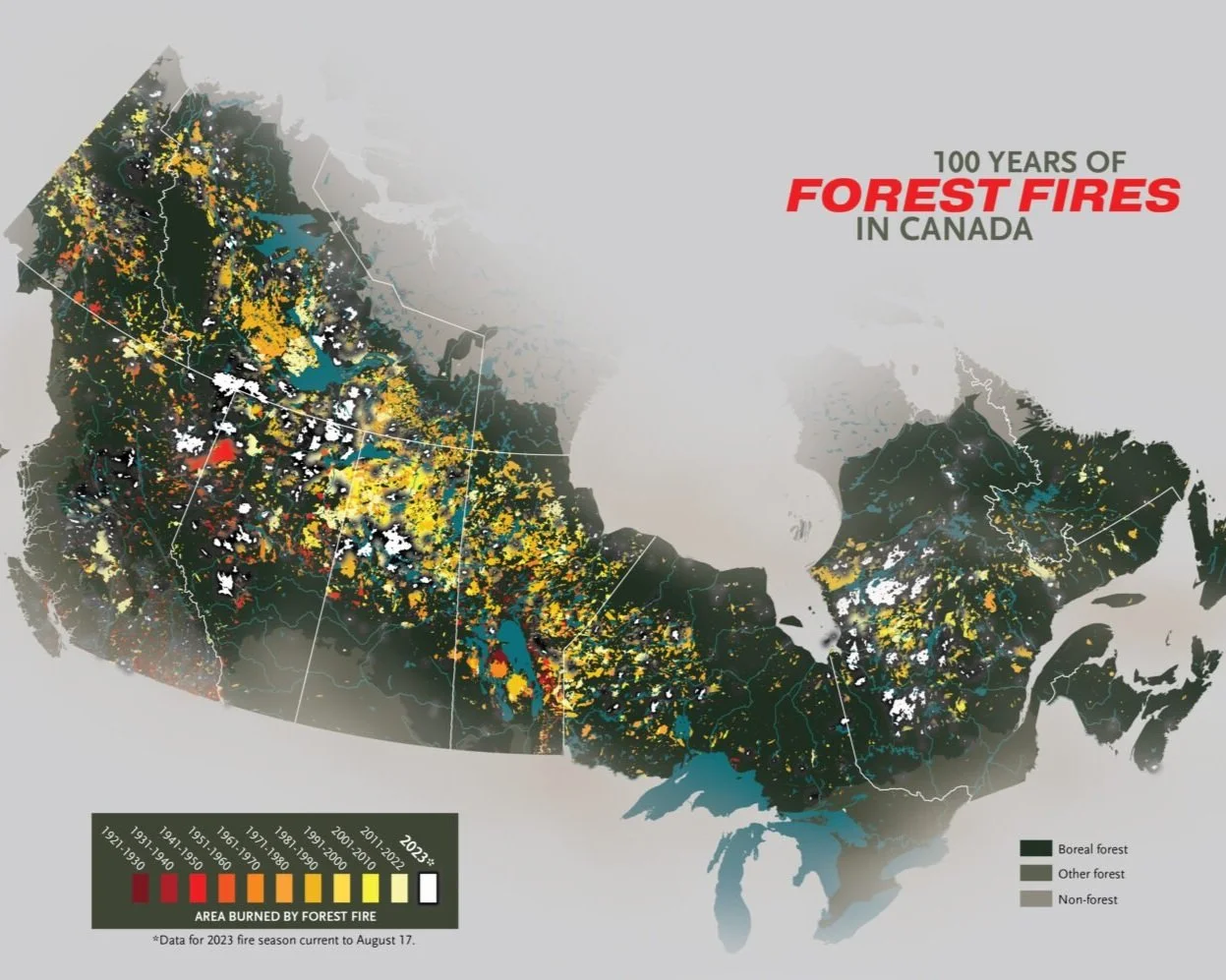
How unprecedented was Canada’s 2023 fire season? A look at the past century of fire activity.
MEET THE TEAM
-
Dr. Ellen Whitman
2024 TREBEK GRANTEE AND PROJECT LEAD
Dr. Ellen Whitman is a forest fire research scientist with Natural Resources Canada in the Canadian Forest Service. She holds a PhD in Forest Biology and Management from the University of Alberta, where she specialized in fire ecology and the remote sensing of burn severity.
Her work focuses on understanding how climate change affects forest regeneration after wildfires, with a strong emphasis on predictive modelling and field-based ecological assessments.
Ellen has led extensive field studies across Canada’s boreal and montane ecosystems, working with land managers and Indigenous communities to ensure her research has practical applications for wildfire management and policy development.
-
Dr. Marc-André Parisien
WILDLAND FIRE RESEARCH SCIENTIST
Dr. Marc-André Parisien is a wildfire specialist with Natural Resources Canada in the Canadian Forest Service, known for his expertise in spatial analysis and fire behaviour modelling.
He earned his PhD in Environmental Science from the University of California, Berkeley, where he focused on probabilistic mapping of fire occurrence. His research helps understand how spatial patterns of fire and fire history modify forests, and how fire responds to climate change, providing key insights into long-term landscape resilience.
With decades of experience conducting fieldwork and spatial analysis in post-fire environments, Marc-André is crucial in analyzing the geographic and climatic factors that influence forest recovery across Western Canada.
-
Dr. Sean Parks
FIRE ECOLOGY & VEGETATION DYNAMICS PROFESSOR
Dr. Sean Parks is a research scientist with the USDA Forest Service and a recognized leader in remote sensing applications for wildfire ecology.
He holds a Phd in Forestry from the University of Montana, where his research focused on utilizing satellite imagery and GIS technology to evaluate the ecological impacts of wildfires. Sean has developed innovative mapping techniques to track fire spread, severity, and post-fire recovery, making him an invaluable asset to the project.
His expertise ensures that field data is effectively integrated with large-scale spatial models to predict forest vulnerability and resilience under future climate conditions.
-
Dr. Jonathan Coop
FIRE ECOLOGY & VEGETATION DYNAMICS PROFESSOR
Dr. Jonathan Coop is an ecologist specializing in the role of fire in shaping vegetation communities and landscape transformations.
His research explores how tree species at the edge of their climatic range respond to disturbance, particularly in alpine and subalpine environments. Jonathan’s contributions to this project focus on understanding how fire alters the structure and composition of forests, with an emphasis on long-term ecological shifts.
His expertise in vegetation dynamics helps the team determine whether burned landscapes are on a trajectory toward recovery or a fundamental state change.
-
Dominique Letourneau
FIELD TECHNICIAN
Dominique Letourneau specializes in soil and organic matter analysis, providing essential data on how fire affects soil conditions and nutrient availability.
Her work focuses on measuring soil depth, moisture retention, and recovery of the organic layer in post-fire landscapes. Understanding these factors is critical for predicting whether an area will successfully regenerate or transition to a new vegetation type.
Dominique’s field expertise, combined with her background in environmental monitoring, ensures that soil health is a key component of the team’s broader study of fire-driven ecological change.
Follow @trebekinitiative on Instagram
For more inspiring stories and discoveries from our Trebek Initiative Grantees.
Stay informed about groundbreaking projects like Kirsten's and witness the journey of exploration, innovation, and hope that illuminates and inspires appreciation for Canada's rich natural and cultural heritage.