The Mount Meager Volcano Project:
A Journey into Canada’s Most Active Volcano
2021 Trebek Grantee
Christian Stenner

Christian Stenner explores Mount Meager’s hidden ice caves as a citizen scientist—balancing rigorous research and the thrill of discovery.
Exploring Canada’s Active Volcano
Discover Mount Meager’s Hidden Wonders
Join 2021 Trebek Grantee and National Geographic Explorer Christian Stenner as he journeys deep into Q́welq́welú́sten, the Mount Meager Volcanic Complex—Canada’s only known active volcano. This massif has been described as Canada’s most dangerous mountain. The Mount Meager Project expedition ventured into glacial cave systems shaped by volcanic forces and changing climate, an ambitious and challenging undertaking.
Stenner and his team are uncovering thriving extremophile microbial communities, and using cutting-edge technologies like LiDAR to map this ever-evolving and hazardous environment in remarkable detail.
Their exploration illuminates the powerful geothermal processes at work beneath the ice and enhances hazard preparedness for communities living in the shadow of this active volcano.
The team’s efforts enhanced technologies for space exploration and life detection on other worlds. The project offers valuable insights which help scientists understand where and how life might exist beyond Earth and reveals the incredible resilience of life in these extreme conditions.
EXPLORE THIS PROJECT

PHOTOS FROM THE FIELD
Journey into Q̓welq̓welústen: Where Fire Meets Ice
Explore the captivating world of Q̓welq̓welústen, known as Mount Meager—a place where fire and ice collide.
Christian Stenner led a project to venture into the volcanic caves, mapping the cave network and uncovering how geothermal forces shape the frozen landscape.
Discover how these hidden worlds provide insights into volcanic activity, natural hazards, and even the search for life beyond Earth.

SCIENCE
Science of Q̓welq̓welústen: Unveiling Earth's Extremes
Mount Meager, or Q̓welq̓welústen, is a landscape sculpted by the clash of fire and ice.
The team’s research dives deep into volcano-ice interactions, geothermal forces, and resilient life forms that adapt to harsh conditions.
These caves offer a unique glimpse into how life might exist on other planets and hold clues about the level of volcanic activity and resulting hazards to nearby communities.

EXPLORATION
Bridging Earth’s Extremes NASA’s Search for New Life
The caves of Mount Meager are crucial testing grounds for NASA’s search for life beyond Earth.
The dark, icy environment found here has similarities to places on ice-covered ocean worlds like Enceladus that could harbour life. The team’s research helps shape exploration strategies and technology for future space missions.
Discover how these insights are paving the way in the search for life beyond Earth.

HISTORY & CULTURE
Traditions and Cultural Significance of Q̓welq̓welústen
Q̓welq̓welústen, known as Mount Meager, is more than just a mountain.
The Lí’lwat people knew it as the “cooked face place” or “cooked fireplace.” Oral traditions contain the volcanic history of this massif, the transformation of the landscape, and the past impact to First Nations communities.
This project honours that legacy, expanding our knowledge of the mountain's dynamic interactions with the land which were known in Oral traditions for centuries.

Journey to Q̓welq̓welústen: Where Fire Meets Ice
Mount Meager, known to the people of the Lí’lwat Nation as Q̓welq̓welústen, is more than a mountain—it is a powerful and potentially dangerous place. Over 2,360 years ago, a formidable eruption reshaped the landscape, embedding itself in the Oral traditions of the Lí’lwat people.
The landslide of 53 million cubic meters of debris in August 2010 was the largest recorded in Canada, while additional unstable slopes threaten even greater landslides. Glacial retreat has been proposed as a possible factor in triggering a landslide-induced volcanic eruption. Both landslide modelling and volcanic debris flow modelling have shown that there is a significant threat to residents and communities in the Pemberton Valley.
Large cave openings emitting steam and gas on Job Glacier at Mount Meager were observed by a helicopter pilot in 2016. This signalled a re-awakening of the volcano; the activity that started to cause concern. Models of future eruptions showed that ash could blanket Western Canada while nearby communities could be devastated.
But with the source of the activity underneath a glacier and with deadly volcanic gas coming from under the ice, scientists could not safely reach the source of the volcanic activity.
In 2019, Christian Stenner, a National Geographic Explorer, first began an exploration of these glaciovolcanic caves with his team. His research examines how geothermal heat and glacial ice interact and reveals previously inaccessible, rare ecosystems.
Discover the clash between geothermal forces and glacial ice, the extremophiles adapting to life at the edge, and the innovative tools enabling exploration of this hidden world.






Unlocking Mount Meager‘s Volcanic Secrets

An illustration of Mount Meager's glacial volcanic landscape, showing geothermal heat interacting with the glacier to create underground caves. (Illustrated by Alex Boersma)
Select the image to view an interactive model of this illustration.
A mission to uncover the hazards of one of Canada’s northernmost volcanoes
In 2016, new, strange caverns were observed in the ice at Job Glacier at Mount Meager. The gas and steam coming from the openings indicated volcanic activity.
This discovery led to a series of multidisciplinary expeditions culminating in 2022, involving explorers, volcanologists, planetary scientists, and robotics engineers.
The team's objectives included taking measurements to assess the volcanic hazard to nearby communities, studying extremophiles thriving in these extreme conditions, and testing advanced technologies for exploring other planets.
The Cascade Volcanic Arc:
A Chain of Active Fire and Ice
The Cascade Volcanic Arc stretches 1,200 kilometres along the western edge of North America, from California to British Columbia.
It represents a dynamic geological system where tectonic activity and glaciation intersect to create a unique landscape.
The image below shows notable volcanic sites, including Mount Meager (Q̓welq̓welústen), Mount Garibaldi (Ch’kay-Nch’kay), Mount Rainier, and Mount St. Helens—part of a region marked by frequent volcanic eruptions.
Map of the Cascade Volcanic Arc below was created by Chris Brackley.

Mount Meager:
A Complex Giant with both Hazards and Opportunities
The Garibaldi Volcanic Belt, located at the northern end of the Cascade Volcanic Arc, extends northwest from Mount Garibaldi, north of Vancouver, British Columbia. View on Map
This belt comprises several dormant volcanic peaks, including the Mount Meager Volcanic Complex (MMVC), which consists of six main peaks: Pylon Peak, Mount Job, Capricorn Mountain, Plinth Peak, Devastator Peak, and Mount Meager itself. These peaks are surrounded by glaciers, contributing to the region's dynamic geological landscape.
While the Mount Meager Volcanic Complex (MMVC) has remained quiet for over 2,400 years, its potential for future volcanic activity and associated hazards, such as landslides, necessitates continuous monitoring to mitigate risks to nearby communities.
Mount Meager is also a place of incredible opportunity. The potential for using the active volcano as a renewable energy source has been known since the 1970’s and efforts are ongoing to tap into its potential.
Mount Meager's Volcanic Activity
-
Approximately 2,360 years ago, Mount Meager experienced an explosive eruption similar in magnitude to the 1980 eruption of Mount St. Helens, reaching a Volcanic Explosivity Index (VEI) of 5.
This event dispersed volcanic ash over hundreds of kilometers and generated lahars (volcanic debris flows) that travelled far down the valley.
-
At least four of the MMVC volcanoes have exhibited seismic activity in recent decades, indicating the potential presence of active magma chambers.
Canada lacks a formal monitoring program for its volcanoes, including Mount Meager, resulting in limited data on their current activity levels.
-
Climate change is accelerating the melting of alpine glaciers and permafrost, including those surrounding Mount Meager.
This melting alters water flow and destabilizes slopes, increasing the likelihood of landslides.Summit Research Repository
Continuous Monitoring for Hazards
-
Mount Meager is considered one of Canada’s most threatening volcanoes due to its proximity to population centers.
Despite the absence of major eruptions in recent centuries, the potential hazards necessitate close monitoring and preparedness.Simon Fraser University
-
Significant landslides could act as a catalyst for volcanic eruptions by effectively removing the "lid" on magma chambers, similar to releasing pressure from a pressure cooker.
This underscores the interconnected nature of geological and climatic factors in the region. Summit Research Repository
-
The absence of a formal volcanic monitoring program in Canada means that changes in volcanic activity at Mount Meager may go undetected.
Monitoring programs help provide timely risk assessment and mitigation efforts.
Environmental Impact of Mount Meager
How Volcanic Activity Shapes Cave Ecosystems and Local Biodiversity
Mount Meager's glaciovolcanic caves are dynamic ecosystems shaped by volcanic emissions, geothermal heat, and glacial ice. These processes are vital for understanding the region's geologic history and the resulting impact on the incredible life that exists there.
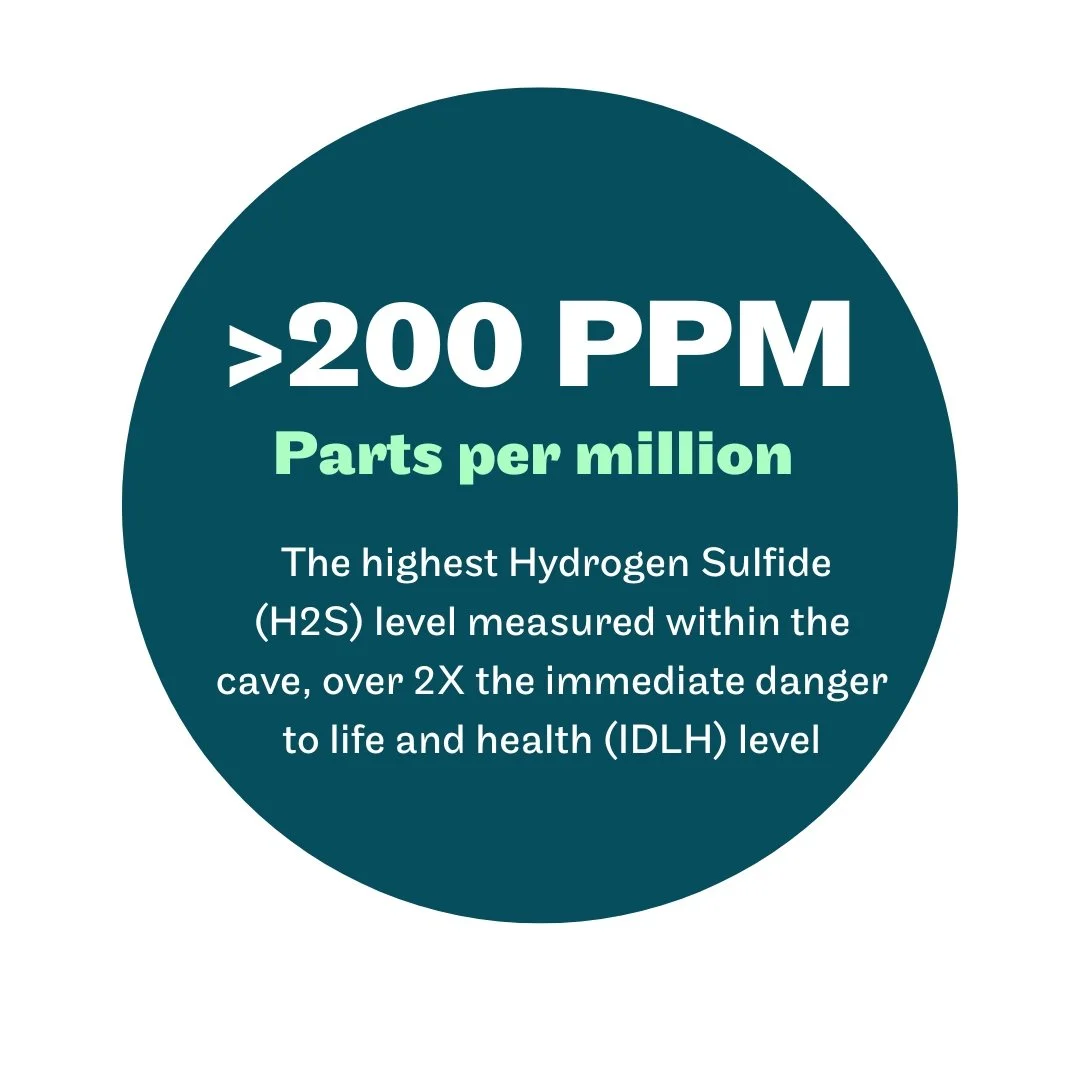
Hot steam and volcanic gases like hydrogen sulfide (H₂S) and sulfur dioxide (SO₂) create a constantly changing cave environment. These hot gases influence ice melt, interactions with the underlying volcanic rock and minerals, the microclimate, and the resulting habitat conditions for life in extreme settings.
Studying these caves is crucial for understanding natural hazards, volcano-glacier interactions, and the remarkable ecosystem they have produced.
How Fire + Ice Shape the Landscape
-
Geothermal heat sculpts cave interiors, melting channels that transform the cave morphology.
Airflow within the cave creates ice scallops on the cave walls and ceilings
Volcanic emissions create mineral deposits within the cave, and weaken the volcanic edifice through hydrothermal alteration.
-
Volcanic emissions influence ice melt, form mineral deposits, and alter the chemistry of the habitat for extraordinary microbial life.
Measuring these gases helps us understand the atmosphere that the microbes thrive in, while measuring the characteristics of the sediments and minerals helps us understand their energy sources and micro ecosystem.
This biogeochemistry provides insights into the resilience of life in extreme environments and the environments where life can exist.
What are Glaciovolcanic Caves?
When glacial ice melts from underlying volcanism, a glaciovolcanic cave can form.
Glaciovolcanic caves are rare environments.
Even though there are many glaciated volcanoes, only a few places have revealed glaciovolcanic caves.
Volcanoes of the Pacific Northwest, USA, and Antarctica are the best-known locations which host these incredible environments.
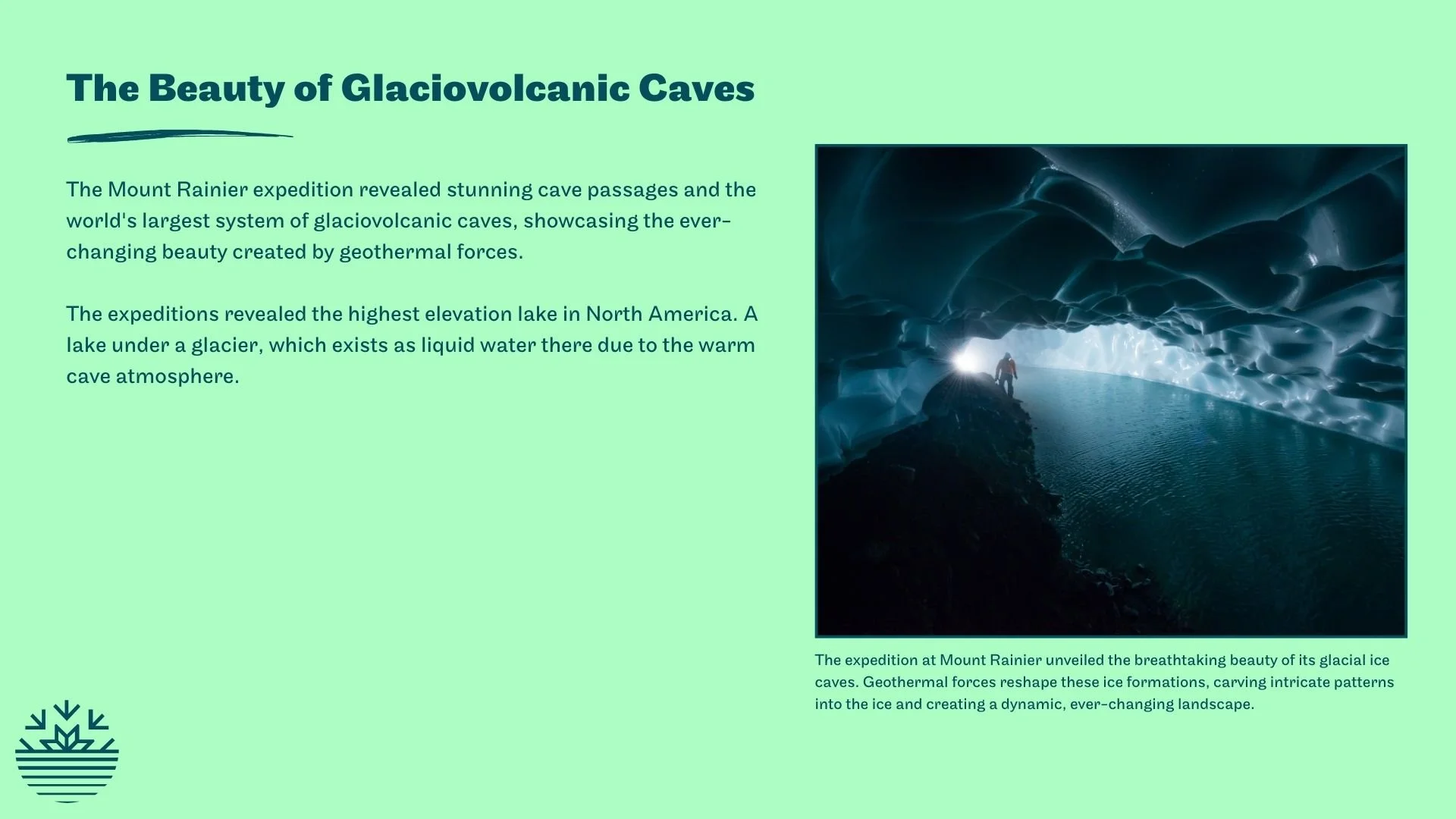
In the Mount St. Helens crater, a glacier is advancing against the warm lava dome, and caves have been forming for the last decade. At the summit of Mount Rainier, the worlds largest system of glaciovolcanic caves has persisted for over 50 years.
Exploring Knowledge About Glaciovolcanism
Volcanoes at high altitudes or high latitudes can be covered in glaciers.
20% of the known volcanoes in the world are glaciated or have permanent snowfields.
When volcanic systems and ice interact, it is called glaciovolcanism.
The slides below portray glaciovolcanic cave knowledge based on research by Stenner and his colleagues.




The Dangers of Glaciovolcanic Activity
The Start of the Project
The interaction of heat from the Earth's interior with various types of ice masses - glaciovolcanism - can threaten nearby populations.
Sometimes, these interactions can have global consequences affecting human life and greatly impacting the world’s economies.
Eruptions underneath glaciers or adjacent volcanic activity can generate glacial outburst floods, jökulhlaups, or lahars, causing threats to nearby populations, tourist areas, and infrastructure.
Climate change, causing increased glacial melt which then interacts with volcanoes, can also be the trigger for eruptions.
Potential Dangers from Glaciovolcanic Activity
-
Occurs when a dam of ice holding back a glacial lake bursts, causing a sudden outflow of water.
Similarly, a jökulhlaup is a glacial outburst flood which occurs when the water overflows its glacier.
Both can be caused by the melting of the glacier ice by volcanism, and an estimated 15 million people around the world are at risk from this hazard.
Such floods have caused widespread destruction in the past.
-
Composed of volcanic material, water, and debris, and they can be caused by the sudden melting of ice and snow resulting from volcanic eruptions.
Lahars triggered by the eruption of Nevado del Ruiz in 1985 killed more than 23,000 people living near the volcano.
As lahars can travel down valleys at 200 km/hour and affect populations even 300 km away, they are a much more far reaching hazard than lava flows.
At Mount Rainier in Washington State, south of Mount Meager, lahars could affect over 150,000 people, cause $40 billion USD in damage downriver, and destroy parts of Seattle.
-
When rising magma Interacts with meltwater it can influence the type of volcanic eruption.
These events where magma and water interact are often explosive and usually referred to as “phreatomagmatic”.
A landmark event in 2010 was the eruption of 2010 Eyjafjallajökull in Iceland, causing unprecedented disruption to global air traffic, leading to economic damage of about $ 5 billion USD.
-
The interaction of volcanic gases and the rock can cause rock to weaken, a process called hydrothermal alteration.
This weakened rock can fracture and collapse, which can lead to landslides and volcanic eruptions.
If these interactions are happening under a glacier, scientists cannot observe and monitor them.
At Mount Meager Volcanic Complex, over 25 unstable slopes have been identified which could cause landslides, or even trigger a volcanic eruption.


Life in Mount Meager's Caves
Offering Clues to Life on Other Worlds
The extreme environment of Mount Meager’s caves pushes the boundaries of what we know about life on Earth.
Microorganisms here have adapted to survive in volcanic gases, darkness, and sub-zero temperatures, offering a glimpse into life's resilience in some of the harshest settings imaginable.
These caves serve as a natural laboratory for astrobiology research, mirroring extreme conditions found on icy moons like Enceladus.
By studying these extremophiles, scientists gain insights into the potential for life beyond Earth and the strategies that might allow it to flourish in other worlds.
Discover the Resilient Life of Mount Meager:
Dive into the slideshow to explore Mount Meager's dynamic volcanic activity, hidden cave systems, and ongoing research to understand these environments.
Life Thrives in Volcanic Caves
-
Adaptation to Harsh Environments: Microorganisms in Mount Meager's caves thrive amid high volcanic gases, near-total darkness, and widely variable temperatures.
Decoding Survival Strategies: Genetic analysis reveals that these microbes endure volatile, nutrient-scarce conditions.
Identifying Microbial Function: Scientists study the metagenome of these cave microbes—crucial for understanding how they can function and thrive.
-
Earthly Analogs for Other Worlds: The caves' dark, icy conditions and microbial communities resemble those expected on Mars or Ocean Worlds, making them crucial analogs for extraterrestrial environments.
Refining Search Strategies: Research in these caves helps scientists develop and refine methods for detecting life in extreme off-world environments.
Insights for Extraterrestrial Life: These findings provide clues about how life could adapt and persist in similarly hostile environments beyond Earth.
-
Testing Technology: The caves' challenging conditions provide an ideal testing ground for instruments which could be used for exploring and detecting life on Ocean worlds like Saturn's moon Enceladus.
Guiding Future Exploration: Discoveries at Mount Meager help train robotic autonomy systems in extreme terrains, shaping strategies for future planetary missions.
Mount Meager’s Active Wonders and Hidden Challenges


Revealing Secrets with Technology
Overcoming the Hazards of Mount Meager
Imagine standing in the depths of Mount Meager, surrounded by toxic gases and unstable conditions.
How do explorers navigate such danger?
With cutting-edge technology that makes exploration possible, ensuring safety while uncovering the mountain's mysteries.
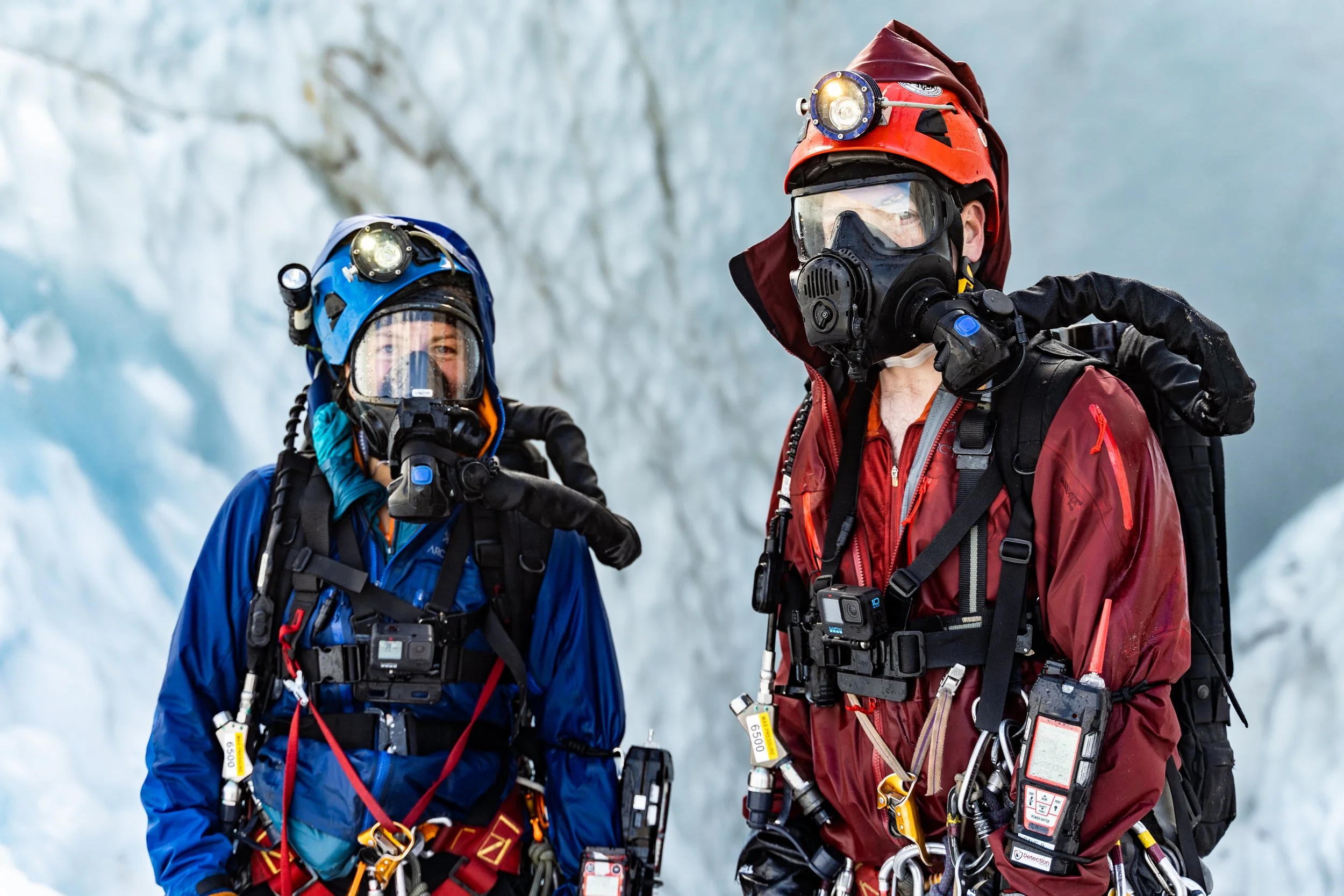
From advanced life support systems filtering hazardous gases to tools providing real-time analysis, the slideshow below reveals how these innovations unlock the secrets of this active volcano.
Innovative Technology to Explore
-
Designed for Chemical Hazards: Specialized life support systems filter toxic gases, enabling researchers to explore areas where the atmosphere is deadly, transforming previously inaccessible zones into research opportunities.
Real-Time Monitoring: Continuous monitoring of gas levels and temperatures keeps the team safe while revealing valuable insights into the volcano’s evolving environment.
Pushing Boundaries: These systems, along with cave and ice climbing equipment and the skills to use them, turned hazardous zones into accessible research sites, allowing the explorers to gather data from areas previously beyond reach and expanding our understanding of these extreme environments.
-
On-Site Mineral Analysis: Portable spectrometers allow on-site analysis of minerals, giving insights into the volcanic rock underneath the glacier and deposits on the ice surface.
Assessing Volcanic Activity: Analysis of gas emissions and temperature lets scientists monitor volcanic activity, providing valuable insights into how geothermal heat is interacting with glacial ice at Mount Meager.
Deepening Understanding: These studies help scientists create a detailed picture of how volcanic processes shape the cave and the glacier, enhancing our geological knowledge.
-
High-Resolution Cave Mapping: 3D light detection and ranging (LiDAR) scanning and laser surveying produces detailed maps, revealing unique geomorphology and documenting the cave's evolution.
Groundwork for Future Discoveries: Mapping data provides a foundation for future research, and helps us understand how volcanic and glacial forces are shaping similar environments around the world.
Overcoming the Dangers with Cutting-Edge Technology and Processes




Fieldwork and Research at Mount Meager
Providing a window into an extreme environment + the process that shaped it
Exploring Mount Meager's exceptional environment requires a blend of advanced technology, courage, and meticulous fieldwork.
Christian Stenner and his team used state-of-the-art tools to navigate the caves safely, gather crucial data, and uncover insights into one of the world's most unique and dynamic ecosystems.
Their work provides a glimpse into the extreme conditions that shape our planet and the potential for life in similar harsh environments elsewhere in the universe.
Uncovering Nature’s Extremes
-
3D Laser Scanning: Produces detailed maps of cave interiors, tracking changes over time and identifying potential hazard zones. This data is essential for safety and scientific discovery.
Continuous Monitoring: Monitoring stations measure temperature, gas levels, and humidity in real-time, helping researchers anticipate environmental changes within the caves.
Specialized Sampling: Custom tools designed for volcanic environments collect sediments and gases from geothermal vents, adding depth to our understanding of cave formation and unique geological processes.
-
Microorganisms Adapt to Extremes: Microbial life thrives in nutrient-poor, volatile conditions, demonstrating incredible resilience. These findings are crucial for understanding potential life beyond Earth.
Direct Volcanic Temperature Measurements: Temperature readings from geothermal vents provide vital data about volcanic activity beneath the glacier, revealing the interplay between heat and ice.
Expanding Knowledge: These studies deepen our understanding of volcanic hazards, glacial dynamics, and the potential for life in extreme environments—insights that may one day guide the search for life on other planets.
-
Tracking Ice Melt Patterns: Researchers monitor glacial melting rates to assess the impact of volcanic activity on ice stability and regional water supplies, helping predict future changes.
Water Quality and Flow: The interaction between meltwater and volcanic minerals affects local water quality. Analyzing its composition reveals how volcanic processes influence freshwater sources, which is critical for ecosystems and nearby communities.
Ecosystem Adaptations: Long-term biodiversity monitoring reveals how plants, animals, and microbes adapt to shifting volcanic conditions, providing insights into ecosystem resilience and broader environmental impacts.


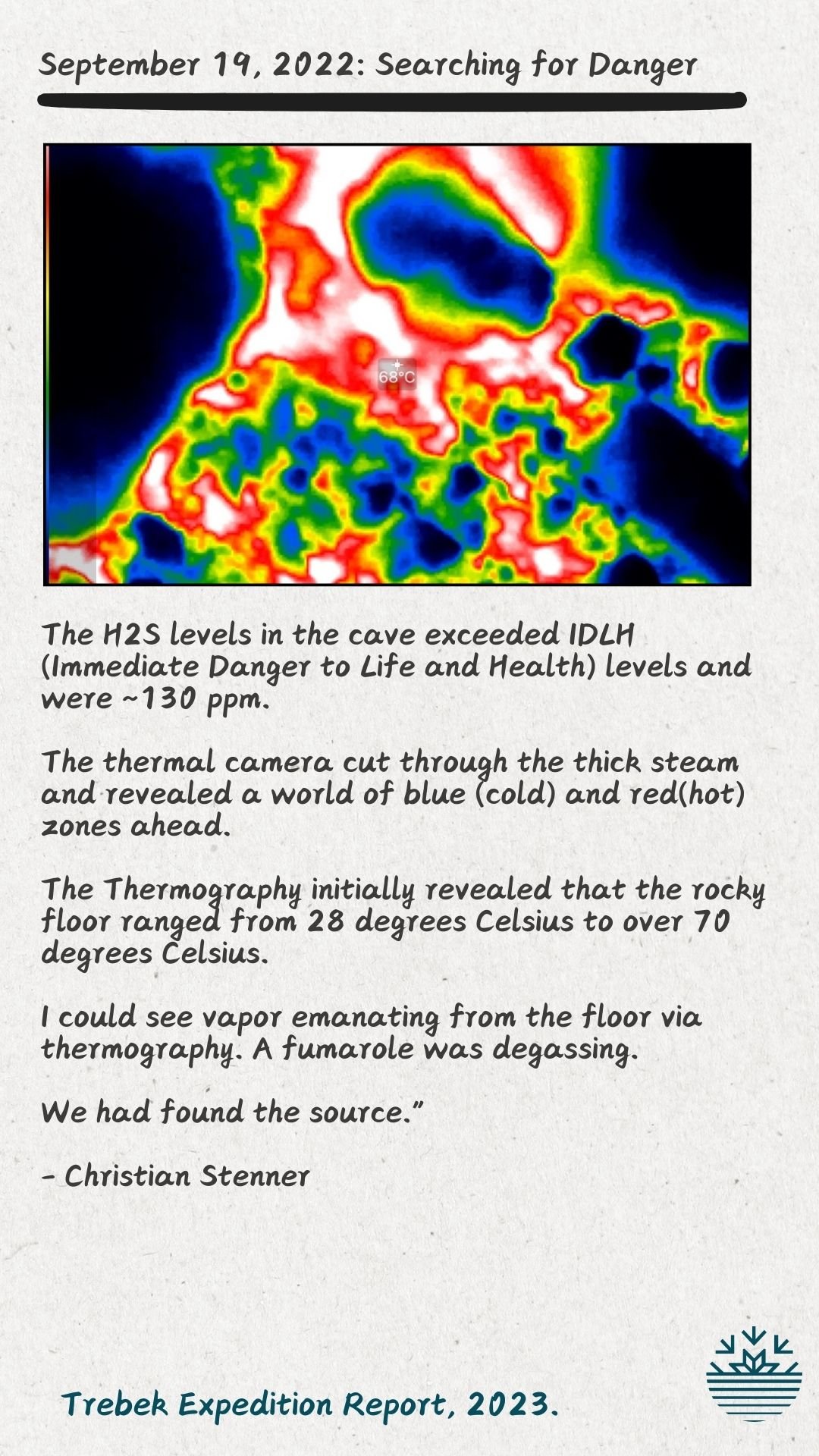


Christian Stenner explores Mount Meager as a citizen scientist, backed by an intrepid team balancing rigorous research and the thrill of discovery

Ben Swerdlow carefully packs essential gear on Job Glacier, showcasing the meticulous logistics behind exploring Mount Meager's volcanic caves.

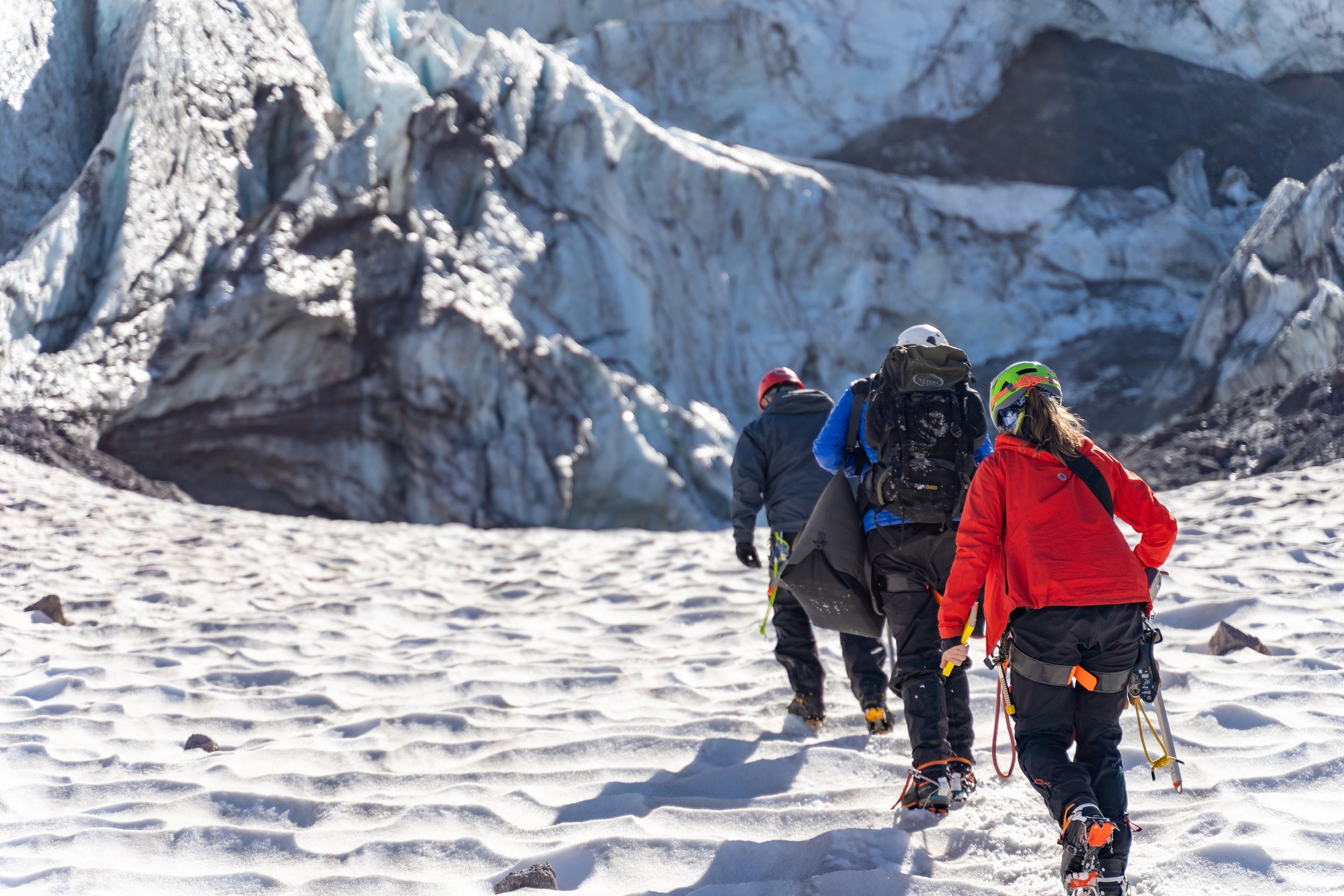
Eddy Cartaya and Ben Swerdlow traverse the vast landscape, with the imposing Mount Meager looming in the background, highlighting the scale and rugged environment of the expedition.

Christian Stenner and Dr. Glyn Williams-Jones trek across Job Glacier towards the upper cave entrance, where geothermal steam rises from the glacier’s depths, hinting at the volcanic forces below.

Kathleen Graham and Stenner gear up at the lower cave entrance, before Graham's first descent into the glacier.

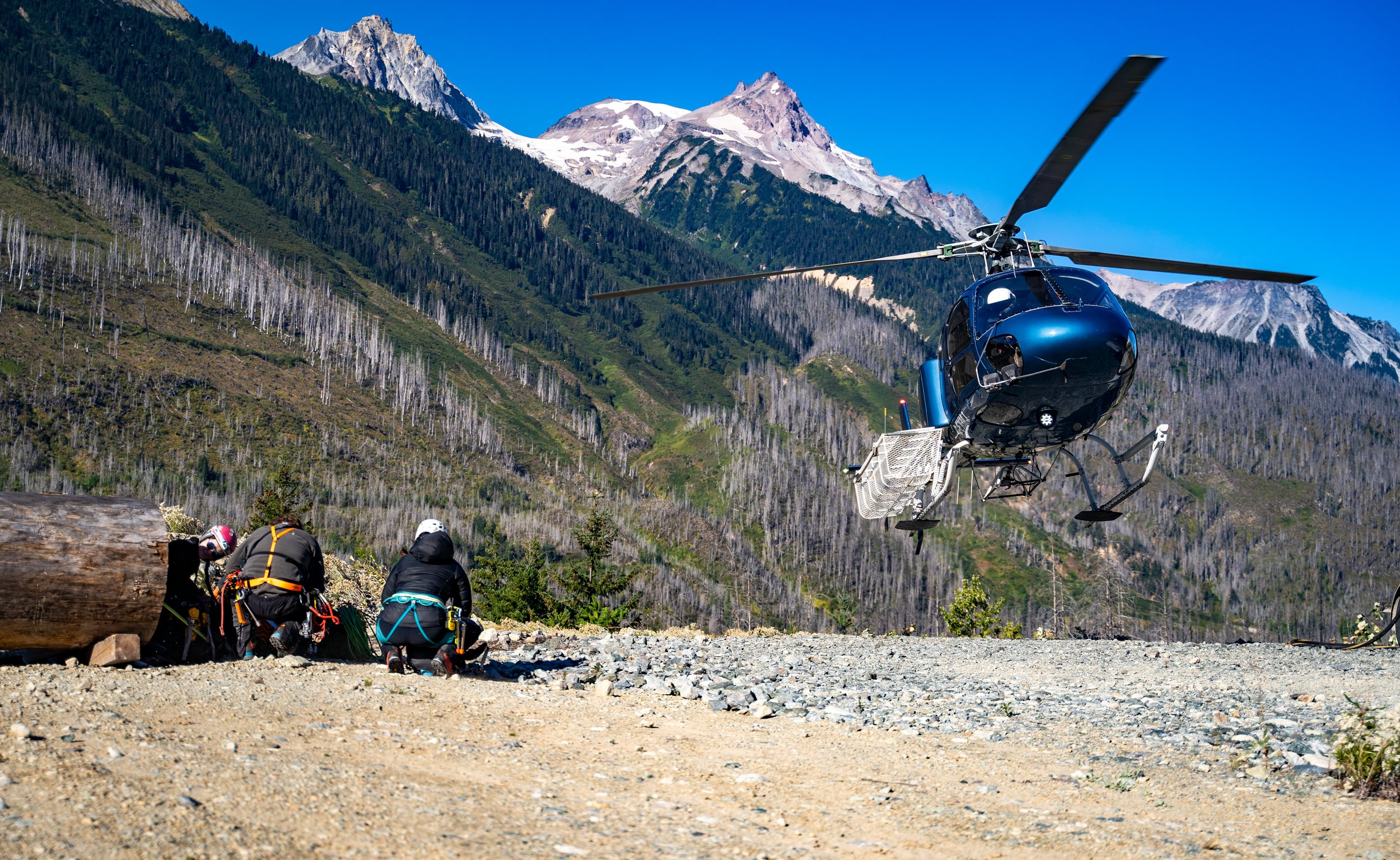
Kathleen Graham waits at the landing zone, ready for the helicopter's arrival – a crucial part of the expedition's logistics.

The helicopter is packed and ready for liftoff, marking the end of a challenging first day of the expedition.

Flying over Mount Meager is no easy feat – the remote, rugged terrain makes access challenging. Every helicopter trip requires precise planning to navigate unpredictable weather and the volatile landscape below."

Documenting the extremes – Jake Schaffer, a researcher, takes detailed notes on Job Glacier, surrounded by Mount Meager’s rugged landscape. Equipped with specialized gear, every observation contributes to understanding this dynamic volcanic environment.

Eddy Cartaya, Christian Stenner and Scott Linn make their way across Job Glacier to assess safety conditions

Adam Walker, filming the project activities near the entrance of the cave system

Personal equipment for Mount Meager glacier travel and glaciovolcanic cave exploration. Waterproof, breathable and insulated clothing, gas monitoring and detection equipment, SHIELD life support system, Air Purifying Respirator mask, Radio communications, ice climbing and rope climbing/descending equipment, personal rescue and safety equipment

Glyn Williams-Jones carefully steps up the rugged interior of the upper cave, showcasing the challenging terrain that comes with exploring Mount Meager's dynamic and ever-changing environment.

Climbing within the upper entrance passage of the cave, Dr. Glyn Williams-Jones, Adam Walker, and Stenner navigate the steep, icy terrain inside the upper cave. Their climb represents the challenging exploration efforts needed to uncover the secrets hidden within Mount Meager’s glaciovolcanic depths.

Ablation scallops are unique patterns and depressions that form on the surface of ice due to the melting and sublimation process. In glaciovolcanic caves like those in Mount Meager, they occur when geothermal heat and volcanic gases interact with the glacial ice. This creates scallop-shaped indentations in the ice walls, revealing the dynamic and constantly changing environment within the caves.

Graham and Stenner climbing out from the upper level of the glaciovolcanic cave on 19 September.

Looking up through the vertical ice walls of Mount Meager’s cave system, Kathleen Graham’s mesmerizing view.

Christian Stenner checks his forearm-mounted gas monitor inside the cave, a crucial step in navigating the hazardous environment of Mount Meager's ice caverns.

Illuminated by headlamps, Christian Stenner prepares to ascend the rope up towards Tom Gall and waiting support team members, revealing the beauty and challenges of Mount Meager’s depths.
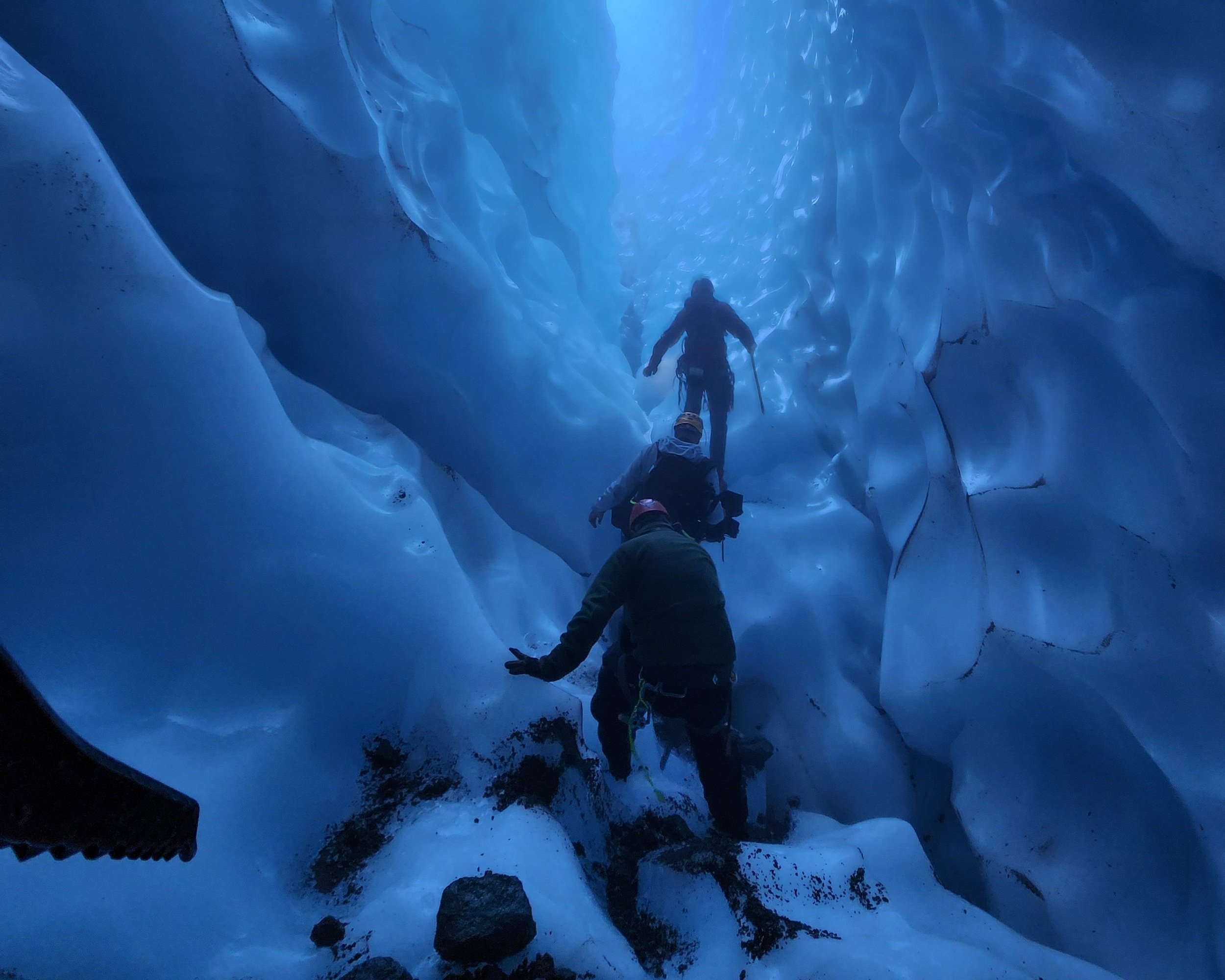
Climbing within the icy depths of the cave, Dr. Glyn Williams-Jones, Adam Walker, and Stenner navigate the steep, scalloped ice walls that reflect the dynamic forces shaping Mount Meager's glaciovolcanic environment.

Climbing out of the glaciovolcanic cave, Stenner and Graham return to the surface while carrying a pack full of vital rock and sediment samples
“Astrobiology is the study of the origin, evolution, distribution, and future of life in the universe.
Why is Earth habitable? How, when, and why did it become habitable?
Are, or were, any other bodies in our Solar System habitable?
Might planets orbiting other stars be habitable?
What sorts of stars are most likely to have habitable planets?
These are just a few of the questions that astrobiologists are trying to answer today.”

Exploring Mount Meager’s Caves
A Step Forward in the Search for Life Beyond Earth
Mount Meager's caves are a vital resource for scientists exploring the potential for life beyond Earth.
The extreme conditions within these caves—the terrain, unusual atmosphere, darkness, low nutrients, rocky soils, varying temperatures, and microbial life—mirror environments on moons like Enceladus and planets like Mars.
By studying life at Mount Meager, Stenner’s team is helping NASA and astrobiologists understand life at the extremes, refine their search for extraterrestrial life and develop technologies for future missions.
Insights for Space Exploration and Life at the Extremes
-
Astrobiology Roadmap: The exploration at Mount Meager helps address key questions within NASA’s Astrobiology Roadmap of “How can the exploration of extreme environments on Earth reveal the presence (or absence) of life under stress?” and “What are the potentials for preserving signatures of life in extreme environments?”.
The expedition presented a unique opportunity to examine an analog of subsurface conditions for supporting life on icy worlds, and the possible origins of life itself.
Searching for the Requirements for Life: The expedition was linked to the goal of “searching for the requirements for life and understanding habitats on other planets”, which has been identified as one of three compelling cross-cutting themes in planetary science for the coming decade.
In the 2018 National Academies of Sciences, Engineering, and Medicine report:An Astrobiology Strategy for the Search for Life in the Universe, the exploration and better understanding of accessible subsurface sites was identified as crucial work for the search for life in the coming decades.
-
Questions posed in the 2013-2022 planetary science decadal survey related to life detection in the extreme terrain satellites (Enceladus and Europa), helped guide exploration at Mount Meager:
Beyond Earth, are there contemporary habitats elsewhere in the solar system with necessary conditions, organic matter, water, energy, and nutrients to sustain life, and do organisms live there now (with Enceladus and Europa listed among key targets to study)?
What are the processes that result in habitable environments? Is there evidence for life on satellites and what energy sources are available to sustain life? and
What does the plume material from Enceladus tell us about the volatile inventory of that body?”
-
The deep, icy channel, darkness and twilight, and plume of vapour and gas being ejected from under the ice at the Mount Meager cave reflect the environment on Enceladus, offering a unique analog for these extraterrestrial conditions.
-
Learnings from Mount Meager enhance the EELS capability to maneuver and detect life in the harsh conditions of space, particularly in subsurface settings
-
Testing these robotic instruments in Mount Meager's extreme conditions helps refine their performance for extraterrestrial environments, and trains their environmental mapping and autonomous navigation which are critical for planetary exploration.
-
Findings from Mount Meager inform the design of future space missions, shaping how scientists search for signs of life and select sampling sites on distant worlds.
These advancements will provide insight into what biological communities might form below the ice shells of Enceladus and Europa and how we might detect evidence of the existence of this subsurface life at a location accessible by robotics.
Testing Technology for Space Exploration
-
Understanding how life thrives in extreme conditions helps NASA fine-tune its search for biosignatures on Mars and icy moons.
Microbial life found in Mount Meager's caves help scientists understand how life could adapt to dark, icy environments.
This research supports NASA's efforts to identify potential habitats for life in the solar system by focusing on extremophile adaptations and the potential for biosignatures in similar extraterrestrial settings.
-
Data from Mount Meager informs NASA's strategies for identifying life beyond Earth.
“Discoveries of the role of water-rock interactions, both at high rates in high-temperature vents, and at slow rates in lower-temperature continental settings, has generated a renewed focus on how to seek for signs of subsurface life—thereby informing astrobiology investigations of the subsurface of other rocky planets (e.g., Mars), ocean or icy worlds, and beyond to exoplanets.”
-An Astrobiology Strategy for the Search for Life in the Universe, 2018
The Search for Life beyond Earth and Life’s Origins
An Analog for Icy Moons:
Understanding Life at Extremes

This 3D model brings the glacial world of Mount Meager to life. Treacherous crevasse fields and steaming holes in the glacial ice reveal a landscape shaped by volcanic heat, glacial movement, and climate change.

Jake Shaffer holds up sonde equipment used for measuring water chemistry, important for understanding the conditions under which Mount Meager’s microbial life can thrive

Preparing equipment and coordinating efforts before Stenner and Graham’s deep descents into the cave. Eddy Cartaya and Scott Linn prepare safety and rescue equipment to act as a backup team, while Graham and Stenner prepare a bag of equipment for sample collections. Their collaborative approach is essential for successful research in extreme conditions.

Jake Shaffer, collecting a sample of snow algae on the glacier. The reddish hue on the snow surface is indicative of snow algae blooms, which thrive in these unique glaciovolcanic environments. This research is key to understanding the impact of glacial microbial ecosystems.

Jake Shaffer takes a moment to capture measurement data

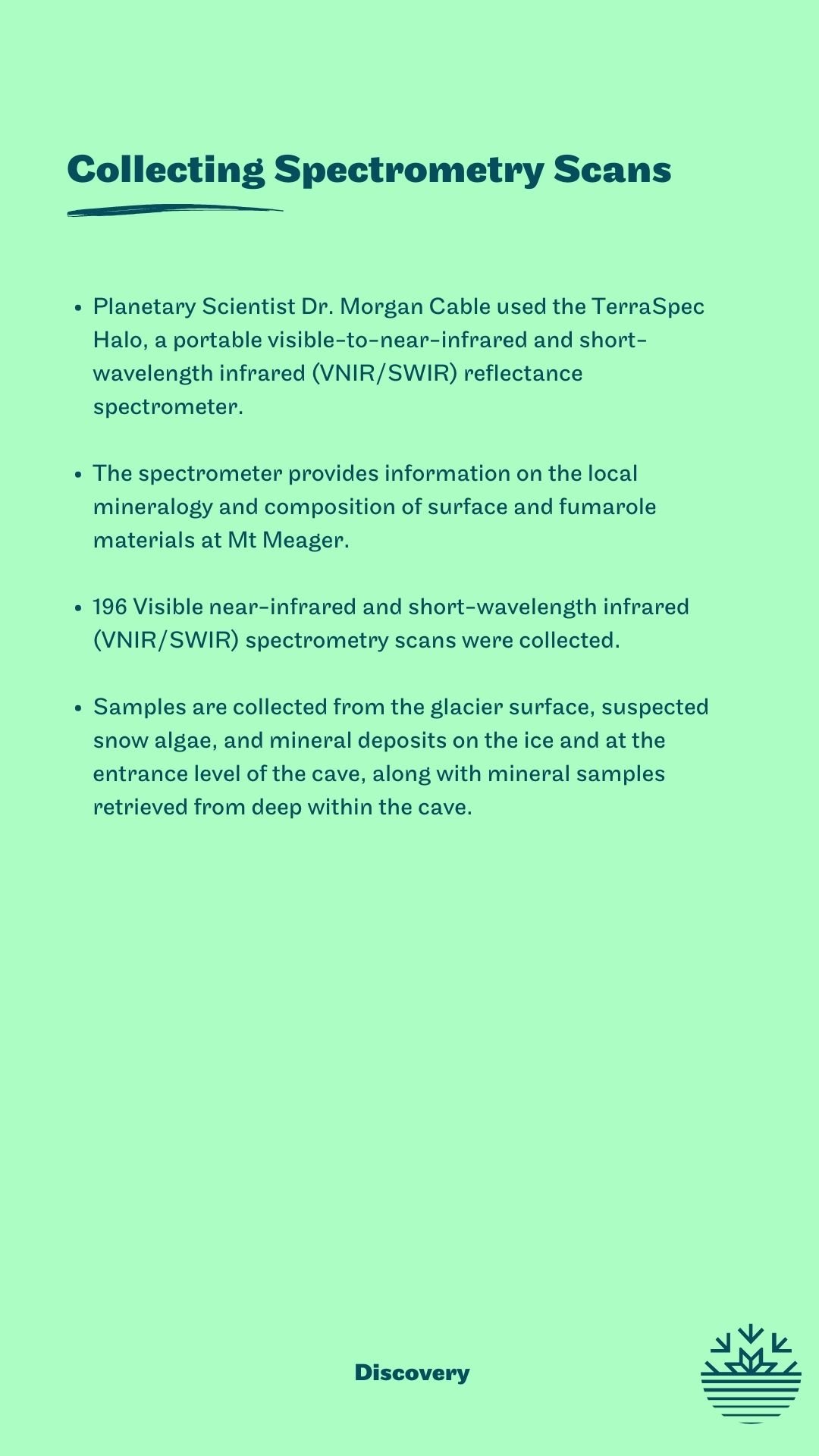
Using advanced spectrometry: Planetary scientist Dr. Morgan Cable conducts scans on the glacier surface to measure the presence of minerals, providing crucial data from this extreme environment.

Using advanced spectrometry: Planetary scientist Dr. Morgan Cable conducts scans on the glacier surface to measure the presence of minerals, providing crucial data from this extreme environment.

Dr. Jill Mikucki sets up equipment on the glacier surface to measure the site geochemistry. The steam rising in the background serves as a reminder of the powerful geothermal forces at work beneath Mount Meager.

Kathleen Graham and Christian Stenner wearing SHEILD life support systems after returning from deep within the cave. The volcanic gas and steam vapour have soaked completely through their clothing

Collecting samples from the glacier’s surface, Dr. Jill Mikucki and Jake Shaffer meticulously gather data on the environmental conditions. Each sample holds clues to understanding life in these extreme volcanic environments.

Dr. Morgan Cable showcases the TerraSpec HALO portable mass spectrometer, a critical tool used to identify minerals in the field. This advanced technology helps reveal the hidden secrets of Mount Meager's extreme environments.

Microbiologist Jacob Shaffer carefully packs samples of ice and sediment on Job Glacier. These samples provide invaluable data about how life adapts and thrives in one of Earth’s most extreme environments.

Ensuring safety first, Graham checks the air pressure on the SHIELD SCBA system before the expedition into Mount Meager's caves. Proper gear preparation is crucial for exploring such extreme environments.

Planetary scientist Dr. Morgan Cable poses with the Terraspec HALO Spectrometer
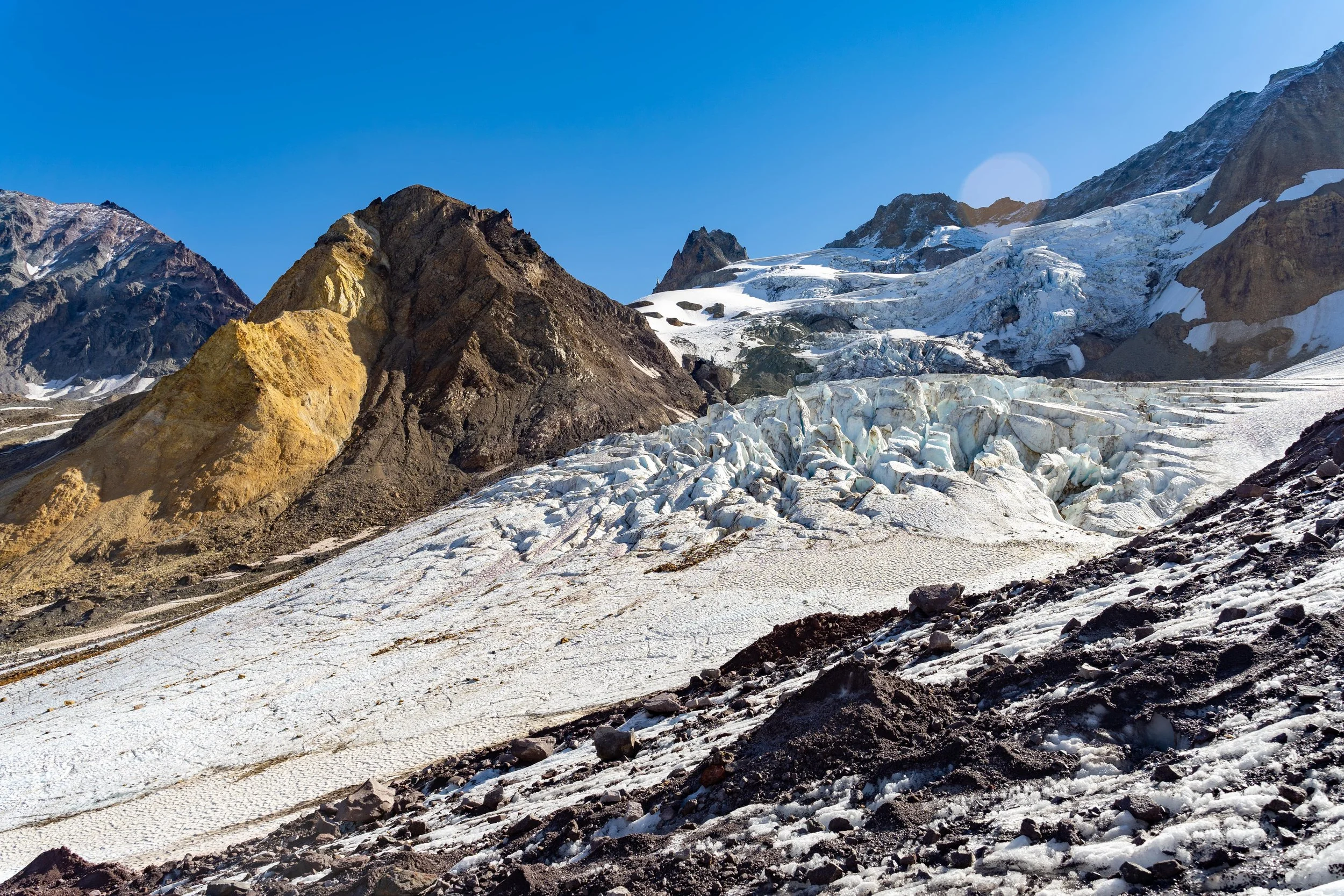
MOUNT MEAGER
Traditions and Cultural Significance of Q̓welq̓welústen
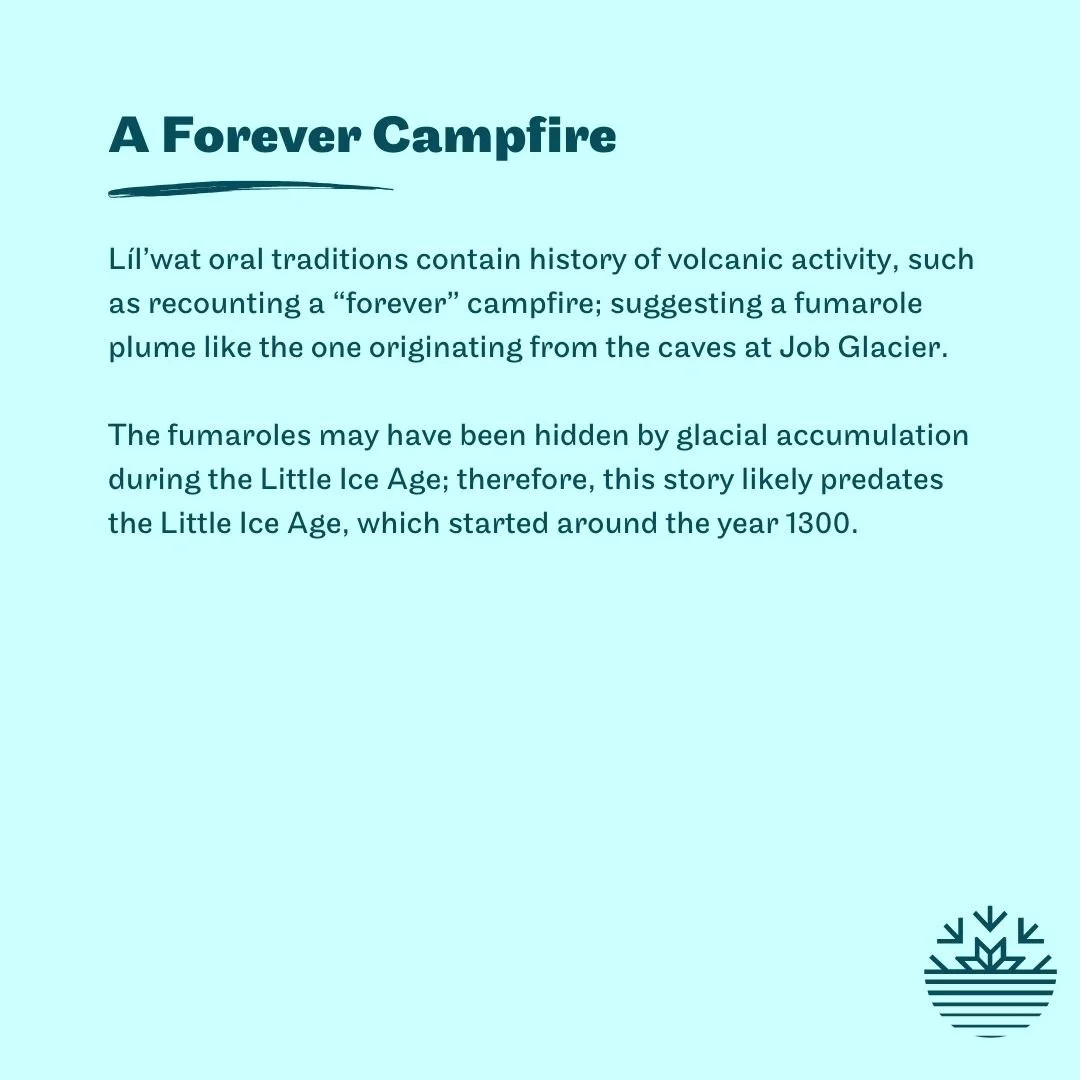
For generations, the Líl̓wat peoples have shared stories of Q̓welq̓welústen, detailing its eruptions and its transformations.
These Oral traditions are more than history; they guide understanding and respecting the mountain as a powerful presence.
The Lí’lwat Nation owns these stories, and elements of them were published in the following research articles;
Lí l’wat oral traditions of Qw’elqw’elústen (Mount Meager):
Indigenous records of volcanic eruption, outburst flood, and landscape change in southwest British Columbia
Líĺwat Climbers Could See the Ocean from the Peak of Qẃelqẃelústen:
Evaluating Oral Traditions with Viewshed Analyses from the Mount Meager Volcanic Complex before Its 2360 BP Eruption
We acknowledge the significance of these stories and do not reperform them here.




Explore Further
Stories from the Trebek Initiative’s Media Partners
Volcanic exploration reveals Earth's hidden extremes and offers insights into planetary science. Dive into these related stories from Trebek's media partners, National Geographic and Canadian Geographic - who share our mission of bringing groundbreaking explorations and cultural stories to a wider audience.
Uncover the fascinating connections between geology, glacial caves, and the search for life in extreme environments.

STORIES
There's a Frozen Labyrinth Atop Mount Rainier

Discusses the exploration and mapping of the world's largest glaciovolcanic cave system by Stenner and Graham, supported by the National Geographic Society.
It delves into the technical and environmental challenges of exploring glaciovolcanic caves and the significance of their discoveries.
Eerie Ice Caves Carved by Mount St. Helens' Fiery Breath

Explores the unique ice caves formed after the eruption of Mount St. Helens.
It provides a fascinating look at similar caves, also researched by Stenner and Graham on expeditions led by Eddy Cartaya.

STORIES
What Canada can learn from the eruption of Mount St. Helens

Even before the Trebek Initiative-supported expedition to Mount Meager, the story of Mount Meager was featured in an article about another Cascade volcanic arc neighbour, Mount St. Helens.
Mount Meager team volcanologist Dr. Glyn Williams-Jones recounts the significance of the eruption of Mount St. Helens over 40 years ago and the implications for Mount Meager:

Christian Stenner and Kathleen Graham’s Contributor Pages
Christian Stenner and Kathleen Graham have contributed several articles and content to Canadian Geographic, providing firsthand accounts and insights into exploration, safety, and the environmental importance of these unique natural spaces.
Their contributions highlight their expertise and ongoing research related to caves like those in Mount Meager.

Unlocking Mount Meager‘s volcanic secrets
This article delves into the recent exploration of Mount Meager’s volcanic secrets. It reveals the discovery of steam-emitting caves, the dangers of this active volcano, and the groundbreaking expedition led by cavers, scientists, and engineers.
The team faced extreme conditions while assessing volcanic hazards, studying unique organisms, and testing technology with applications that may reach beyond Earth.

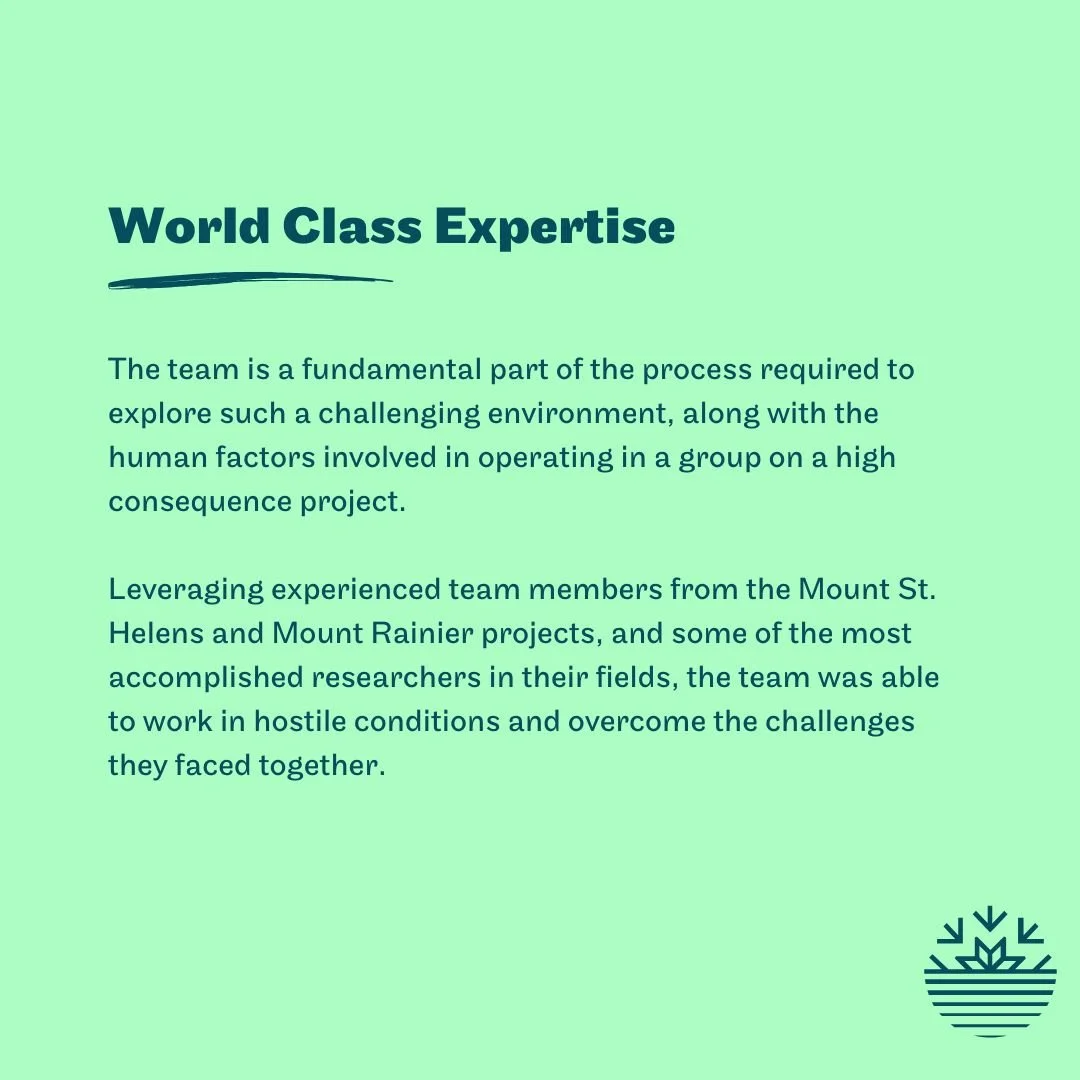
The Expedition Team members who deployed to Mount Meager were:
Christian Stenner – Mount Meager Volcano Project leader & Cave Exploration, RCGS Fellow
Kathleen Graham – Cave Exploration, RCGS Fellow
Dr. Glyn Willams-Jones – Simon Fraser University, Professor, Volcanology
Elizabeth Passey – PhD Student, Volcanology
Adam Walker – Videography, Photography, Surface Support, and Graphic Design, RCGS Fellow
Dr. Morgan Cable – NASA JPL, Research Scientist, Astrobiology and Ocean Worlds Group Supervisor
Dr. Michael Paton – NASA JPL, Robotics Technologist, Robotics Mobility Group
Jeremy Nash – NASA JPL, Robotics Electrical Engineer, Computer Vision Group
Dr. Jill Mikucki – University of Tennessee, Professor, Microbiology
Jacob Shaffer – University of Tennessee, PhD Student, Microbiology
Eddy Cartaya – Glacier Cave Explorers, National Speleological Society, Safety Officer
Scott Linn – Glacier Cave Explorers, National Speleological Society, Surface support
Ben Swerdlow – Glacier Cave Explorers, National Speleological Society, Surface support
Tom Gall – Glacier Cave Explorers, National Speleological Society, Paramedic, HAZMAT support
TREBEK EXPLORERS DRIVE IMPACT IN 3 DIFFERENT WAYS
The Trebek Initiative was launched in 2021 to explore and celebrate Canada’s natural and cultural heritage.
Through storytelling, we illuminate the hopeful work our 38 Trebek Explorers are doing across Canada.
We aim to inspire future explorers and drive meaningful impact through Discovery, Engagement, and Action.
DISCOVERY
Project Impact Through
Discovery is a key factor in true exploration. The discoveries made during the Mount Meager project have provided invaluable insights into volcanic hazards, volcano-ice interactions, and the potential for life in extreme environments.
These findings are crucial for understanding the risks to local populations and their impact on Western North America, advancing our knowledge of Earth’s geological processes, and informing future research on other planetary bodies.
What Was Discovered From This Project




ENGAGEMENT
Project Impact Through
The Mount Meager project team worked closely with local communities, scientists, youth, and the public to promote education and awareness about volcanic hazards, the explorer’s mindset, and the search for life in extreme environments.
By engaging various groups, the project fostered a deeper appreciation for Earth's natural systems and their connection to broader scientific explorations.
The engagement efforts fall into three core areas: Educational Outreach, Media Communication and Scientific Collaboration and Outreach. Explore the team’s efforts below:
-
Youth Engagement
After the fieldwork concluded, expedition members Stenner, Dr. Paton, and Dr. Cable gave live presentations to approximately 835 students of four Pemberton, BC area schools
They connected with a further 200 students remotely via Zoom that day.
Each presentation was an hour in length and covered the Mount Meager project, Ocean Worlds, and the EELS mission concept.
Stenner leveraged relationships with Cadets Canada (youth 12-19) to deliver ~100 presentations to ~2500 youth across Canada in 125 different Cadet Corps and Squadrons.
Through the National Geographic Explorer Classroom program, Stenner delivered an explorer classroom session live to 321 classrooms and homes around the world reaching 6,146 students, and a further 750 views of the recorded video:
Incredible Caves of Fire and Ice
Canadian Geographic Education is currently developing learning resources for students, which will be available to their network of 28,000 K-12 teachers, reaching 750,000 students.
The team delivered presentations to students, connecting volcanic and glacial science to space exploration.
-
Popular media articles and reports simplified complex concepts for the public. Engaging visual content—photos, videos, and infographics—helped bring the project to life.
Our Photographer/Videographer Adam Walker captured outstanding images in a challenging environment where acidic gases corrupt electronic equipment.
Canadian Geographic’s feature article and infographic in the September 2023 issue featured the project to the magazine’s ~4.3 million print and online reach:
Various podcast interviews told the story of the project, including the Canadian Geographic Explore Podcast (ranked in the top 1.5% of podcasts globally)and the Adventure Audio podcast. Canadian Geographic Explore Podcast COMPLETE
BBC News covered the EELS testing using video footage from the project in their story: NASA's JPL snake robot explores extreme terrain
Stenner and Graham delivered a presentation at the headquarters of the Royal Canadian Geographical Society in Ottawa, Can Geo Talks presents: Christian Stenner and Kathleen Graham: Descent into Fire and Ice, which was also covered by CTV News in Ottawa.
A documentary film about the project is in development.
Community leaders participated in discussions about the project’s findings and their implications for local safety.
-
Building a Multidisciplinary Team
Scientists specializing in volcanology, microbiology, robotics, and speleology united to discover different facets of Mount Meager’s glaciovolcanic caves.
Those partnerships have continued since then and the various team members have since collaborated on many other projects involving volcanoes, caves, astrobiology, and robotic testing.
The expedition results and data collected directly supported three PhD students and one MSc student in their projects which related to Mount Meager volcanology and microbiology.
Scientific Community Publications and Reports
The initial results of the microbiology findings were published, and further results are anticipated with more analysis:
Clance, J., Shaffer, J., Cable, M., Stenner, C., Williams-Jones, G., Szynkiewicz, A., Paton, M., Graham, K., Vinnes, O., Mikucki, J. (2024) Biogeochemistry of the rare sulfidic glaciovolcanic cave system on Mount Meager, British Columbia, Canada. Frontiers in Geochemistry, 2:1410338. https://doi.org/10.3389/fgeoc.2024.1410338
Dr. Williams-Jones delivered a presentation to Thompson Rivers University Environmental Science Seminar Series: Meager Mumblings - Current hazards and conditions at Qẃelqẃelústen / Mount Meager volcano
Christian delivered several invited keynote presentations to the scientific community, including:
The morphology, morphodynamics, and use of glaciovolcanic caves as planetary analogs. Science Visitor and Colloquium Program, Planetary Science Seminars. NASA Jet Propulsion Laboratory, Pasadena, California, USA
Morphodynamics, morphology, and microclimate of glaciovolcanic cave systems, 10th International Workshop on Ice Caves (IWIC-X), May 12-18, 2024, Werfenweng, Austria.
Subglacial volcanism and the formation of glaciovolcanic cave systems. International Association for Volcanology and Chemistry of the Earths’ Interior/International Association of Cryospheric Sciences, Volcano Ice Interactions Commission (VIIC)
Speleological exploration in Western Canada and glaciovolcanic cave research. Texas A&M University, USA.
Several conference abstracts have been published based in whole or part on project results:
Stenner, C., Graham, K., Cable, M., Williams-Jones, G., Clance, J., Shaffer, J., Mikucki, J., Szynkiewicz, A., Vinnes, O., Paton, M., Nash, J. (2024) The ecosystem of a remarkable glaciovolcanic cave at Mount Meager, British Columbia, Canada. 1st International Conference of the Emil G. Racoviță Institute for the Study of Life in Extreme Conditions, Frontiers unbound: Exploring extreme environments. Sept 12-14, 2024. Cluj Napoca, Romania http://doi.org/10.5038/FUe3-2024-6
Stenner, C., Florea, L., Sobolewski, L., Pflitsch, A., Cable, M., Anitori, R., Davis, R.E., Graham, K., Williams-Jones, G. (2024) The environment of glaciovolcanic caves and their value as planetary analogues. 1st International Conference of the Emil G. Racoviță Institute for the Study of Life in Extreme Conditions, Frontiers unbound: Exploring extreme environments. Sept 12-14, 2024. Cluj Napoca, Romania http://doi.org/10.5038/FUe3-2024-26
Stenner, C., Florea, L., Pflitsch, A., Sobolewski, L., Williams-Jones, G. (2024) Morphodynamics, morphology, and microclimate of glaciovolcanic cave systems. 10th International Workshop on Ice Caves, May 12-18, 2024, Werfenweng, Austria. https://doi.org/10.25651/1.2024.0002
Stenner, C. & Graham, K. (2023). Canadian Volcano: Descent into Fire and Ice. National Speleological Society 2023 Convention. Elkins, WV, USA
Sobolewski, L., Florea, L., Stenner, C., Burgess, S., Ionescu, A., Pflitsch, A., Nadeau, J., Paton, M., Cartaya, E. (2023) Glaciovolcanic caves as an analogue for subglacial settings elsewhere in the solar system. IAVECI 2023, Rotorua, New Zealand
Additional reports to the speleological community and to the National Geographic Society and Royal Canadian Geographical Society were made. As well, a report was included in the Alpine Club of Canada’s esteemed State of the Mountains Report, volume 6.
Speleology reports included the cover stories of issues of the Canadian Caver, the journal of record of cave exploration in Canada, and the US National Speleological Society (NSS) News.
ACTION
Project Impact Through
The Mount Meager project took actionable steps to enhance community safety, advance scientific research, and support future planetary exploration.
These efforts went beyond education and awareness to ensure tangible results for local communities and the broader scientific community and build capacity for future projects.
Discover the Actions from this project in the slideshow below:
A new joint US/Canadian glaciovolcanic cave exploration and microbial discovery project at Mount Baker, Washington State.
Tested a capillary electrophoresis instrument meant as part of the life-detection payload for the EELS robot:
Field Testing a Capillary Electrophoresis Inorganic Ion Analyzer: The Scientific Payload of an Exobiology Extant Life Surveyor (EELS) at the Athabasca Glacier. AGU Astrobiology Science Conference (AbSciCon) 2024
EELS Testing
Athabasca Glacier as a Terrestrial Analog for Ocean World Exploration: Field Test of the Exobiology Extant Life Surveyor (EELS) AGU Astrobiology Science Conference (AbSciCon) 2024
What Actions Resulted from this Project


Learn more about actions from this project
A new joint US/Canadian glaciovolcanic cave exploration and microbial discovery project (Mount Baker, Washington State)
Tested a capillary electrophoresis instrument meant as part of the life-detection payload for the EELS robot:
Field Testing a Capillary Electrophoresis Inorganic Ion Analyzer: The Scientific Payload of an Exobiology Extant Life Surveyor (EELS) at the Athabasca Glacier. AGU Astrobiology Science Conference (AbSciCon) 2024
In-field EELS Testing for NASA:
Athabasca Glacier as a Terrestrial Analog for Ocean World Exploration: Field Test of the Exobiology Extant Life Surveyor (EELS) AGU Astrobiology Science Conference (AbSciCon) 2024
Follow Us On Instagram!
For more inspiring stories and discoveries from the Trebek Initiative.
Stay informed about groundbreaking projects like Christian’s and witness the journey of exploration, innovation, and hope that illuminates and inspires appreciation for Canada's rich natural and cultural heritage.